Humming with no start
A compressor that hums for a few seconds and then shuts off usually needs a stronger start boost or has a locked rotor.
Your outdoor unit's fan spins but the compressor will not kick on, it clicks and hums before tripping the breaker, or the unit runs and the air inside never gets cold.
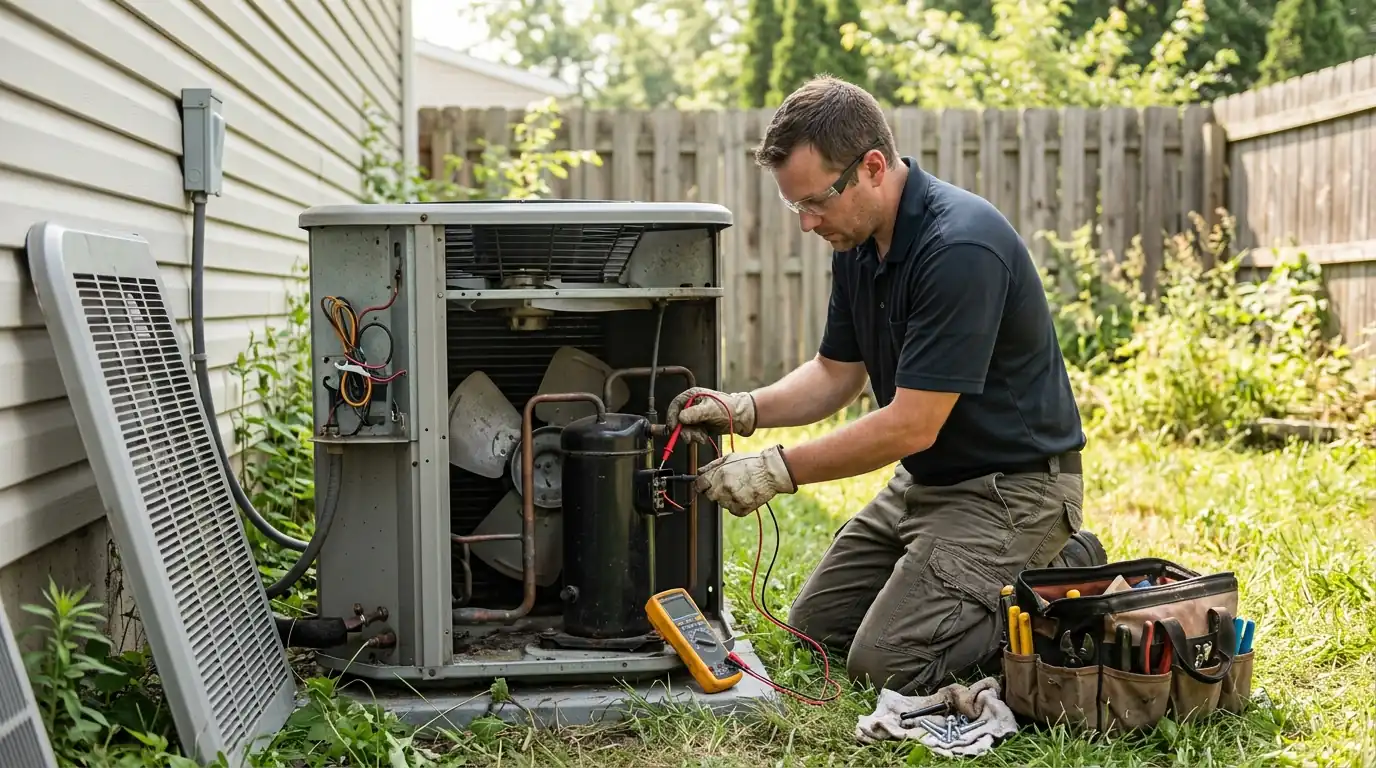
Many compressor problems are caused by parts around it: a weak start or run capacitor, a failed contactor or a condenser fan that let it overheat. Those repairs typically run $167 to $612 in the Kalamazoo area. A failed compressor itself costs $1,870 to $3,640 to replace, which often leads to comparing repair with a new outdoor unit.
The compressor is the pump at the center of an air conditioner or heat pump. It squeezes low-pressure refrigerant vapor into hot, high-pressure gas so the outdoor coil can release heat outside. When it fails to start or loses pumping strength, nothing else in the system can make up for it, and the house warms up quickly on a humid summer day.
Not every compressor complaint means a dead compressor. Many trace to a weak capacitor, a burned contactor, a failed fan motor or an overheated compressor tripped on its internal overload. Our technicians test the windings, start components and pressures before naming the compressor as the cause. You hear the findings and the price first. The line at (269) 360-5258 is answered day and night.
A compressor that hums for a few seconds and then shuts off usually needs a stronger start boost or has a locked rotor.
High current draw on startup trips the breaker, often from a failing capacitor, a shorted winding or a seized compressor.
If the outdoor fan spins and the compressor stays quiet, the compressor may be off on its thermal overload or have an open winding.
Internal mechanical noise can mean worn bearings or a broken valve inside the compressor shell.
A compressor that runs but does not pump well shows normal sound with poor pressures and warm supply air.
Overheating comes from low charge, a dirty condenser coil or a failed fan motor, and it trips the internal overload.
Testing starts with power off. We check the compressor terminals with an ohmmeter, measuring resistance between the common, start and run windings. Readings that do not match, or a winding that reads open or shorted to the shell, tell us the compressor has a real internal fault. If it reads normal but is hot to the touch, the internal overload may simply be open and needs time to cool.
With power restored, we watch amp draw on startup and while running. A compressor that pulls locked-rotor current and will not turn may respond to a hard start kit if the windings are healthy. Once running, suction and discharge pressures show whether it is pumping well. Low head pressure and high suction pressure together usually mean worn valves inside the shell.
A weak run capacitor is the most common reason a compressor struggles to start in July. Replacing it restores the starting boost, and the compressor often runs fine for years afterward. A hard start kit adds an extra boost for older compressors that start slowly, which helps when voltage sags during heat waves. Burned contactor points or loose terminal wires are also quick, inexpensive fixes.
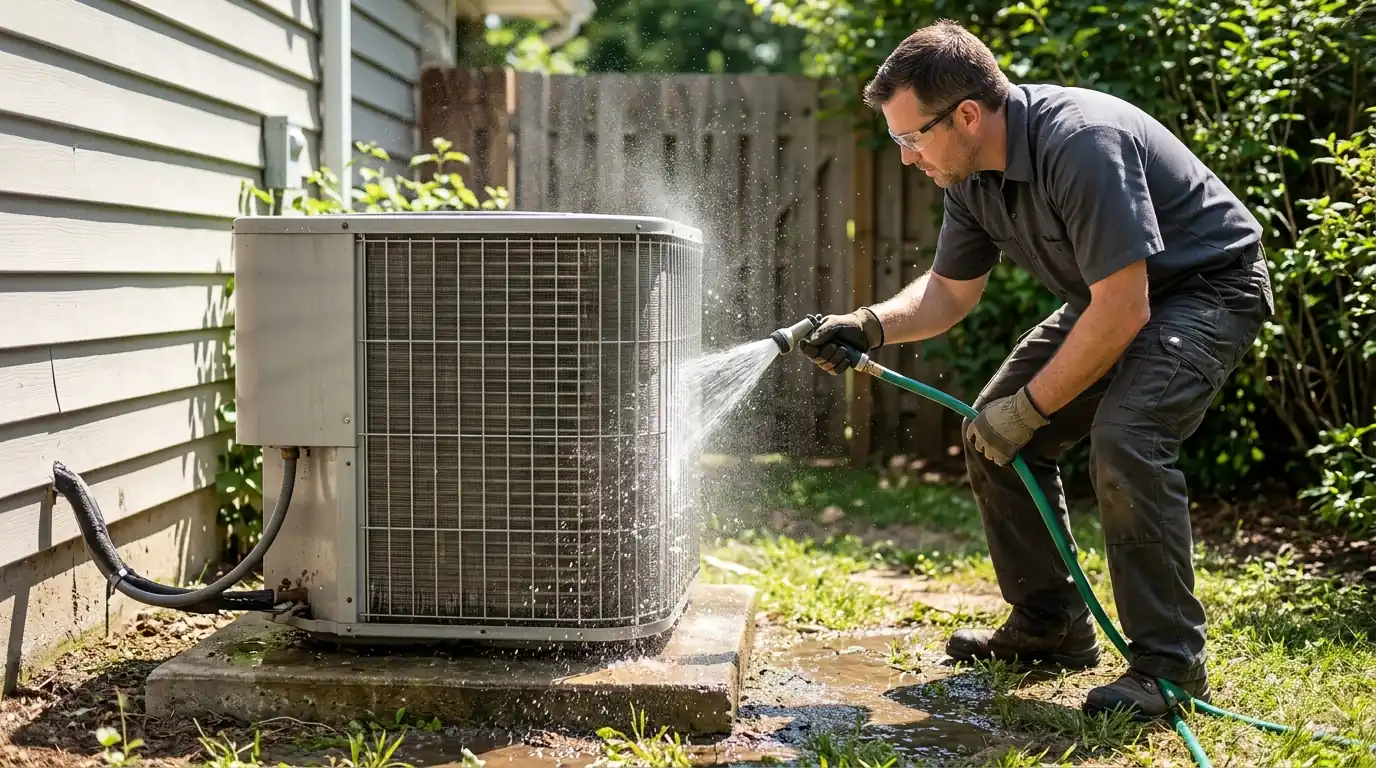
Overheating causes are just as important to fix. A condenser coil packed with cottonwood fluff and grass raises head pressure until the compressor trips. A failed condenser fan motor does the same in minutes. Low refrigerant charge overheats the compressor because the returning vapor carries less cooling. Fixing the root cause protects the compressor from cooking itself on the next hot afternoon.
If a winding is shorted, open or grounded, or the compressor is mechanically seized, it has to be replaced. Compressor replacement is a large job: the refrigerant is recovered, the old compressor is cut out and a new one is brazed in. A new filter drier goes on, and the system is pressure-tested, evacuated and charged. If the old compressor burned out, we also test the oil for acid.
An acidic burnout spreads contamination through the system, so we may add a suction line filter and flush the line set to protect the new compressor. On systems still under manufacturer warranty, the compressor part may be covered, leaving labor and refrigerant as the main costs. We check the warranty status by serial number before quoting, so you know where you stand.
On a system under 8 to 10 years old with a warranty-covered compressor, replacing just the compressor usually makes sense. On an older unit, a new compressor goes into a cabinet with an aging coil, fan motor and electrical parts that will keep wearing. The total spent on repair can come close to the cost of a new, more efficient outdoor unit.
We give you both prices on the same visit, along with the age and condition of the coil and other parts. If the indoor coil is also leaking or the furnace is nearing the end of its life, a full system replacement is often the better investment. If you are considering a heat pump, now is a good time to compare heat pump options as well.
| Work | Typical range |
|---|---|
| Diagnostic visit with compressor tests | $89 to $149 |
| Run capacitor or contactor replacement | $167 to $394 |
| Hard start kit installation | $218 to $412 |
| Condenser fan motor replacement | $386 to $612 |
| Compressor replacement | $1,870 to $3,640 |
Compressor costs vary with tonnage, refrigerant type and warranty status. The technician confirms the final price after testing and before any work begins. Compare more jobs in the furnace and AC price guide.
Keep reading
Central air repair for systems that blow warm, freeze up, trip breakers or leave the house sticky on a humid July day.
Learn moreLeak detection and repair for air conditioners and heat pumps that lose charge, freeze up or need a top-off every season.
Learn moreNew central air sized by load calculation, matched to your furnace and set up to dry out the air in humid Michigan summers.
Learn moreFAQ
It can when the compressor's windings are healthy and the problem is weak starting torque, especially on older units or during low voltage on hot days. It will not fix a shorted winding, a seized compressor or internal valve damage. We test the windings first so a hard start kit is used only where it will help.
The compressor may be overheating and tripping its internal overload. Common causes are a dirty condenser coil, a failing condenser fan motor or low refrigerant. A weak run capacitor can also cause it to draw high current and overheat. Each of these is cheaper to fix than the compressor damage they lead to.
Once the replacement compressor is on site, most jobs take six to ten hours. That includes recovering refrigerant, cutting out the old compressor, brazing in the new one, installing a filter drier, pressure testing, evacuating and charging. Ordering the correct compressor can add a few days, especially in peak summer.
Many manufacturers cover the compressor part for a set period when the system is registered and installed correctly. Labor, refrigerant and other materials are usually not covered by the manufacturer. We check the model and serial number to see whether the part is still under coverage before quoting the repair.
Common causes include running for long periods with low refrigerant, overheating from a dirty coil or failed fan, electrical problems such as voltage spikes or weak capacitors, and moisture or acid in the system from a poor earlier repair. Regular tune-ups and fixing leaks promptly greatly lower the chance of a burnout.
Call any hour. Our office answers, sets the visit and tells you what to expect before a technician arrives.