Your AC is aging out
If the central air is 12 or more years old, replacing it with a heat pump adds efficient heating for a modest step up in cost.
You want one system that heats and cools, but you are not sure a heat pump can handle a Kalamazoo January or whether your ducts and electrical panel are ready for one.
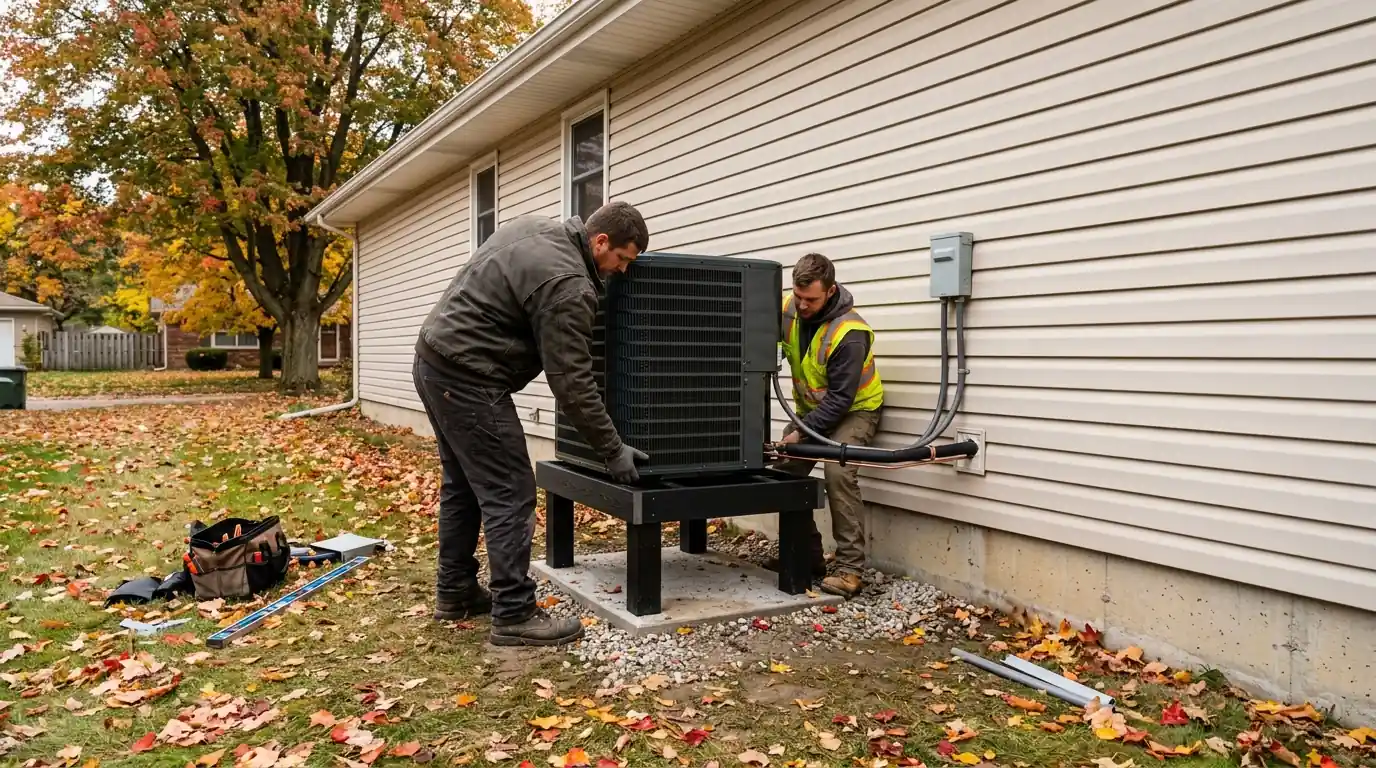
A heat pump installation in Kalamazoo typically runs $7,640 to $16,890, depending on capacity, whether the unit is a cold-climate model, and whether ducts or electrical service need work. A proper job includes a load calculation, a new air handler or coil, a raised outdoor stand for snow, and a commissioning test in both heating and cooling.
A heat pump installed well can carry most of a Southwest Michigan winter on electricity and handle humid summers as a central air conditioner. Installed poorly, it short-cycles, leaves cold rooms and hands the hard nights to expensive backup strips. The difference is mostly in the sizing, the equipment choice and the small details at the outdoor pad and the duct system.
Our installers start with a room-by-room heat loss calculation, not the size of the old unit. We check the ductwork, the electrical service and the spot where the outdoor unit will sit. Then we lay out options, from a cold-climate ducted heat pump to a pairing with your existing gas furnace. The estimate visit has no charge, and you can reach us at (269) 360-5258 any hour of the day.
If the central air is 12 or more years old, replacing it with a heat pump adds efficient heating for a modest step up in cost.
Rural homes heating with propane often see the biggest drop in heating cost by moving most of the load to a heat pump.
Older units built before cold-climate designs lose heat output fast in the teens. A modern replacement holds output much lower.
A new system with variable-speed blower and compressor evens out temperatures that a single-stage unit cannot.
Many homeowners choose a heat pump instead of a straight AC so the furnace runs less during spring and fall.
A heat pump can supply most of a year's heating from electricity while keeping gas or propane as backup for the coldest nights.
Heating load drives the size of a heat pump in Michigan, not cooling. We measure walls, windows, ceiling insulation and air leakage, then calculate how much heat the house loses at a design temperature near zero. That number tells us what the heat pump must deliver at that temperature, and we pick equipment whose rated output at 5 degrees meets as much of it as practical.
Oversizing to chase the coldest night is a common mistake. A unit that is too big for July will short-cycle and leave the house clammy in humid weather. Variable-speed cold-climate models solve much of this by ramping down in mild weather and ramping up hard when the temperature drops, which is why we recommend them for most Kalamazoo homes we survey.
Heat pumps move more air than many older furnaces, so we check that the return and supply ducts can carry it without whistling. Undersized returns are common in post-war ranch homes and are often the reason a new system sounds loud. Where ducts fall short, we add a return or resize a trunk as part of the job rather than leaving you with a noisy system.
On the electrical side, the heat pump and any backup strips need dedicated circuits, and some older 100 amp panels need upgrading. Outdoors, we set the unit on a raised stand so it sits above typical snow depth and drains meltwater from defrost cycles. We keep it clear of roof drip lines and dryer vents, and leave room for service on every side.
Every heat pump in this climate needs a plan for the coldest stretch. The simplest is electric resistance strips in the air handler, which work well in homes with good insulation and a cold-climate unit that rarely needs them. In homes with an existing gas furnace, keeping the furnace as backup and adding the heat pump on top is often the better fit.
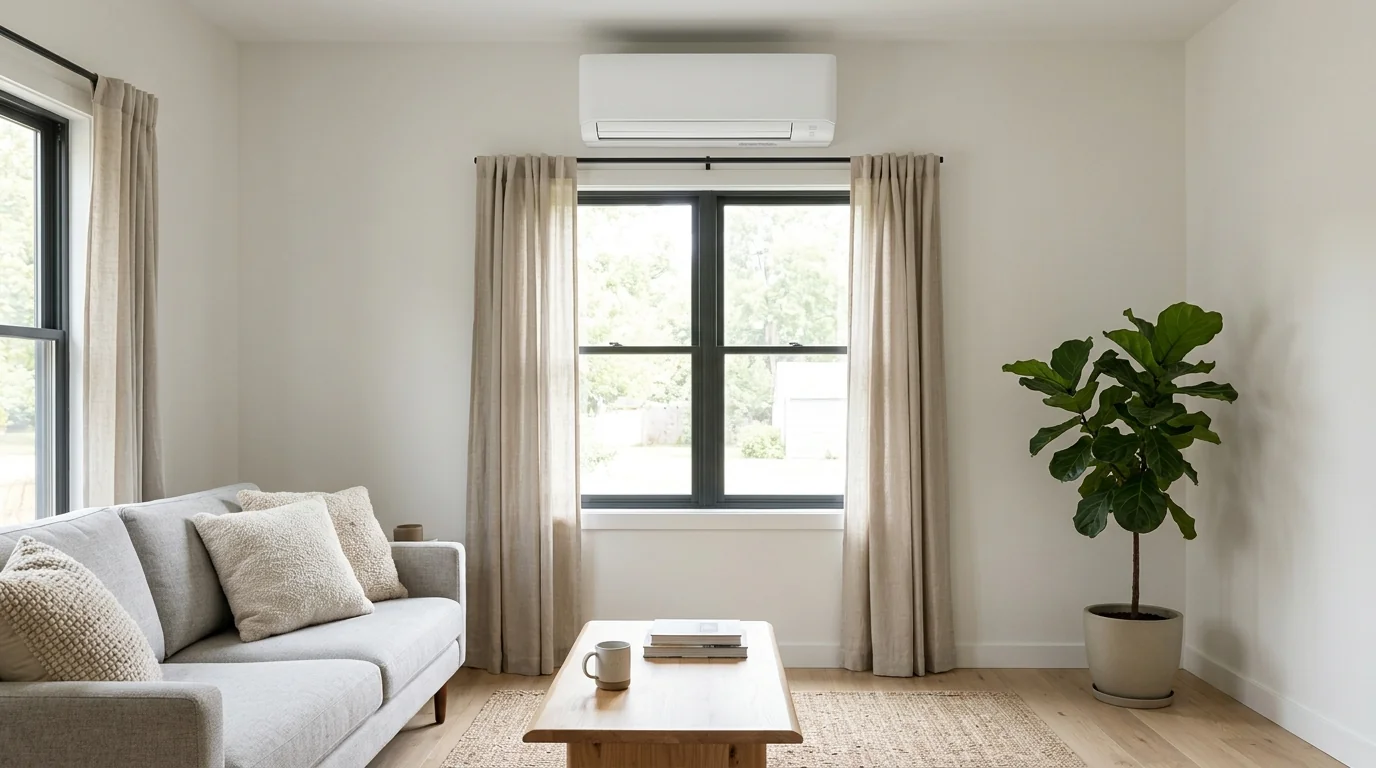
That second approach is called a dual-fuel system, and the thermostat switches between the two based on outdoor temperature or energy cost. For houses with no ducts at all, such as older homes heated by radiators, we usually suggest ductless mini-splits instead of adding ductwork. We walk through each choice with estimated operating costs for your house and your fuel.
Installation is not finished when the unit turns on. We weigh in the refrigerant charge, measure superheat and subcooling, set blower speed to match the duct system, and configure the thermostat for the correct backup lockout temperature. Then we run a forced defrost cycle to confirm the outdoor coil clears properly and the backup heat stages in only when needed.
During the first cold snap, expect the system to run long, quiet cycles with mild supply air. That is normal heat pump behavior, not a sign of trouble. We show you how to read the thermostat so you can tell heat pump operation from backup heat, and how to keep snow clear of the outdoor unit. If something looks off, one call gets a technician out.
| Work | Typical range |
|---|---|
| Standard ducted heat pump with air handler | $7,640 to $11,280 |
| Cold-climate variable-speed heat pump system | $10,470 to $16,890 |
| Heat pump added to an existing gas furnace | $5,980 to $9,740 |
| Electrical panel or circuit upgrade | $687 to $2,940 |
| Return air or duct modifications | $594 to $2,315 |
These bands cover most heat pump projects we quote in the region. The final price is set after our installer surveys your home, and the estimate visit has no charge. Compare more jobs in the furnace and AC price guide.
Keep reading
Diagnosis and repair for heat pumps that ice up, blow lukewarm air or lean on backup heat through a Michigan winter.
Learn moreA heat pump paired with a gas or propane furnace, switching between the two so each runs when it costs the least.
Learn moreNew and replacement duct systems designed from room loads, with sealed sheet metal trunks, sized branches and added returns.
Learn moreFAQ
It depends on insulation, windows and air leakage more than square footage. Many 1,500 to 2,200 square foot homes here land between 2 and 4 tons, but the only reliable answer comes from a heat loss calculation. Sizing by the old unit's label often leads to a system that is too big for summer.
Yes, and many Kalamazoo homeowners do. The heat pump replaces the central air conditioner and handles heating in milder weather, while the furnace takes over on the coldest nights. The existing ducts and furnace blower stay in use, which usually keeps the project cost lower than a full system change.
Not always. Many 150 and 200 amp panels have room for a heat pump and backup strips. Older 100 amp panels, common in early and mid-century homes, may need an upgrade or a load calculation to confirm capacity. We check the panel during the estimate visit so there are no surprises on install day.
In Southwest Michigan we typically set heat pumps 12 to 24 inches above grade on a stand. That keeps the coil above normal snow depth and gives defrost meltwater a place to drain instead of refreezing under the unit. Shore towns with heavier lake-effect snow often get the taller end of that range.
Often it does, but heat pumps need steady airflow, and older ducts may have undersized returns or leaky joints. We measure static pressure during the survey. If the numbers are high, we recommend specific fixes such as an added return or sealed trunk lines so the new system runs quietly and delivers its rated output.
Call any hour. Our office answers, sets the visit and tells you what to expect before a technician arrives.