Radiator home with no central air
Early 1900s homes with steam or hot-water heat can add cooling and shoulder-season heat without tearing open walls for ducts.
A room in your house never gets comfortable, or your older home has radiators and no ductwork, and window air conditioners are the only thing keeping summer bearable.
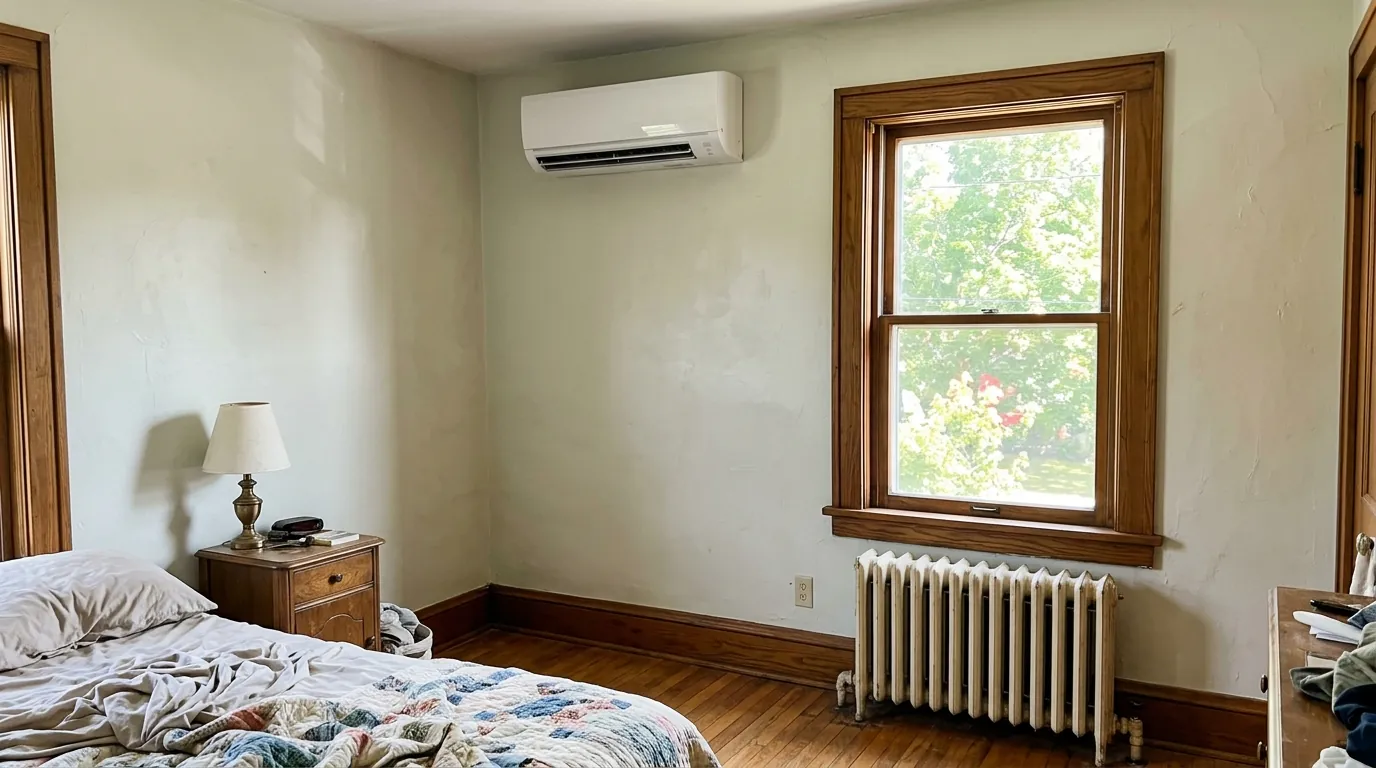
A single-zone ductless mini-split typically costs $3,870 to $6,240 installed in the Kalamazoo area, and multi-zone systems serving three to five rooms run $9,180 to $18,460. Price depends on the number of heads, the head style, the length and route of the line set, and the electrical work needed at the panel.
Ductless mini-splits are small heat pumps that serve one room or zone through an indoor head connected to an outdoor unit by a thin refrigerant line. No ducts are needed, so they fit homes that were built for radiators, sunrooms that were added later and upstairs bedrooms that overheat in July. Cold-climate models also heat well into a Michigan winter, which makes them far more than a summer cooling option.
Our installers plan where each head goes, how the line set runs and where the outdoor unit can sit above the snow. We size every zone to its room, since an oversized head in a small bedroom short-cycles and leaves the air damp. You get the plan and a price before anything is drilled, and the estimate visit has no charge. Call (269) 360-5258 any hour to set it up.
Early 1900s homes with steam or hot-water heat can add cooling and shoulder-season heat without tearing open walls for ducts.
Finished attics and half-story bedrooms in older Kalamazoo homes often sit 8 to 10 degrees warmer than the main floor all summer.
Extending existing ducts to a new space often fails to keep it comfortable. A dedicated head handles that room directly.
Insulated garages and rooms over garages are a natural fit for a single-zone unit that heats and cools on its own schedule.
Window air conditioners block light, leak cold air in winter and are noisy. A wall head runs at a fraction of the sound.
Replacing baseboard heat or supplementing propane with a mini-split can cut heating cost in the rooms you use most.
Where the indoor head goes decides how well the room feels. Wall heads work best high on an outside wall with a clear throw across the room, while ceiling cassettes suit kitchens and open spaces where wall area is scarce. Floor consoles fit under windows in older homes and send warm air low where it is most needed in winter. We look at furniture, curtains and doorways before choosing.
The line set, drain line and power cable run together from the head to the outdoor unit. On a single-story house that is often a short, straight path through the wall. In multi-story homes we plan routes through closets, attic space or a covered exterior line hide painted to match the siding. The condensate drain needs a steady downward slope, or a small pump where gravity will not work.
A single-zone system pairs one outdoor unit with one indoor head. It is the simplest and usually the most efficient choice for one problem room. Multi-zone systems connect two to five heads to a single outdoor unit, which saves space outside but means every zone shares one compressor. For a whole radiator house, we sometimes recommend two smaller systems instead of one large one.
Each head is sized to its room using a load calculation rather than a rule of thumb. A 9,000 BTU head is plenty for many bedrooms, while a living room with large windows may need 12,000 to 18,000. Undersized heads run flat out in January, and oversized heads cycle on and off in humid weather without pulling enough moisture out of the air.
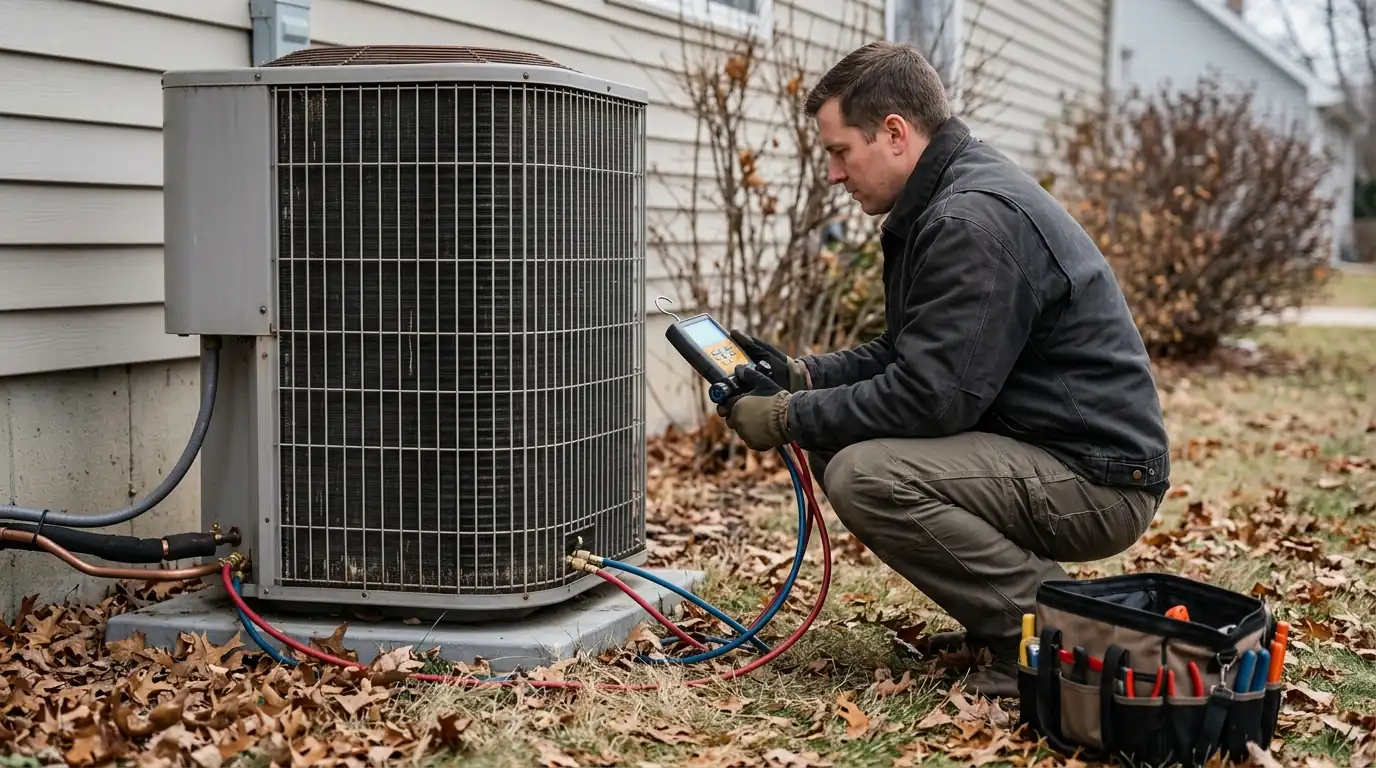
Cold-climate mini-splits keep producing useful heat well below zero, which is why they work as a primary heat source in many rooms here. In homes with a boiler, they often take over heating in spring and fall so the boiler runs only in deep winter. That split can lower fuel use while keeping the radiators as a dependable backup for the coldest week.
Summer humidity matters as much as heat. Mini-splits with variable-speed compressors run long, gentle cycles that pull moisture from the air, so rooms feel drier at the same temperature. Outdoors, we set the condenser on a wall bracket or raised stand to keep it above drifting snow, and away from roof edges where meltwater can drip and freeze on the coil.
A single-zone install usually takes one day. We mount the head bracket, drill a three-inch hole for the line set, set the outdoor unit and run a dedicated circuit from the panel. Then we pressure-test the line set with nitrogen, pull a deep vacuum and release the factory charge, adding refrigerant only when the measured line length calls for it.
Before we leave, we run the system in heating and cooling, check the drain flow and show you the remote, the filter screens and the modes worth using. Washable filters in the head need rinsing every few weeks during heavy use. If a head ever starts dripping or blowing weak air, our mini-split repair team can diagnose it on the same 24/7 line.
| Work | Typical range |
|---|---|
| Single-zone wall head system | $3,870 to $6,240 |
| Two-zone system | $6,590 to $10,370 |
| Three to five zone system | $9,180 to $18,460 |
| Ceiling cassette or floor console upgrade per head | $486 to $1,170 |
| New circuit or panel work | $394 to $1,860 |
Typical installed ranges for the Kalamazoo area. Our installer confirms the price after seeing the rooms, the wall construction and the electrical panel. Compare more jobs in the furnace and AC price guide.
Keep reading
Repairs for mini-split heads that drip, flash error codes, blow weak air or stop heating when the weather turns cold.
Learn moreVenting, balancing, valve repair and pipe pitch corrections for steam and hot-water radiator systems in older homes.
Learn moreCold-climate heat pumps sized to your home with a load calculation, set up to heat through January and cool in July.
Learn moreFAQ
It can in a well-insulated home with an open layout and a cold-climate system sized correctly. In most older Kalamazoo houses, mini-splits handle the main living spaces and existing radiators or a furnace cover the coldest nights. We look at your layout and insulation before recommending how much of the load to put on ductless.
Usually about three inches across, drilled through the wall behind the indoor head. The line set, drain and control cable pass through it together, and it is sealed inside and out. On brick or stone walls we use a core bit and seal the opening so weather and insects cannot get in.
Wall heads are visible, but placement helps a lot. In historic homes we often use floor consoles under windows, where radiators once sat, or concealed slim-duct units hidden in a closet or attic. Exterior line hides can be painted to match trim so the line set blends into the house.
No. A multi-zone outdoor unit can serve two to five indoor heads. Separate single-zone units are sometimes the better choice when rooms have very different loads or when you want one zone to keep running if another system needs service. We price both approaches when it makes sense.
Yes, if the garage is insulated and the door seals reasonably well. A single-zone heat pump keeps a workshop usable in winter and cool in summer. For an uninsulated garage that only needs heat, a gas garage heater is usually the more practical choice.
Call any hour. Our office answers, sets the visit and tells you what to expect before a technician arrives.