No service in over a year
Coils lose efficiency gradually, and capacitors weaken without warning. A yearly check catches both before they cause a breakdown.
Your air conditioner sat idle all winter under snow and leaves, and you would rather find the weak capacitor or clogged drain in May than on the first 90 degree day.
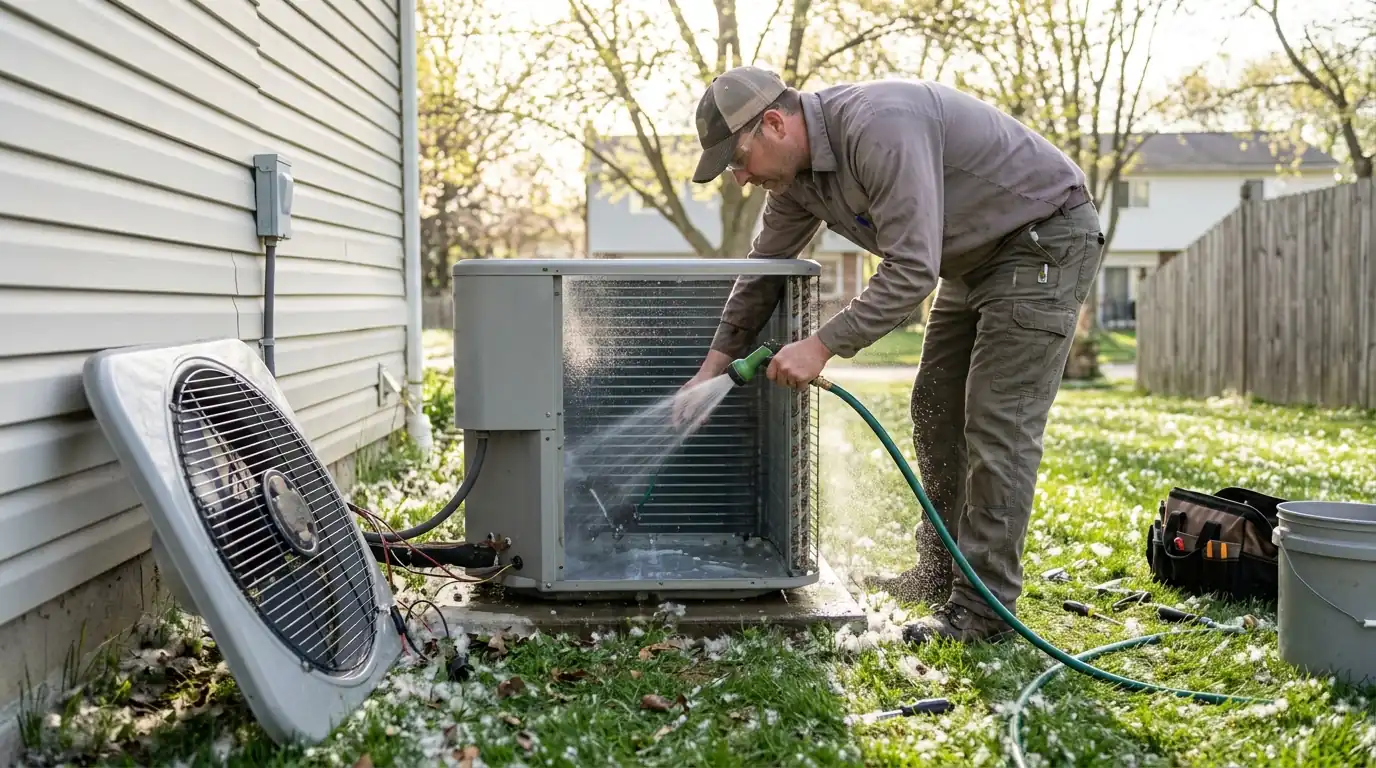
An AC tune-up in the Kalamazoo area typically costs $119 to $187 and takes about an hour. It includes cleaning the condenser coil, testing the capacitor and contactor, flushing the condensate drain, checking refrigerant pressures and temperature drop, and inspecting the filter and blower. The best time is April or May, before cooling season starts.
A Michigan air conditioner spends half the year sitting still outdoors. Cottonwood fluff, grass clippings and leaves pack into the condenser fins, mice nest in the cabinet, and the condensate drain dries out and fills with algae. By June, the system has to push through all of it during the hottest, most humid stretch of the year, which is exactly when parts tend to fail.
An AC tune-up from our technicians cleans the parts that matter for performance and tests the ones most likely to fail. We measure the system under load and give you a written list of what we found, with anything that needs attention priced before we touch it. Spring visits fill up quickly as the weather warms, and the phone at (269) 360-5258 is answered 24/7.
Coils lose efficiency gradually, and capacitors weaken without warning. A yearly check catches both before they cause a breakdown.
Cottonwood seeds and grass clippings build a felt layer on the coil that blocks airflow and raises operating pressure.
A dirty coil and slightly low charge can raise energy use noticeably even while the system still keeps up.
A partially clogged drain may have overflowed last summer, leaving stains on the floor or ceiling below the coil.
Rattles, clicks or a fan that sounds rough at startup often point to loose panels, worn bearings or a weakening capacitor.
Many manufacturer warranties expect regular maintenance, and a dated service record is useful if a part fails later.
Every tune-up starts with shutting off power at the disconnect and opening the condenser. We clear debris from inside the cabinet, straighten bent fins and rinse the coil from the inside out so dirt washes away instead of being pushed deeper. Then we inspect the fan blade, motor bearings, wiring and the contactor points for pitting or insect damage before restoring power for the run test.
Indoors, we check the filter, the blower wheel and motor, and the evaporator coil face where it can be seen. The condensate drain gets flushed and the trap cleared, and we test the overflow float switch so it will shut the system down if the drain ever backs up. Finally, we run the system long enough to stabilize and take full readings.
The first heat wave usually arrives in late May or June, and when it does, every weak air conditioner in the area fails at about the same time. Booking a tune-up in April or early May gets you a flexible appointment and gives time to order any parts the technician finds failing. Running the system for a test on a mild day is also easier on the equipment.
Spring is also when cottonwood trees release their seeds, which coat condenser coils across Kalamazoo neighborhoods within a few days. If your unit sits near cottonwoods or tall grass, a light rinse of the coil in early summer, after the fluff stops falling, can help. We show you how to do it safely with a garden hose and the power off.
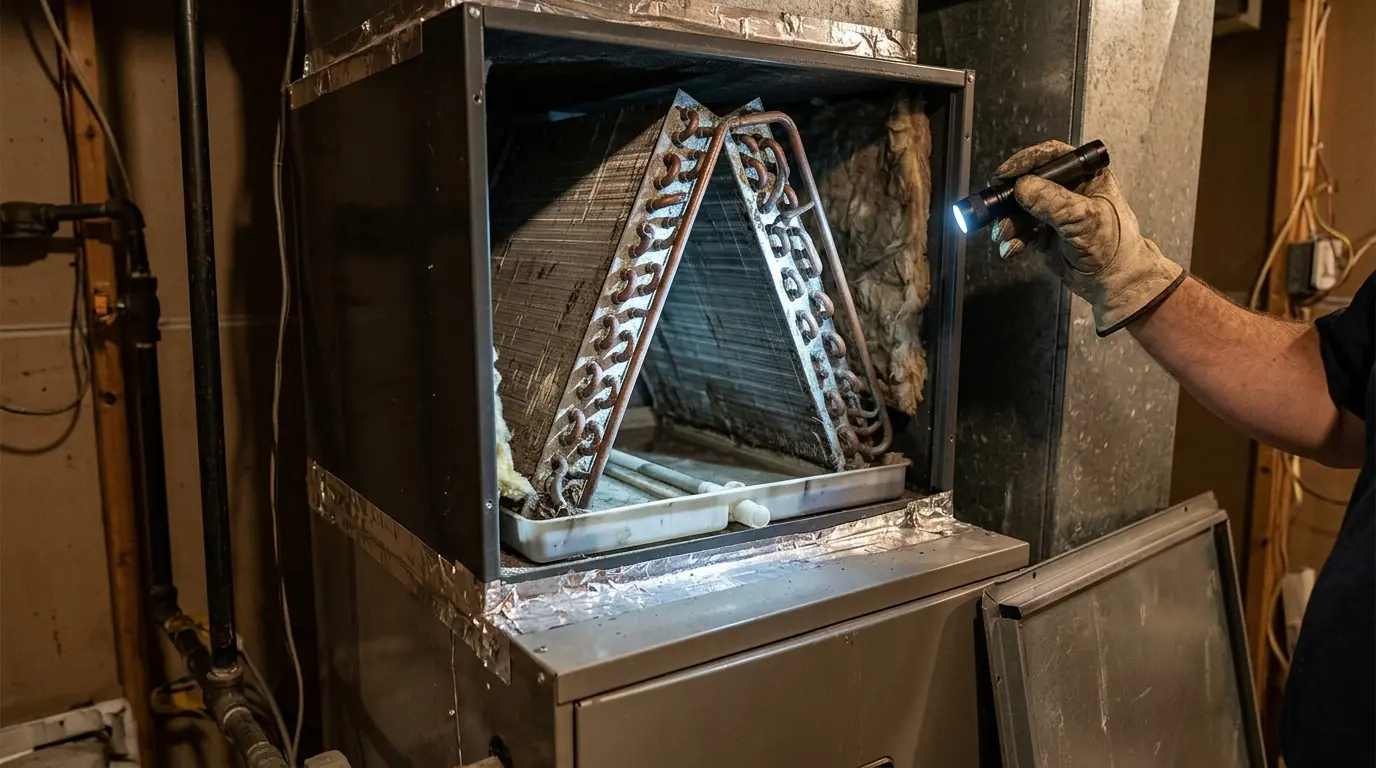
A tune-up is only useful if it measures how the system performs, not just how it looks. We record suction and discharge pressures, calculate superheat or subcooling against outdoor and indoor conditions, and measure the air temperature drop across the coil. Those numbers tell us whether the charge is correct and whether the coil is moving enough heat to handle a humid July afternoon.
We also measure amp draw on the compressor and condenser fan motor and compare it to the nameplate. Rising amps over several years can show a compressor that is starting to wear. If charge is low, we do not just top it off and leave. Low charge means a leak, and we explain the leak repair options before adding anything.
Most of what we find on spring visits is minor: a capacitor reading below the value printed on its label, a contactor with burned points, a loose wire, a drain trap full of slime or a filter that has been in place too long. Replacing a weak capacitor in May costs far less than an emergency visit after it fails and the compressor overheats trying to start.
If you want both the furnace and the air conditioner checked each year, our maintenance plan covers a fall heating visit and a spring cooling visit together on one schedule. Between visits, change the filter every one to three months, keep at least two feet of clearance around the outdoor unit, and keep mowers from blowing clippings directly into the coil.
| Work | Typical range |
|---|---|
| Standard AC tune-up | $119 to $187 |
| Heat pump tune-up (heating and cooling checks) | $139 to $214 |
| Run capacitor replacement found during tune-up | $148 to $296 |
| Evaporator coil cleaning | $186 to $437 |
Typical Southwest Michigan prices. Any repair found during a tune-up is quoted on the spot and only done with your approval. Compare more jobs in the furnace and AC price guide.
Keep reading
Central air repair for systems that blow warm, freeze up, trip breakers or leave the house sticky on a humid July day.
Learn moreTwo visits a year, furnace in fall and AC in spring, with priority scheduling when your home needs a repair.
Learn moreA fall furnace tune-up that cleans, measures and tests ignition, combustion and airflow before the first hard freeze.
Learn moreFAQ
Once a year is the usual recommendation, ideally in spring. Michigan systems sit idle for months and then run hard through humid summers, so a yearly cleaning and test catches weak parts before they fail. Homes near cottonwoods, farm fields or busy roads may benefit from an extra coil rinse midsummer.
Yes, with care. Turn off power at the disconnect first, then spray gently from the inside out if you can reach it, or straight on from outside at low pressure. Never use a pressure washer, which flattens the fins. A homeowner rinse helps between visits but does not replace electrical and refrigerant checks.
A tune-up includes checking the refrigerant charge, but adding refrigerant is a separate item. A sealed system should not lose charge, so a low reading means there is a leak. We tell you what we measured and explain whether leak testing, a repair or a small charge adjustment makes sense for your system.
Remove any cover you placed over the unit, clear leaves and debris from around it, and change the furnace filter. Check that the condensate drain is not blocked. Then turn the thermostat to cool on a mild day and listen for unusual noises. A spring tune-up handles the deeper cleaning and testing.
A full plastic cover can trap moisture and invite rodents, so we generally do not recommend one. A breathable top cover or a board over the top can keep icicles and falling debris out. Never cover a heat pump, since it runs all winter and needs open airflow through the coil.
Call any hour. Our office answers, sets the visit and tells you what to expect before a technician arrives.