Garage too cold to work in
If you put off projects until spring because the garage sits near outdoor temperature, a permanent heater fixes that.
Your garage or workshop is too cold to use from November to March, and a portable heater barely takes the edge off while the tools and paint freeze.
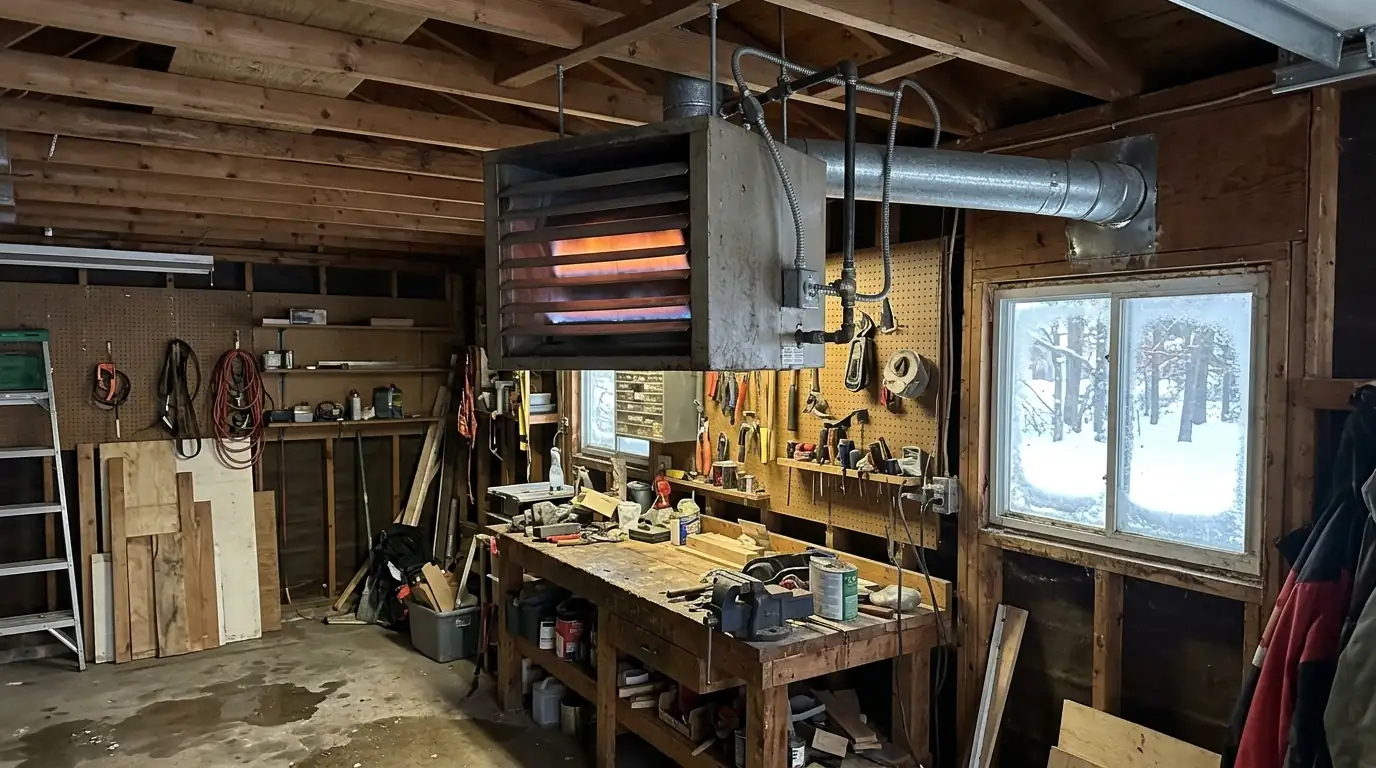
A vented natural gas or propane unit heater is the most common choice for Michigan garages. A two-car garage typically needs 45,000 to 60,000 BTU depending on insulation. Installed cost in the Kalamazoo area usually runs $1,780 to $3,960, including the heater, venting, gas line, wiring and thermostat. Electric heaters suit smaller, well-insulated spaces.
A Michigan garage loses heat fast. Big overhead doors, thin walls and a slab floor pull warmth out as soon as it is made, which is why a portable heater rarely keeps up. A permanently mounted, vented heater sized for the space can hold a workable temperature all winter, keep water lines and stored liquids from freezing and dry the snow off a car overnight.
Our installers mount garage heaters in attached garages, detached two-car garages, home workshops and pole barns across Southwest Michigan. The job covers the heater, the venting, the gas or propane line, the electrical connection and a thermostat. Every unit we install is vented outdoors, because an unvented heater burning fuel in a closed garage adds moisture and combustion gases to the air.
If you put off projects until spring because the garage sits near outdoor temperature, a permanent heater fixes that.
Plumbing that runs through the garage or along its walls can freeze on subzero nights.
Latex paint, glues and some cleaners are ruined by freezing and need storage above freezing.
A bedroom over an unheated garage stays cold. Heating the garage modestly can help that room.
Portable kerosene or propane heaters add fumes and moisture and need constant attention.
Slush tracked in by the car stays on the slab all winter in an unheated garage.
Forced-air unit heaters are the most common choice. They hang from the ceiling, burn natural gas or propane, and push warm air across the space with a fan. They heat quickly, which suits a garage that is used a few hours at a time. Separated combustion models draw outside air for burning, which keeps sawdust and fumes out of the burner and makes them a good fit for wood shops.
Infrared tube heaters warm surfaces and people rather than the air. They work well in tall pole barns and garages where the door opens often, because the floor and objects stay warm even when cold air rushes in. Electric unit heaters are simpler to install and need no venting, but they cost more to run and are best for small, well-insulated spaces such as a single-car garage.
Sizing depends on floor area, ceiling height, insulation and how warm you want the space. An uninsulated two-car garage held at 50 degrees on a zero-degree night needs far more heat than an insulated one held at 40. Our installers measure the space, look at the walls, ceiling and door, and size the heater for the coldest weather Kalamazoo typically sees, not an average day.
Oversizing a garage heater is less of a problem than oversizing a house furnace, but it still wastes fuel and causes temperature swings. Undersizing is worse, since the heater runs constantly and never catches up. If the garage has no insulation at all, the installer will mention it, since adding batts to the walls and insulating the door often lets you buy a smaller heater.
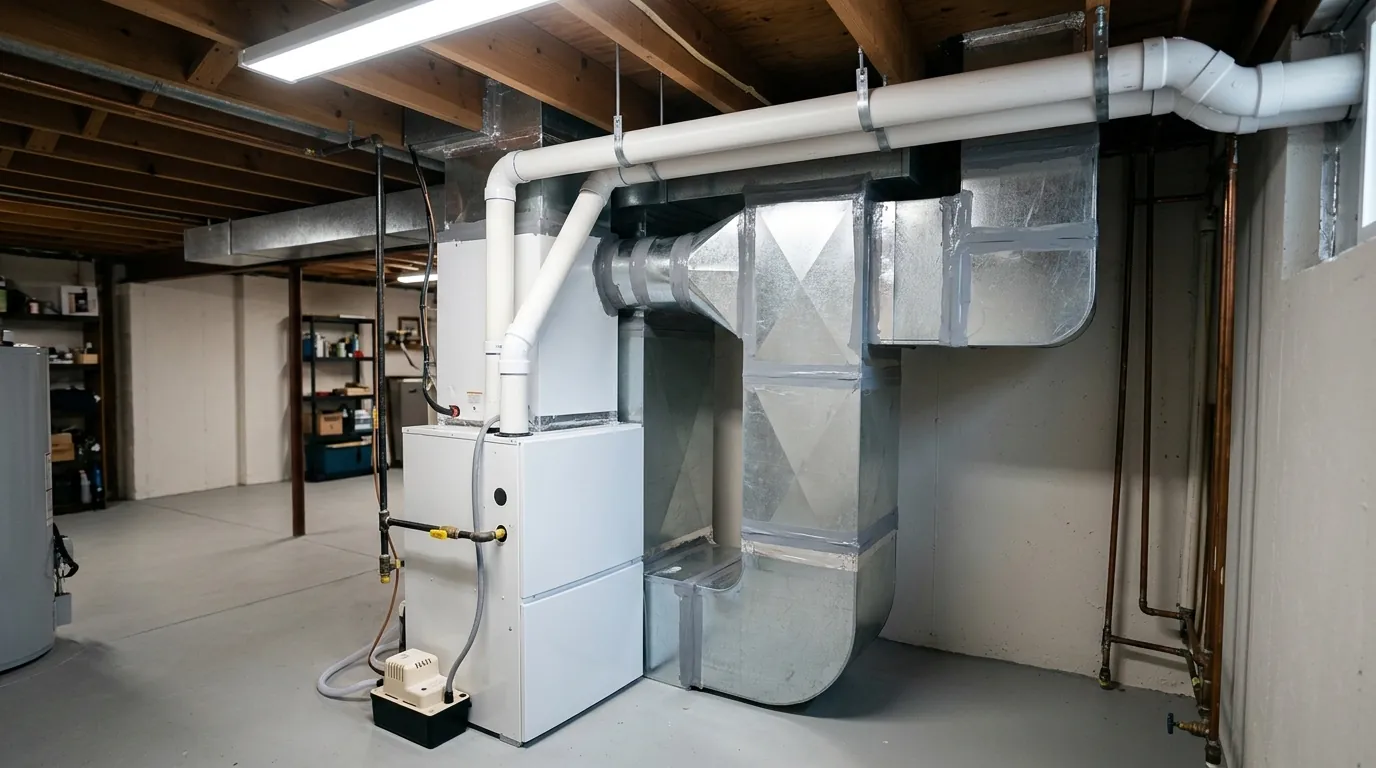
Most garage heaters need a new gas or propane line from the house piping or the propane regulator. The installer checks that the existing meter and pipe sizes can handle the added load along with the furnace and water heater, then runs black iron or approved flexible pipe to the heater with a shutoff and drip leg. Detached garages may need an underground run, which is planned with you before the job.
Venting runs through a wall or the roof, with clearances from windows, doors and the overhead door track. The heater is hung high enough to stay clear of vehicles and ladders, typically in a corner aimed across the space. The thermostat goes on an inside wall away from the door so cold drafts do not fool it. For the gas work alone, see our gas line installation service.
Garages hold gasoline, solvents and dust, so placement matters. Heaters are mounted well above the floor where heavy gasoline vapors collect, and they are kept clear of storage shelves. Each install ends with a gas leak test, a combustion check and a carbon monoxide reading near the heater. We also recommend a CO alarm in any attached garage that shares a wall with living space.
A garage heater needs a yearly look, best done in the fall alongside a furnace tune-up. The technician cleans the burner and fan, checks the vent for nests and confirms the igniter and safety controls work. Workshops with heavy dust may need a mid-season cleaning, since sawdust on the fan blades and heat exchanger reduces output and can create an odor.
| Work | Typical range |
|---|---|
| Gas or propane unit heater, attached garage | $1,780 to $3,240 |
| Separated combustion unit heater, workshop | $2,460 to $3,960 |
| Infrared tube heater, pole barn or tall garage | $2,890 to $5,370 |
| Electric unit heater with circuit | $887 to $1,940 |
| Underground gas run to a detached garage | $648 to $1,870 |
Typical installed ranges for Southwest Michigan. The final price depends on heater size, distance from the gas supply and venting route, and is set after the installer sees the space. Compare more jobs in the furnace and AC price guide.
Keep reading
New gas piping for furnaces, ranges, dryers, generators, garage heaters and outdoor grills, sized for load and pressure tested.
Learn moreA fall furnace tune-up that cleans, measures and tests ignition, combustion and airflow before the first hard freeze.
Learn moreRepair, tune-ups and conversions for propane furnaces in rural Southwest Michigan homes, from regulators to burner orifices.
Learn moreFAQ
Most insulated two-car garages in Southwest Michigan do well with 45,000 to 60,000 BTU. An uninsulated garage, a tall ceiling or a three-car layout can push that higher. The installer measures the space and checks the insulation so the heater can hold your target temperature on the coldest nights.
Usually yes. The installer adds up the BTU load of every gas appliance and checks it against the meter and pipe sizes. Most homes have room for a garage heater. If the piping is too small for the added load, a larger line is run from the meter so the furnace never runs short of gas.
Yes, when the heater is vented outdoors and mounted high, as the manufacturer requires. Gasoline vapors are heavy and stay near the floor, so a ceiling-hung unit is well above them. Never run a car with the garage door closed, and keep a CO alarm in an attached garage.
Insulating first is often the better investment. Batts in the walls and ceiling and an insulated garage door can cut the heat a garage needs by a large margin, which means a smaller heater and lower fuel use. The installer can size the heater either way and will note how much insulation would change it.
Yes. Many homeowners set the thermostat around 40 degrees to protect plumbing and stored liquids, then raise it when they want to work. A vented unit heater handles that well. Running it low costs much less than heating to room temperature, and the garage warms quickly when you turn it up.
Call any hour. Our office answers, sets the visit and tells you what to expect before a technician arrives.