No heat in freezing weather
Indoor temperature falling with an outdoor reading below 20 degrees is a true emergency for pipes and people.
The heat quit after dark, the indoor temperature is dropping by the hour, and waiting until Monday is not an option with pipes, pets and family in the house.
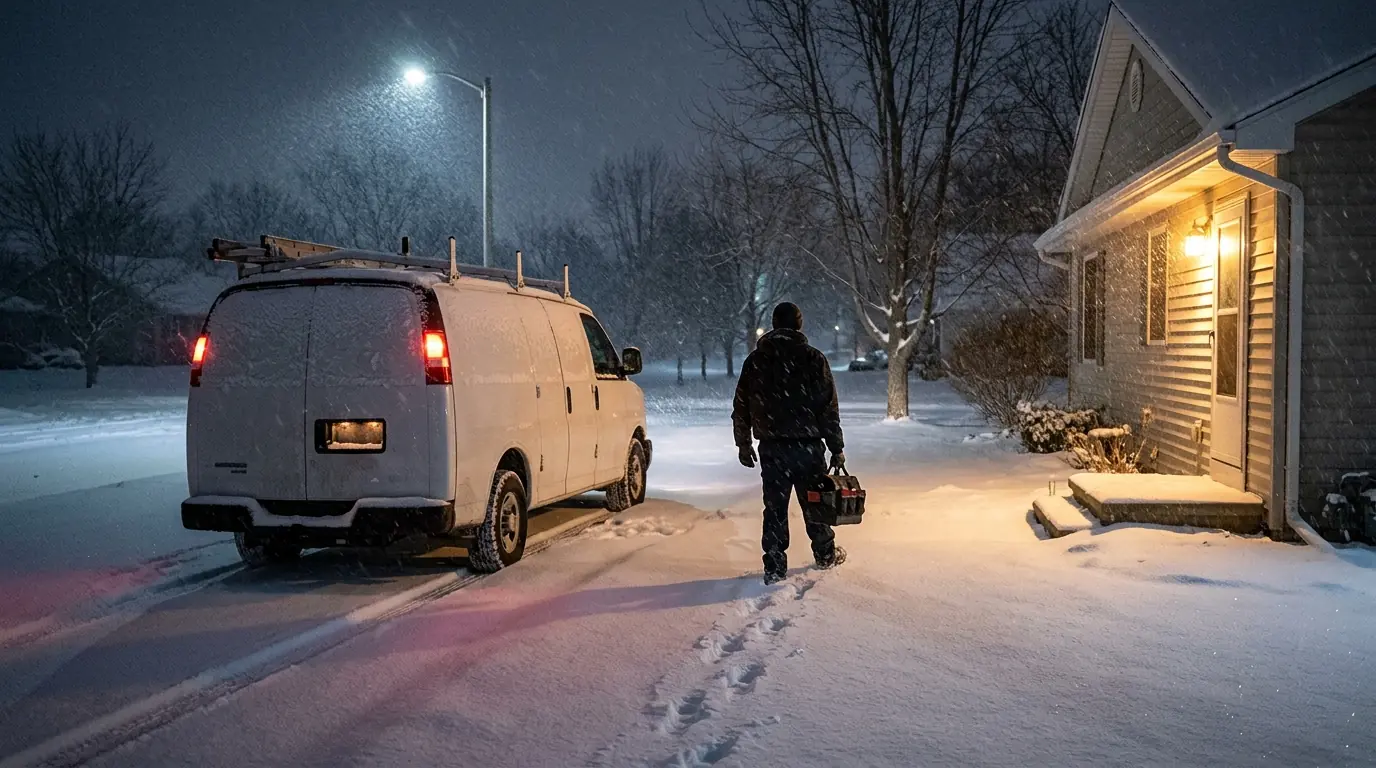
Call (269) 360-5258 any time. A technician is dispatched to diagnose the furnace, boiler or heat pump and restore heat, usually with parts carried on the truck. While you wait, check the thermostat, the breaker, the furnace switch and the filter. If you smell gas, leave the house first and call Consumers Energy from outside.
Heating emergencies in Southwest Michigan rarely happen on a mild afternoon. They show up at 11 p.m. during a lake-effect storm, on Christmas Eve, or on the coldest morning of February when every system in the county is running flat out. Our phone line is answered around the clock by a real person, and on-call technicians cover nights, weekends and holidays.
An emergency call covers every heating system we service: gas and propane furnaces, hot-water and steam boilers, heat pumps and ductless units. The goal on the first visit is to restore safe heat. Most of the time that means a full repair on the spot. When a part has to be ordered, the technician sets up the safest temporary heat possible and explains exactly what happens next.
Indoor temperature falling with an outdoor reading below 20 degrees is a true emergency for pipes and people.
Leave the home, call the gas utility from outside and do not operate switches. Call us once the utility clears the leak.
Get everyone outside and call 911. A technician can then find the source once emergency crews have checked the home.
High pressure with water at the relief valve needs attention right away. Shut the boiler off at its switch.
A hot motor or shorted wire can smell like scorched plastic. Turn the system off at the switch and call.
An outdoor unit encased in ice will not defrost on its own and leaves backup strips running at high cost.
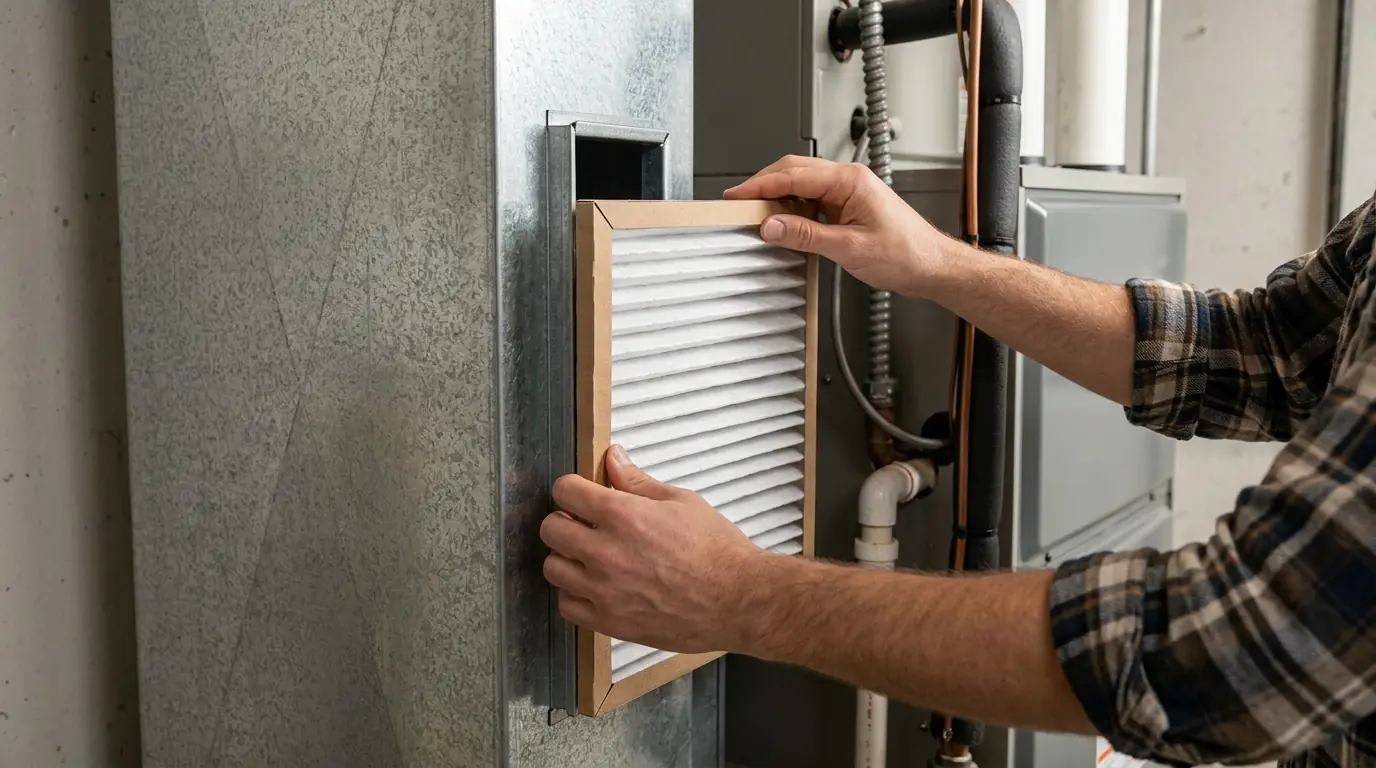
Start with the simple checks, because they solve a fair number of after-hours calls. Make sure the thermostat is set to heat and has working batteries. Look for a tripped breaker labeled furnace or boiler, and confirm the service switch near the unit is on. Pull the filter and hold it to a light. A filter you cannot see through can trip a furnace's limit switch on its own.
If those checks do not bring heat back, call before the house gets too cold. Tell us what you see: a blinking light code, a boiler pressure reading, a frozen heat pump or a quiet unit with no lights. That detail helps the technician bring the likely part. Close blinds and interior doors to hold heat, and open cabinet doors under sinks on outside walls.
Most homes in the Kalamazoo area hold heat for several hours after a system stops, but older houses with little wall insulation and homes on crawlspaces cool faster. Let faucets on outside walls drip slowly, and keep the garage door closed if plumbing runs along it. Space heaters can bridge the gap if they are placed on a hard floor, away from bedding and curtains.
Never use an oven, a grill or a portable generator indoors to make heat, since each one can fill a house with carbon monoxide. If anyone in the home is elderly, an infant or medically fragile, tell us on the call so the dispatch can be prioritized. For homes heated with boilers, check the basement for any water on the floor, which can point to a failed relief valve or a split pipe.
On furnaces, the most frequent overnight fixes are cracked igniters, failed flame sensors, frozen condensate lines, burned-out inducer motors and blown control board fuses. On boilers, it is usually a stuck circulator pump, a failed thermocouple or a low-water cutoff that tripped. Heat pumps tend to fail on defrost controls, contactors and capacitors. Our trucks carry these parts year round.
Sometimes the fix is outside the house. A sidewall vent buried by a plow ridge, an ice-blocked intake or a snow-packed condensate outlet can shut down an otherwise healthy furnace. The technician clears it, restarts the system and may recommend a raised vent kit if drifts reach that wall every winter. If the cause is a deeper problem, the next step is a scheduled furnace repair visit or a boiler repair once the part arrives.
A cracked heat exchanger, a failed gas valve that has to be ordered, or a boiler with a leaking section cannot always be fixed in the middle of the night. In those cases the technician makes the equipment safe, shuts off anything that should not run, and sets up the best temporary heat available. You will know which part is needed and when it is expected.
If replacement is the right answer, you get options and prices on the spot so the new equipment can be installed as soon as possible. We do not use an emergency to rush a sale, and you can take the night to think it over. Many families choose to restore partial heat with a repair, then replace on a planned date once the cold snap breaks.
| Work | Typical range |
|---|---|
| After-hours or holiday diagnostic visit | $149 to $239 |
| Igniter, flame sensor or fuse repair | $186 to $394 |
| Frozen condensate line or blocked vent clearing | $168 to $327 |
| Circulator pump or inducer motor replacement | $487 to $1,060 |
Typical ranges for night, weekend and holiday calls in the Kalamazoo area. The final price is confirmed after diagnosis, and you approve it before the repair starts. Compare more jobs in the furnace and AC price guide.
Keep reading
Gas furnace diagnosis and repair for ignition faults, short cycling, cold air and noisy blowers, any hour.
Learn moreRepair for hot-water and steam boilers: circulators, pressure problems, leaks, ignition faults and cold radiators.
Learn moreDiagnosis and repair for heat pumps that ice up, blow lukewarm air or lean on backup heat through a Michigan winter.
Learn moreFAQ
Pipes inside heated walls are usually safe while the indoor temperature stays above about 55 degrees. Pipes on exterior walls, in crawlspaces or near garages can freeze much sooner on a subzero night. Opening sink cabinets and letting those faucets drip buys time until heat is restored.
Holiday and overnight visits carry a higher diagnostic rate than daytime service, and we tell you that rate on the call before anyone is dispatched. Repair parts are priced the same. You approve the full repair price after the technician has tested the system and found the problem.
If it is still producing some heat and there is no gas smell or alarm, leaving it on usually keeps the house warmer than shutting it off. Change the filter and check the outdoor vents. If it stops heating entirely, starts making loud noises or smells hot, turn it off at the switch and call.
Yes. Our on-call technicians work through storms, though travel times can stretch when roads are bad. Clearing a path to the door and, if possible, to any outdoor unit or vent helps the visit go faster. We keep you updated on timing if the roads slow the technician down.
A modern space heater with tip-over and overheat shutoff can be used with care. Plug it straight into a wall outlet, keep three feet of clearance from anything that burns, and never run it near a sleeping child or under a desk. Fuel-burning heaters meant for outdoor use should never be run inside.
Call any hour. Our office answers, sets the visit and tells you what to expect before a technician arrives.