Converting an electric range or dryer to gas
A new gas appliance needs its own branch with a shutoff valve near the appliance.
Switching from an electric range to gas, adding a garage heater or a standby generator, or moving a furnace all need a gas line sized for the load and tested before the appliance lights.
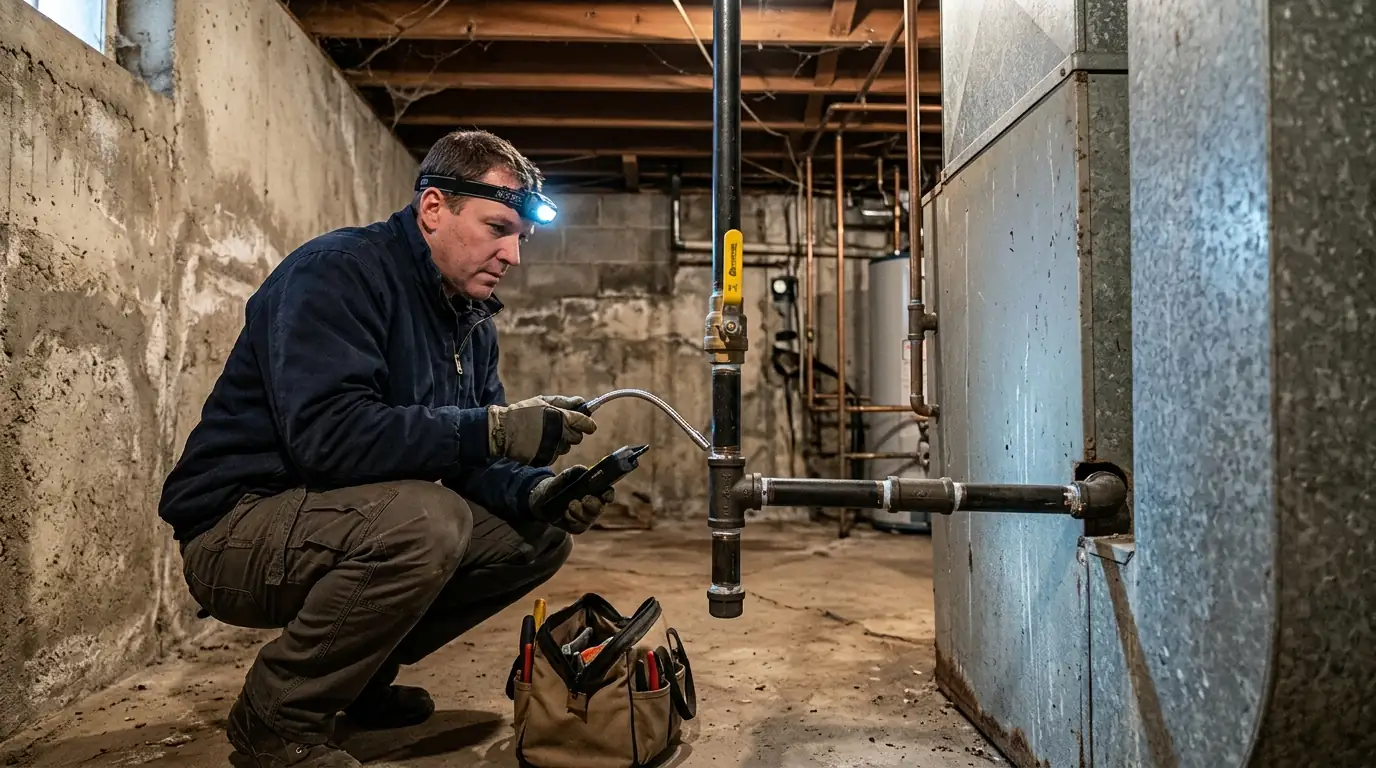
Gas line installation adds or extends natural gas or propane piping from the meter or tank to a new appliance. A technician calculates total load, sizes the pipe for length and pressure, installs black iron or CSST with a shutoff and sediment trap, pressure tests the system, checks for leaks and sets appliance pressure. Simple runs often take half a day.
Every gas appliance in your home is fed from one meter, and the piping from that meter has to carry enough gas for all of them at once. Adding a new appliance to a line that was sized for a furnace and water heater decades ago can leave both starved on a cold morning, with weak flames, poor ignition or a furnace that locks out.
Our technicians size new gas piping by the total load of every appliance and the length of each run, then install black iron, corrugated stainless steel or approved outdoor piping with proper shutoffs, sediment traps and bonding. Every new line is pressure tested before it goes into service, and each appliance is checked for proper pressure once it is connected.
A new gas appliance needs its own branch with a shutoff valve near the appliance.
Unit heaters in detached or attached garages need a properly sized line and sometimes a longer underground run.
Whole-home generators draw a large amount of gas, and the existing piping or meter may not be sized for it.
If burners drop or the furnace struggles when the water heater and dryer are on, the main line may be undersized.
A basement remodel that relocates mechanical equipment requires rerouting the gas supply.
A permanent gas connection for outdoor appliances needs exterior-rated piping and a quick-disconnect or shutoff.
Gas pipe sizing is based on load, measured in BTUs per hour, along with the length of the longest run and the pressure delivered by the meter or regulator. A typical home might have an 80,000 to 100,000 BTU furnace, a 40,000 BTU water heater, a range and a dryer, and the piping has to carry all of them running at once. Adding a large garage heater or generator raises that total considerably.
Our technician adds up the full connected load, measures the run lengths and checks the existing main line size before choosing pipe sizes for the new work. If the existing main is too small, we may need to upsize part of it or run a separate branch from the meter. In some cases the utility has to change the meter or regulator for larger loads.
Black iron pipe remains common in basements and for main runs. It is threaded and assembled with approved sealant, and it is durable once installed, which is why it has served Michigan basements for generations. Corrugated stainless steel tubing, called CSST, is flexible, jacketed and quicker to route through finished spaces with fewer joints. CSST requires proper electrical bonding to protect it from damage during lightning-induced electrical surges.
For buried runs to a detached garage or an outdoor appliance, we use materials rated for direct burial, at the correct depth, with tracer wire so the line can be located later. Exposed outdoor piping is coated or painted to resist rust. Every appliance gets its own accessible shutoff valve, and furnaces and water heaters get a sediment trap to catch debris before it reaches the controls.
Most homes in Kalamazoo, Portage and the surrounding towns are served by Consumers Energy natural gas. Many rural homes across the region heat with propane stored in an outdoor tank, especially in the countryside of Van Buren, St. Joseph, Barry and Cass counties. Propane is delivered at a different pressure and carries more energy per cubic foot, so pipe sizing and appliance orifices are different.
When adding an appliance in a propane home, our technician checks the regulator setup and tank capacity along with the piping. Appliances often ship set up for natural gas, so a conversion kit with new orifices and a spring change in the gas valve may be needed. We make that conversion and set the propane furnace or other appliance to the correct manifold pressure.
Every new section of gas piping is pressure tested before any gas is introduced. The technician caps the line, pressurizes it with air and holds it on a gauge to confirm there are no leaks. Once the test passes, gas is turned on, the line is purged of air and every joint is checked again with leak detection solution or an electronic detector.
Then the appliance is connected and lit. We measure inlet and manifold pressure, check the flame and confirm proper venting where the appliance has a flue. For garage heaters and generators, we confirm the appliance runs at full output without starving the rest of the house. If a new appliance brings questions about combustion, a CO safety check can be added to the visit.
| Work | Typical range |
|---|---|
| Gas line to a range or dryer, short basement run | $286 to $614 |
| Gas line to a garage heater, attached garage | $438 to $986 |
| Gas line to a standby generator | $687 to $1,648 |
| Underground run to a detached garage or outbuilding | $1,138 to $2,876 |
| Natural gas to propane appliance conversion | $118 to $264 |
Gas piping work in the Kalamazoo area typically falls within these figures. The final price is set once the technician sees the meter location, routing and total load. Compare more jobs in the furnace and AC price guide.
Keep reading
Vented gas, propane and electric garage heaters sized for attached and detached garages, shops and pole barns.
Learn moreRepair, tune-ups and conversions for propane furnaces in rural Southwest Michigan homes, from regulators to burner orifices.
Learn moreCombustion and venting tests on your furnace, boiler, water heater and other gas appliances, with CO readings in each room.
Learn moreFAQ
Usually not. A range adds a modest load compared with a furnace. Larger additions, such as a standby generator, tankless water heater or large garage heater, can exceed what the meter or regulator delivers. We add up the total load and, if needed, coordinate with the utility about a meter change.
Leave the house, avoid switches, phones or anything that might spark inside, and call Consumers Energy or 911 from outside. Do not try to find the leak yourself. Once the utility says it is safe, our technicians can come check the piping and connections.
Underground runs depend on ground conditions. Frozen soil makes trenching much harder, so buried lines are usually installed in spring through fall. If the garage heater is needed in winter, we can sometimes run an exposed line or plan a temporary solution until the ground thaws.
CSST has a thin stainless wall that can be damaged by electrical arcing during a nearby lightning strike. Bonding connects the gas piping to the home's grounding system to reduce that risk. The manufacturer's instructions specify how the bonding must be done.
Possibly, if the existing branch is large enough for both loads at the length involved. Outdoor appliances often sit far from the meter, which reduces capacity. Our technician checks the pipe size, length and the BTU input of both appliances before adding a second outlet.
Call any hour. Our office answers, sets the visit and tells you what to expect before a technician arrives.