Both units are 15 years or older
Check the labels on the furnace and the outdoor unit. If both show similar install years in that range, plan for both.
When the furnace and the air conditioner were installed the same year, they usually wear out around the same time, and replacing one often exposes problems with the other.
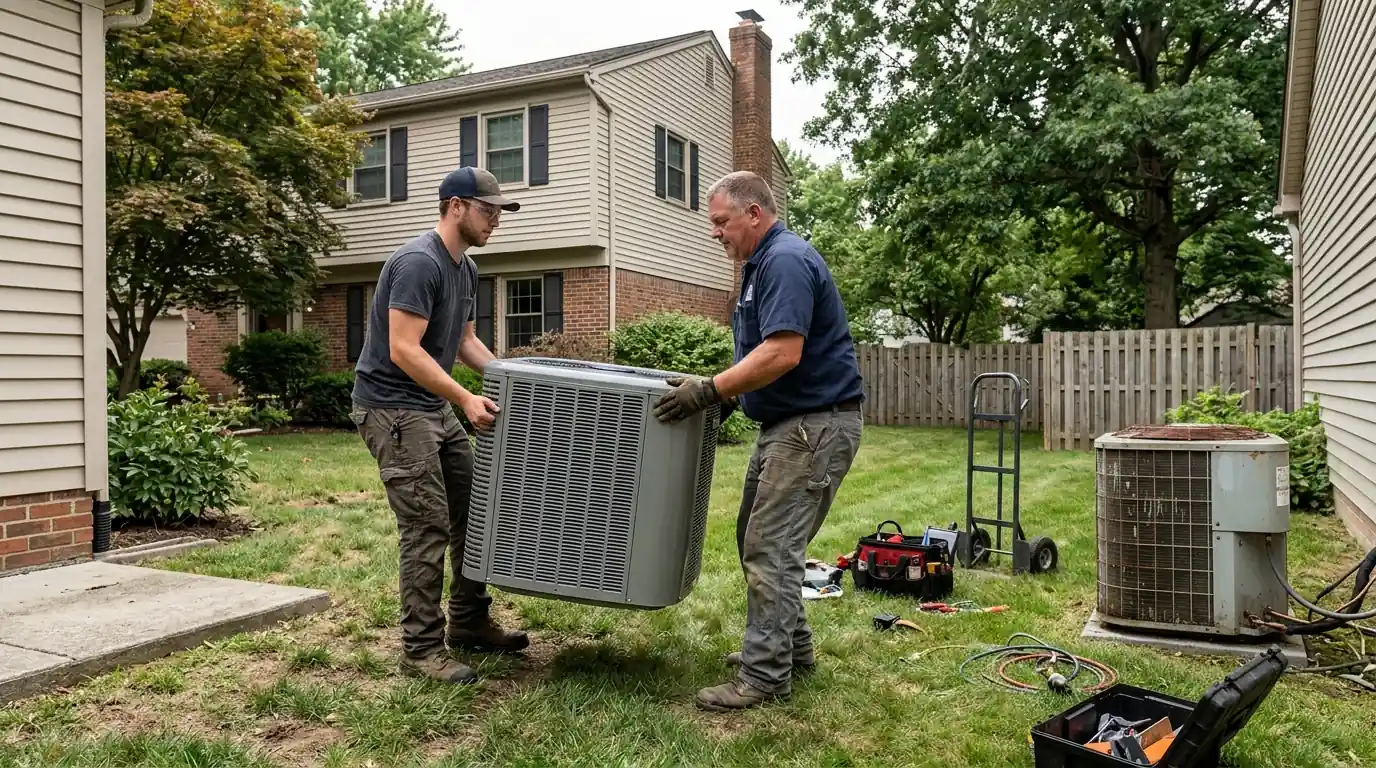
Replacing your furnace and air conditioner together makes sense when both are 15 years or older, when the AC uses R-22 refrigerant, or when one has failed and the other is close. A combined replacement uses a matched furnace, coil and condenser, usually installs in one or two days, and in Southwest Michigan typically costs less than two separate projects.
Many homes in Kalamazoo, Portage and the surrounding townships got their furnace and central air installed together, often when the house was built or during a single upgrade. Fifteen or twenty years later, both are aging at once. If the furnace fails in December, the air conditioner sitting outside is likely close behind it, and its indoor coil sits right on top of the furnace you are replacing.
Replacing both together lets our technicians size the whole system from one load calculation, match the outdoor unit to the indoor coil and blower, and handle the work in a single installation. You get one project instead of two, one set of disruptions, and heating and cooling equipment designed to work as a pair rather than two pieces from different decades.
Check the labels on the furnace and the outdoor unit. If both show similar install years in that range, plan for both.
Older systems built for R-22 are expensive to recharge, and a leak often means the outdoor unit and coil need replacing.
Since the AC coil sits on the furnace, swapping the furnace alone may mean reconnecting an old coil to new equipment.
Rooms that are cold in winter and hot in summer can point to sizing or airflow problems with the whole system.
If you have paid for furnace and AC repairs in the same few years, the combined costs add up quickly.
Owners who expect to stay several years see the full benefit of matched, more efficient equipment.
A furnace and a central air conditioner share the same blower, the same ductwork and, in most homes, the same indoor coil cabinet mounted above the furnace. When they are replaced separately, the technician has to disconnect and reconnect that coil twice, adjust the plenum twice and run startup tests twice. Doing it once saves labor and avoids pairing a new furnace with a coil that is near the end of its life.
Matched systems also perform the way their published efficiency numbers say they will. Manufacturers test those numbers using specific combinations of outdoor unit, indoor coil and furnace blower. A brand new condenser paired with an old coil may not reach its rated efficiency and can struggle with humidity removal. Replacing everything together means the components were engineered to work together from the start.
The furnace and air conditioner you have now may not be the right size, especially if the house has had new windows, added insulation, a finished basement or an addition since they went in. We do a room-by-room load calculation that accounts for the home's square footage, insulation, window area and orientation, and the cold Kalamazoo winters and humid summers that set the design temperatures.
Oversizing is a common problem we see in older installs. An oversized furnace short cycles and creates uneven heat, while an oversized air conditioner cools the air quickly but shuts off before it removes enough moisture, leaving the house cool and damp. Right-sized equipment runs longer, steadier cycles that keep temperatures even and humidity under control through a muggy Michigan July.
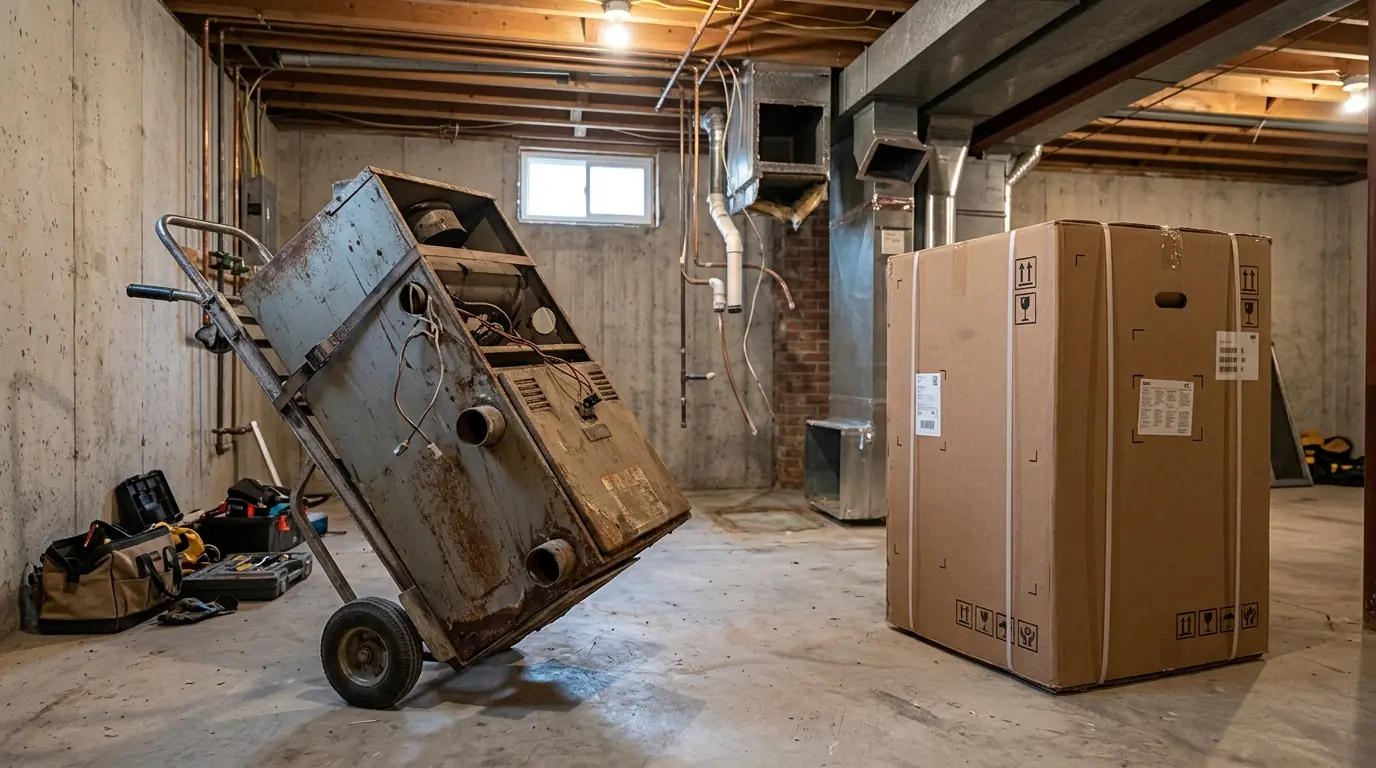
Most combined replacements pair a high-efficiency gas furnace with a central air conditioner. A two-stage or variable-speed furnace runs on low fire most of the winter, which gives quieter, more even heat. On the cooling side, a two-stage condenser removes more humidity on mild summer days. We explain where each upgrade makes a difference and where a single-stage system serves the house just as well.
Some homeowners choose a heat pump in place of the air conditioner, paired with a gas furnace as backup. This dual-fuel setup uses the heat pump for cooling and mild heating weather, then switches to gas when temperatures drop well below freezing. Homes with older ductwork may also benefit from duct sealing during the same project, since leaky ducts waste capacity in both seasons.
Most furnace and AC replacements are completed in one long day, and some take a second day when venting, ductwork or electrical changes are involved. The crew protects floors along the path to the basement, recovers refrigerant from the old system, and removes the furnace, coil and outdoor unit. The new furnace is set, vented and connected to gas, and the new coil goes in on top of it.
Outside, the new condenser is placed on a level pad, and the refrigerant line set is either flushed and reused or replaced depending on its size and condition. The system is pressure tested, evacuated and charged. Before leaving, the technician runs both heating and cooling, checks gas pressure, combustion, refrigerant charge and airflow, and walks you through the new thermostat and filter location.
| Work | Typical range |
|---|---|
| Standard-efficiency furnace and central AC, installed | $7,860 to $11,490 |
| High-efficiency two-stage furnace and AC, installed | $10,740 to $15,980 |
| Gas furnace with heat pump (dual fuel), installed | $12,370 to $18,640 |
| New refrigerant line set | $587 to $1,460 |
| Venting conversion to PVC for a high-efficiency furnace | $468 to $1,290 |
Ranges reflect typical Southwest Michigan installs. The final price is set after the technician sees your home, ductwork and venting, and the replacement estimate visit has no charge. Compare more jobs in the furnace and AC price guide.
Keep reading
New gas furnaces sized by room-by-room load calculation, with venting, gas piping and ductwork matched to the house.
Learn moreNew central air sized by load calculation, matched to your furnace and set up to dry out the air in humid Michigan summers.
Learn moreA heat pump paired with a gas or propane furnace, switching between the two so each runs when it costs the least.
Learn moreFAQ
If both units are around the same age and past 15 years, replacing them together usually saves on labor and gives you equipment designed to work as a pair. If the air conditioner is fairly new and in good shape, it can often stay. We look at both and tell you honestly which makes sense.
Physically it often can, but the old coil may not match the new furnace cabinet or blower, and an aging coil may start leaking soon after. If the air conditioner uses R-22 refrigerant, that coil cannot be paired with a newer outdoor unit later. These are good reasons to consider replacing both together.
Most homes are finished in one full day. Jobs that need new venting, a new line set, electrical upgrades or duct changes may run into a second day. Heat is restored the same day in cold weather whenever possible, and we tell you the expected timeline during the estimate visit.
Sometimes. If the existing line set is the right size for the new system and in good condition, it can be flushed and reused. Lines that are undersized, kinked, buried in a slab or carried R-22 oil may need replacing. The technician checks them during the estimate.
Size depends on the house itself, not just square footage. Insulation, window area, basement type, air leakage and which way the house faces all affect the load. A room-by-room load calculation gives the right furnace BTU and AC tonnage, which is often smaller than the equipment being replaced.
Call any hour. Our office answers, sets the visit and tells you what to expect before a technician arrives.