Flame wavers when the blower starts
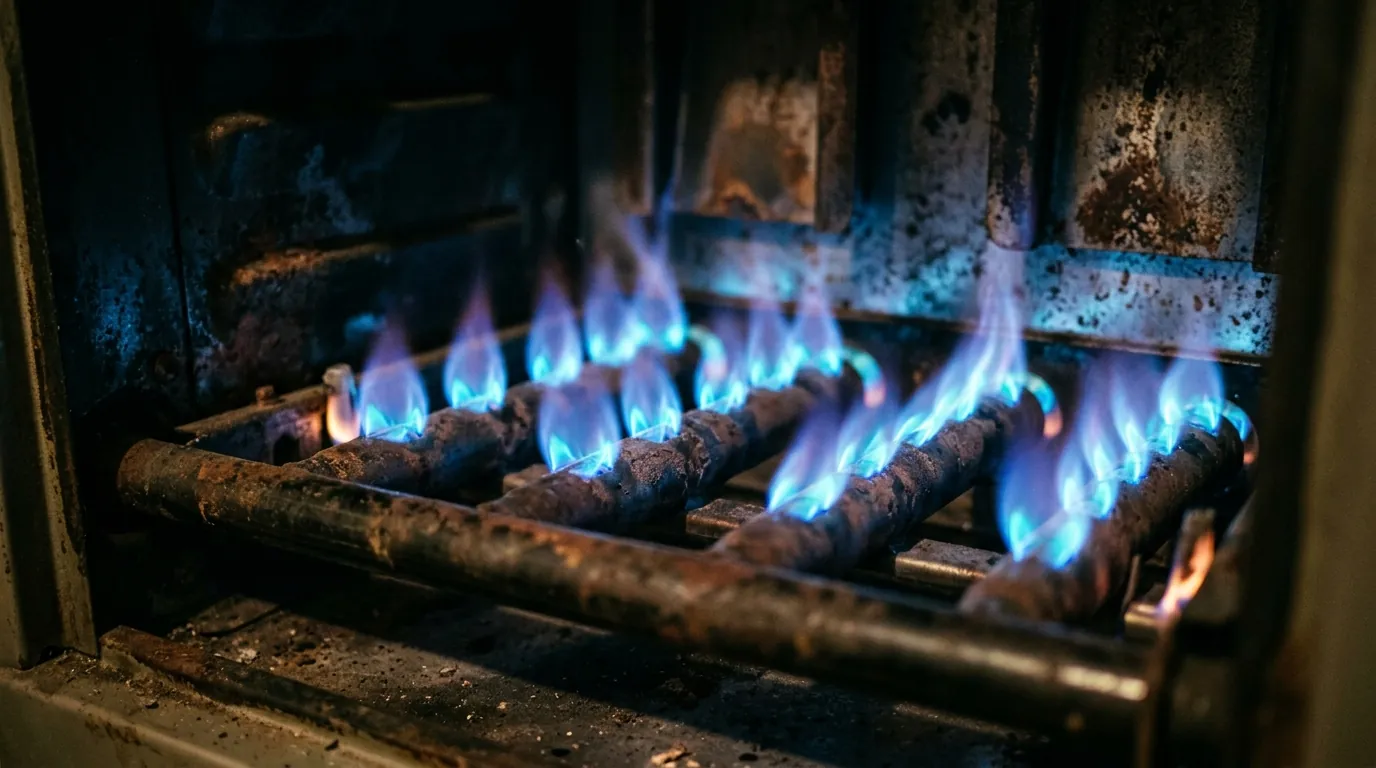
If the burner flame jumps, rolls or changes color as the fan kicks on, air may be pushing through a crack.
Someone told you the furnace might have a cracked heat exchanger, or the flame looks odd and the CO alarm chirped, and you want a clear answer before the next cold night.
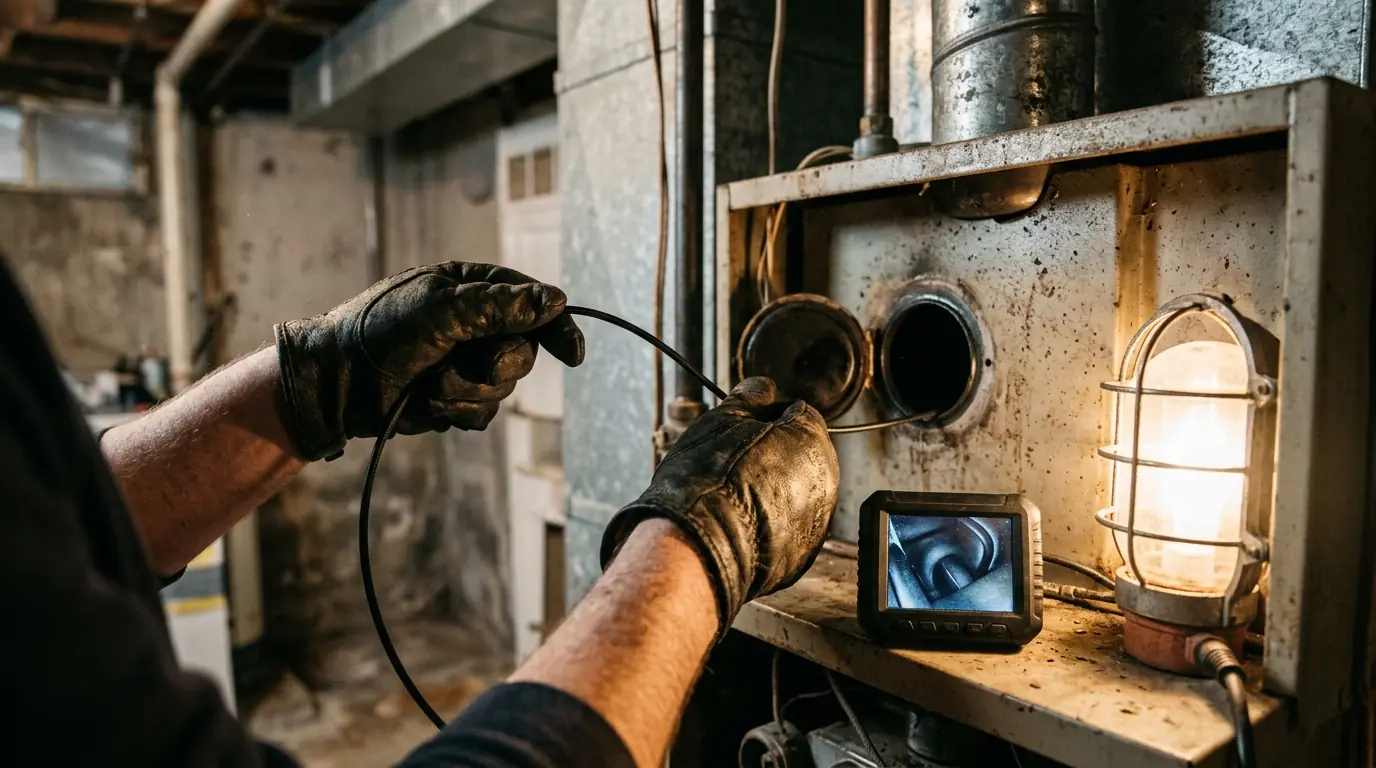
A heat exchanger inspection uses a borescope camera to look inside the furnace's combustion chambers for cracks, holes and heavy rust, along with flame observation and carbon monoxide testing. In the Kalamazoo area it typically costs $149 to $289. If a crack is confirmed, the furnace is shut off and you receive repair or replacement options with photos.
The heat exchanger is the sealed metal chamber that keeps burner flames and exhaust gases on one side and the air you breathe on the other. Each time the furnace fires, the metal expands with heat, then contracts as it cools. After years of that cycle, steel can fatigue, rust or split, usually at bends, seams and crimped joints where stress collects.
A crack does not always mean danger tonight, but it is never something to guess about. Our technicians inspect the heat exchanger with a borescope camera, watch the flame under blower operation and measure combustion gases and room air for carbon monoxide. You see the photos and the readings, so a replacement recommendation comes with evidence rather than a sales pitch.
If the burner flame jumps, rolls or changes color as the fan kicks on, air may be pushing through a crack.
Black streaks near the burner openings or on the cabinet suggest poor combustion that a damaged exchanger can cause.
Any carbon monoxide alarm, even a short one, calls for testing of the furnace and other gas appliances.
Heavy scale falling from above the burners points to corrosion inside the heat exchanger.
Flames escaping the burner area trip the rollout switch, often because a blocked or cracked exchanger is restricting flow.
Dull headaches or nausea that improve when away from home can be a sign of CO and warrant a check right away.
The technician shuts off the furnace, lets it cool and removes the burners and, on many models, the inducer motor to reach the inside of each combustion tube. A borescope camera with a light and articulating tip is fed into each cell. The camera shows the inside surfaces, the seams and the bends where most cracks start. Photos are saved so you can see them.
After the visual check, the furnace is restarted for live testing. The technician watches the flame closely as the blower comes on, takes a combustion analyzer reading in the flue and samples air at the supply registers for carbon monoxide. Some furnaces also get a static pressure test across the exchanger. Together these tests separate a surface scratch from a real breach.
Overheating is the main cause. A furnace starved for airflow by a clogged filter, closed registers or undersized return ducts runs the heat exchanger hotter than it was designed for. Every hot cycle stresses the metal further. Oversized furnaces that short cycle add to the problem by heating and cooling the steel many more times per day than a properly sized unit would.
Corrosion is the other common cause. On condensing furnaces, the secondary heat exchanger handles acidic condensate and can rust through if the drain backs up. In older Michigan homes, humid basements and chlorine or bleach fumes from nearby laundry areas can speed up rust on the primary exchanger. Fixing airflow and drainage problems early slows wear on a heat exchanger that is still healthy.
Not every mark on a heat exchanger is a crack. Discoloration, surface scale and old weld lines often look worrying on camera but do not pass combustion gases. Our technicians explain what they found in plain terms and show you the photos side by side with the combustion and CO readings. If the readings are clean and the metal is intact, the furnace keeps running.
A confirmed crack or hole is different. The furnace is turned off and tagged, and you are told why. Some newer furnaces carry long manufacturer warranties on the heat exchanger, so the technician checks the model and serial number to see if a replacement part is covered. On older units, the choice is usually between a costly exchanger swap and a full furnace replacement.
A healthy heat exchanger lowers risk but does not cover every source. Gas water heaters, ranges, fireplaces and attached garages can all add carbon monoxide to a home. During the inspection, the technician can check the water heater draft and test the air near other gas appliances, especially in older houses where the furnace and water heater share a chimney.
Every home with gas appliances should have working CO alarms on each level and near sleeping areas, replaced on the schedule printed on the unit. If you want a broader look at every gas appliance in the house, a carbon monoxide safety check covers the whole home. It is a sensible step after buying an older house in Kalamazoo or any time an alarm has sounded.
| Work | Typical range |
|---|---|
| Camera inspection with combustion test | $149 to $289 |
| Inspection added to a furnace tune-up | $78 to $146 |
| Heat exchanger replacement, parts under warranty | $689 to $1,480 |
| Heat exchanger replacement, parts not covered | $1,870 to $3,260 |
Typical Southwest Michigan ranges. Exchanger replacement cost depends heavily on the furnace model and warranty status, and the final price is set after the technician confirms the findings. Compare more jobs in the furnace and AC price guide.
Keep reading
A fall furnace tune-up that cleans, measures and tests ignition, combustion and airflow before the first hard freeze.
Learn moreCombustion and venting tests on your furnace, boiler, water heater and other gas appliances, with CO readings in each room.
Learn moreGas furnace diagnosis and repair for ignition faults, short cycling, cold air and noisy blowers, any hour.
Learn moreFAQ
No. Manufacturers do not approve welding or sealing a heat exchanger, and a patched one is not considered safe to operate. The options are replacing the heat exchanger itself, which is sometimes covered by a manufacturer warranty, or replacing the whole furnace. The technician can check coverage using the model and serial number.
Visual inspection alone can be open to interpretation, especially with rust staining or old seams. That is why our inspection pairs camera photos with combustion readings and CO sampling. If the metal shows a clear opening and the readings change under blower operation, it is cracked. If the readings stay clean, a mark may be cosmetic.
You should not run it. A crack can let combustion gases, including carbon monoxide, mix with the air in your home, and it can also cause flame rollout. Once a crack is confirmed, the furnace is turned off. Space heaters or temporary heat can keep the home warm until the repair or replacement is done.
No. A CO alarm is designed to warn you when levels in a room reach a set threshold over time. It does not show early damage, and it may not sound for low levels. An inspection finds problems before they produce dangerous gas. Use both: annual inspection and working alarms on every floor.
Age matters more than efficiency level, but many 80 percent furnaces still in Kalamazoo basements are 15 to 25 years old, and their single primary exchanger has gone through a great many heat cycles. Units that ran with dirty filters or poor return air for years are the most likely to show fatigue cracks.
Call any hour. Our office answers, sets the visit and tells you what to expect before a technician arrives.