CO alarm sounding or chirping
A sounding alarm means leave and call for help. A chirp may be a low battery or end of life, but it still deserves a check.
A carbon monoxide alarm that keeps sounding, headaches that ease when you leave the house, or soot near a furnace or water heater flue all need a trained technician with testing equipment.
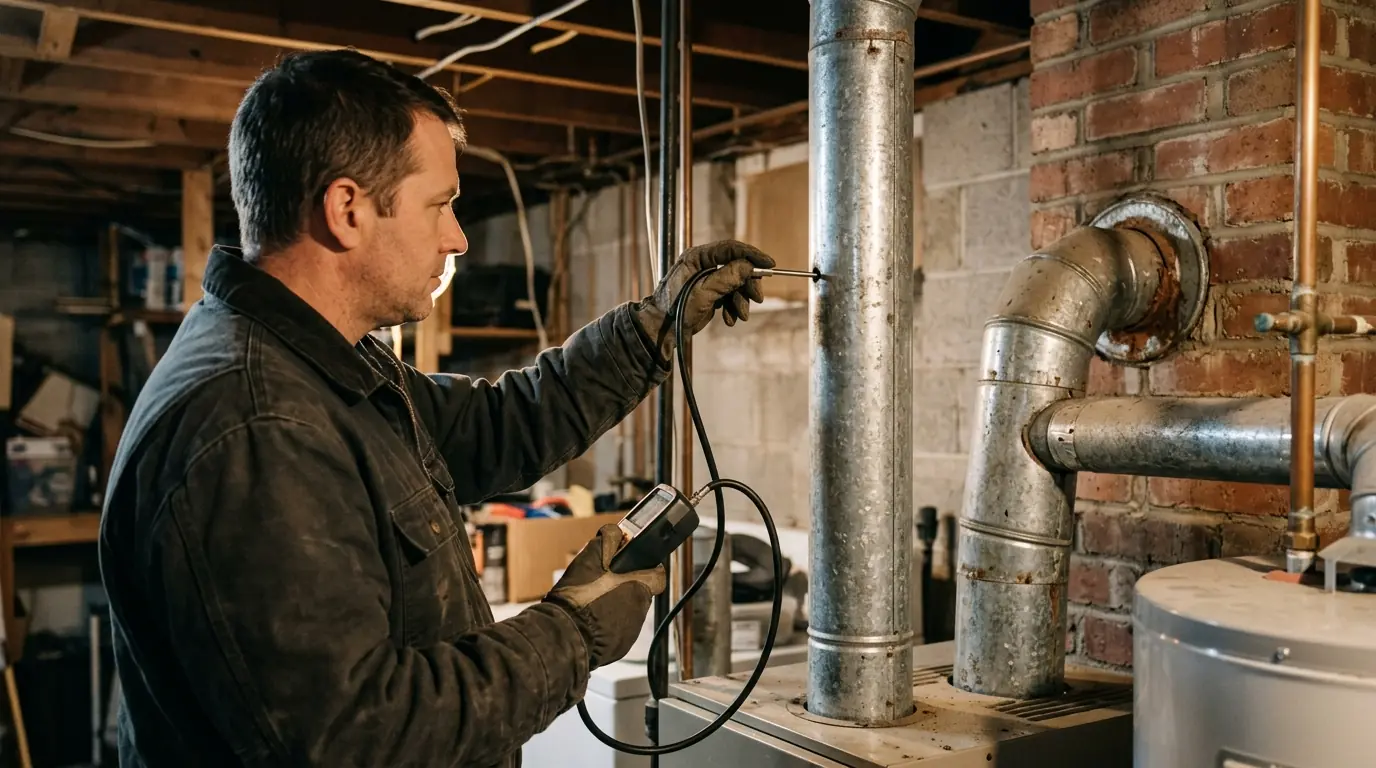
A carbon monoxide safety check tests every fuel-burning appliance in the home for proper combustion and venting. A technician measures CO in the flue and in living spaces, checks draft at the furnace and water heater, inspects flue pipes and chimney connections and confirms your CO alarms work. Most homes take about an hour to ninety minutes.
Carbon monoxide has no color and no smell. It comes from incomplete burning of natural gas, propane, oil or wood, and in a home it usually shows up when an appliance is burning poorly or its exhaust is not leaving the house the way it should. A blocked chimney, a disconnected flue pipe or a cracked heat exchanger can each let it spill indoors.
If an alarm is sounding right now, leave the house, call 911 or your gas utility from outside, and do not go back in until they say it is safe. Once the home is cleared, our technicians can find the source. A planned safety check, before the heating season or after any appliance change, tests each gas appliance, its venting and the air in your living spaces.
A sounding alarm means leave and call for help. A chirp may be a low battery or end of life, but it still deserves a check.
Black marks around a furnace burner door, water heater draft hood or fireplace opening point to poor combustion or spillage.
Gas flames should be mostly blue and steady. Tall, wavering yellow flames suggest the burner is not mixing air and fuel properly.
Heavy moisture in a mechanical room or on nearby windows can mean exhaust is not leaving through the flue.
These symptoms have many causes, but if several people feel better when away from the house, leave and call for help.
Replacing a furnace, adding a high-efficiency unit or relining a chimney can change how the remaining appliances vent.
Each gas appliance is checked while it runs. At the furnace and water heater we measure carbon monoxide in the flue gases with a combustion analyzer and look at oxygen levels to see whether the burners are tuned properly. Draft is tested at the draft hood or flue to confirm the exhaust is rising and leaving rather than spilling back into the room.
We also walk through the living areas with a low-level CO meter, take readings near bedrooms and check that your alarms respond to their test buttons. Flue pipes are inspected for rust, loose joints and proper slope, and we look at the chimney connection and termination where it is visible. Every reading is noted so you can see the results.
Older Kalamazoo homes often have a water heater venting into a masonry chimney that once served a large, older furnace. When that furnace is replaced with a high-efficiency model that vents through the side wall, the water heater is left alone in a chimney that is now too big and too cold. Its exhaust may not draft well, especially on mild days.
Other frequent problems include flue pipes knocked loose during basement work, side wall vents buried by lake-effect snow, birds nesting in chimney caps and furnaces with a cracked heat exchanger. Rural homes heating with propane face the same issues, plus burners that were never converted properly. Attached garages with running vehicles or generators are another source alarms often pick up.
Gas water heaters and many older furnaces rely on natural draft: warm exhaust rises up the flue on its own. In a tightly sealed house, a running bath fan, kitchen range hood and clothes dryer can pull enough air out that the house goes under negative pressure. Air then comes down the flue instead of exhaust going up, pulling combustion gases back into the basement.
We test for this by running exhaust fans and the dryer together and checking draft at the water heater while the house is under that load. If spillage shows up, the fixes range from adding makeup air to replacing an older appliance with a sealed-combustion model. Homes that had major insulation or air sealing work done are the most common place we see it.
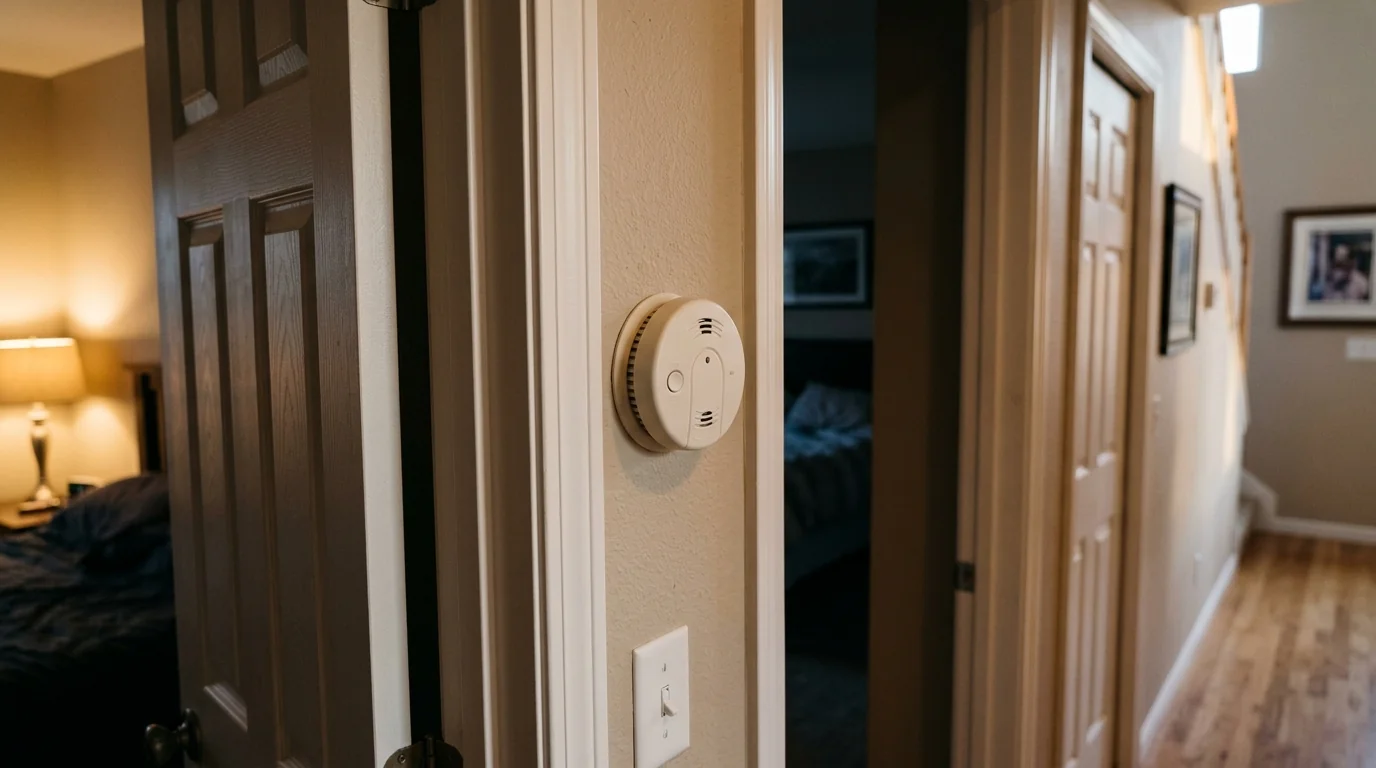
Carbon monoxide alarms belong on every level of the home, including the basement, and near sleeping areas so they can wake people up. Follow the manufacturer's guidance on height and keep them away from the furnace itself, where brief startup readings can cause nuisance alarms. Most alarms have an end-of-life date printed on the back and should be replaced by then.
If an alarm goes off, get everyone outside, including pets, and call 911 or Consumers Energy from outside the house. Do not open windows to air it out first, since that can hide the source. Once responders clear the home, call us and our technician will test each appliance to find what caused it. Our phone is answered at any hour for this reason.
| Work | Typical range |
|---|---|
| Carbon monoxide safety check, one furnace and water heater | $129 to $238 |
| Each added gas appliance (boiler, dryer, fireplace, range) | $34 to $68 |
| After-hours visit following an alarm | $189 to $347 |
| Flue pipe reconnection or replacement section | $148 to $412 |
| Plug-in or hardwired CO alarm, installed | $46 to $118 |
These are typical ranges for the area. The final price is set after the technician sees the appliances and venting in your home. Compare more jobs in the furnace and AC price guide.
Keep reading
Camera and combustion testing of furnace heat exchangers to find cracks, rust-through and hot spots before they become a hazard.
Learn moreA fall furnace tune-up that cleans, measures and tests ignition, combustion and airflow before the first hard freeze.
Learn moreCleaning, pilot and thermocouple repair, glass and log care for gas fireplaces and inserts that will not light or stay lit.
Learn moreFAQ
Get everyone outside first and call 911 or the gas utility from outdoors. Opening windows before leaving delays your exit and can lower the levels before responders arrive to measure them, which makes the source harder to find. Let the responders air out the home once they have checked it.
Yes. Sealed-combustion furnaces vent through PVC pipes and draw outdoor air, which lowers the risk of spillage into the house, but a dirty burner or poor gas pressure can still create CO in the exhaust. A blocked intake or exhaust pipe, often from snow, can also shut the furnace down or cause problems.
When a new high-efficiency furnace vents out the side wall, the old chimney may be left serving only the water heater. That chimney can now be too large for the small amount of exhaust, so it stays cool and drafts poorly. A liner or a different water heater may be needed.
Yes. The sensors inside lose accuracy with age, and most models are designed to last somewhere between five and ten years. Look for a manufacture date or replace-by date on the back. Many alarms also chirp at end of life, which sounds different from a low battery warning.
Yes, our technicians test any fuel-burning appliance in the home, including gas fireplaces, ranges, ovens, dryers and garage heaters. Vented fireplaces are checked for draft and flue condition. Ranges are checked at the burners and oven, since they vent into the kitchen.
Call any hour. Our office answers, sets the visit and tells you what to expect before a technician arrives.