Boiler past 25 years
Cast-iron boilers last a long time, but past 25 to 30 years sections can crack and efficiency is far below modern units.
Your old boiler is leaking, rusting or costing a fortune to run, and you want to keep the radiator heat you like without paying for a system twice the size you need.
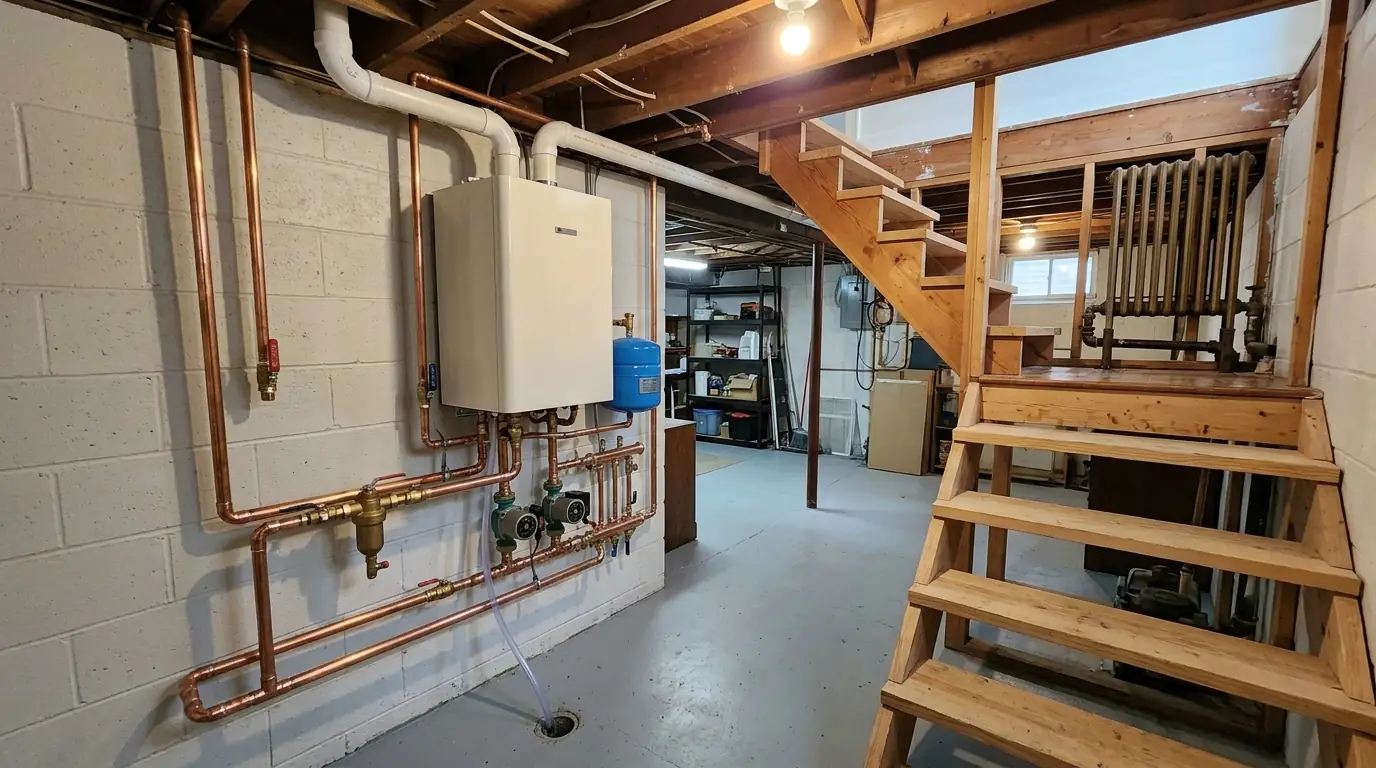
Replacing a residential boiler in the Kalamazoo area typically costs $6,480 to $14,900 installed. High-efficiency condensing boilers are common for hot-water systems, while steam systems need a new steam boiler. The job usually takes two to three days and includes sizing from heat loss and radiator output, new near-boiler piping, venting, controls and a full startup test.
Many boilers in Kalamazoo basements were installed when the house had single-pane windows, no insulation and a coal or oil burner. Over the decades, the homes were tightened up but the boilers stayed the same size. Replacing one is a chance to match the new boiler to how much heat the house actually loses today, which often means a smaller, quieter and much more efficient unit.
Our installers handle hot-water and steam boiler replacements, including the piping changes, venting, controls and water treatment that go with them. The radiators, baseboard and in-floor loops you already have are usually kept. The job is planned around measured heat loss and the real output of your radiators, so the new boiler heats evenly without short cycling, even on a subzero January night.
Cast-iron boilers last a long time, but past 25 to 30 years sections can crack and efficiency is far below modern units.
A leak from the cast iron itself, not a fitting, usually means a cracked section.
An aging boiler loses efficiency as heat exchanger surfaces scale and burners wear.
Several repairs in a season, especially to the burner and controls, suggest the boiler is near the end.
Rust and scale falling from the burner area point to corrosion inside the boiler.
A boiler that short cycles even on cold days is likely much larger than the home needs.
The worst way to size a replacement boiler is to copy the old nameplate. Boilers installed 40 or 60 years ago were often sized for drafty homes or for coal. Our installers run a heat loss calculation for the house as it stands, with today's windows and insulation. On steam systems, they also measure every radiator and add up its square feet of radiation, since steam boilers must be sized to the radiators rather than to heat loss.
For hot-water systems, the radiator survey matters too. Large cast-iron radiators can heat a room with cooler water than baseboard can, which lets a condensing boiler run at lower temperatures and condense more often. That is where most of the efficiency gain comes from. The installer uses the survey to set the outdoor reset curve so the boiler supplies only as much water temperature as the weather calls for.
Condensing modulating boilers are the most efficient choice for hot-water systems. They are wall-hung, vent through PVC or polypropylene pipe and adjust their firing rate to match the load. Cast-iron non-condensing boilers remain a solid choice when water temperatures must stay high or when a chimney is reused. Combination boilers heat the house and make domestic hot water on demand, which frees up basement space.
Steam systems need a steam boiler. There is no condensing option for steam, but a new, properly sized steam boiler with correct near-boiler piping, a new low-water cutoff and fresh main vents runs far more evenly than a tired original. Some homeowners convert steam to hot water, which requires checking every radiator and pipe for suitability. The installer can walk through whether that conversion makes sense for your house.
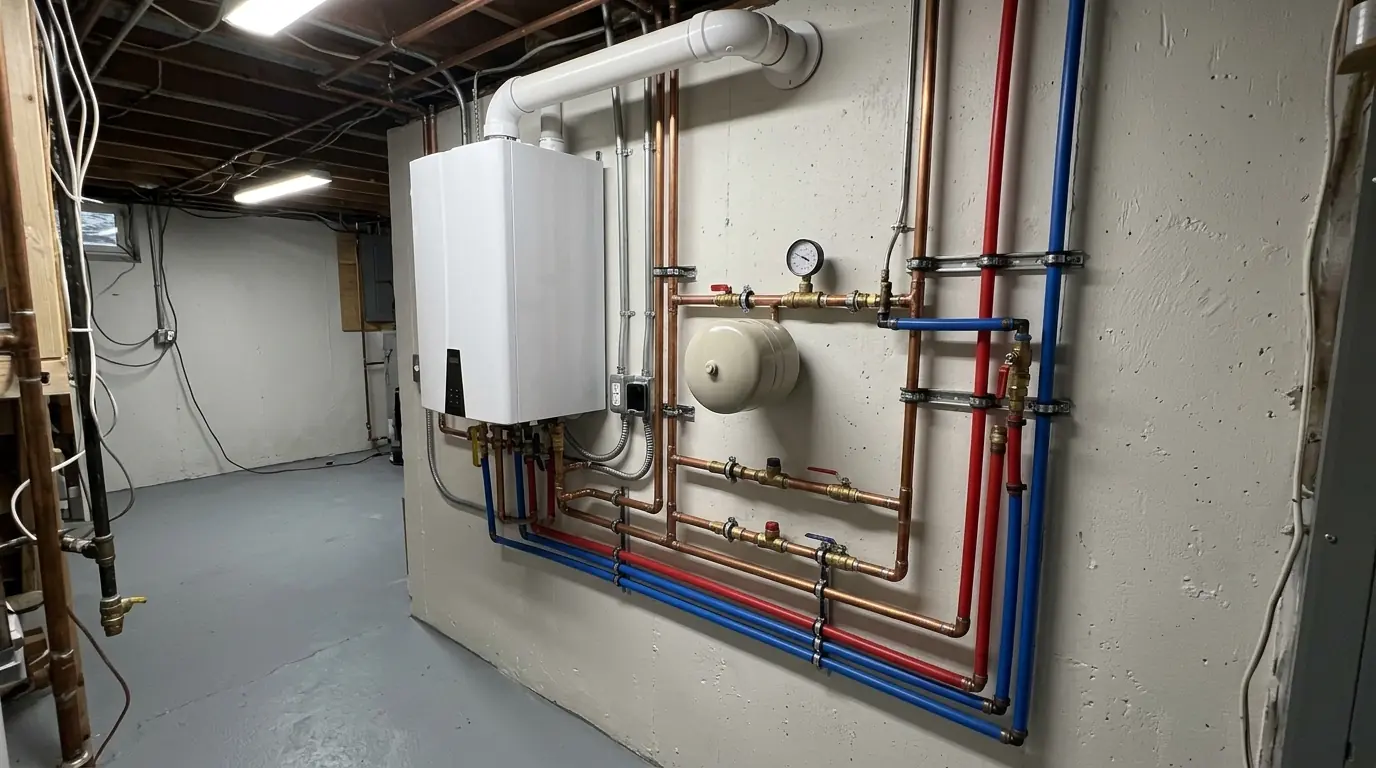
Condensing boilers have small heat exchangers that do not tolerate the sludge and scale built up in old cast-iron systems. Before connecting a new boiler to old radiators, the installer flushes the system and adds a dirt and magnetic separator to catch debris. Primary and secondary piping, or a low-loss header, keeps flow through the boiler steady even when individual zones close.
Venting changes too. A condensing boiler vents through a sidewall or roof with sealed plastic pipe and needs a condensate drain, often with a neutralizer to protect drains from acidic water. A new cast-iron or steam boiler may reuse the chimney, but the installer checks the flue size and liner first. If a gas water heater was sharing that chimney, its venting is reviewed so it still drafts properly.
A typical boiler replacement takes two to three days. The old boiler is drained and removed, which on cast-iron units often means breaking it into sections to get it out of the basement. The new boiler is set, piped, vented and wired, then the system is filled, purged of air and brought up to temperature. Steam boilers are skimmed to remove oil from new piping.
At startup, the installer measures combustion, gas pressure, supply and return temperatures, and system pressure. Controls are programmed, including outdoor reset and any zone controls. You are shown the gauges, the pressure range to watch and how to reset the boiler. If you want warm floors in a new bathroom or addition, a radiant floor loop can be planned off the new boiler at the same time.
| Work | Typical range |
|---|---|
| Cast-iron hot-water boiler, installed | $6,480 to $9,370 |
| Condensing modulating boiler, installed | $8,290 to $12,640 |
| Combi boiler with domestic hot water | $8,960 to $13,480 |
| Steam boiler replacement | $7,840 to $14,900 |
| System flush and dirt separator | $468 to $1,160 |
Typical Southwest Michigan ranges. The final price depends on boiler size, piping changes and venting, and is set after the installer surveys the home. The replacement estimate visit has no charge. Compare more jobs in the furnace and AC price guide.
Keep reading
Repair for hot-water and steam boilers: circulators, pressure problems, leaks, ignition faults and cold radiators.
Learn moreHydronic radiant floor heating design, installation and repair for basements, bathrooms, additions and whole homes.
Learn moreMotorized duct dampers, a zone panel and separate thermostats so one furnace or heat pump can heat and cool each floor on its own.
Learn moreFAQ
Yes, and they often help. Large cast-iron radiators hold a lot of water and can heat rooms at lower water temperatures, which lets a condensing boiler run in its most efficient range. The system is flushed and a dirt separator is added so old sediment does not reach the new boiler's heat exchanger.
A steam boiler must make enough steam to fill every radiator and pipe in the system. If it is too small, the far radiators never heat. If it is too large, it short cycles and wastes fuel. Measuring each radiator's surface area gives the connected load, which is how steam boilers are matched to the house.
It can be, especially in smaller homes with one or two bathrooms. A combi boiler heats the radiators and makes hot water on demand, which frees space where the water heater stood. Homes with large tubs or several showers running at once may do better with a boiler and a separate indirect water heater tank.
Most replacements take two to three days. During that time, the house is without central heat, so we plan the schedule with you and can supply temporary electric heat. Winter installs are common in Southwest Michigan, and the crew works to get heat back on as early as possible during the job.
It depends on the boiler. Condensing boilers vent through plastic pipe and do not use the chimney at all. A cast-iron or steam boiler may reuse the chimney, but the installer checks whether the flue is the right size. Older masonry chimneys often need a stainless liner, especially if a water heater is left venting there alone.
Call any hour. Our office answers, sets the visit and tells you what to expect before a technician arrives.