Furnace past 15 years
Most gas furnaces start needing larger repairs between 15 and 20 years, and parts for older models get harder to find.
Your old furnace needs another major part, the heating bills keep climbing, and you want a replacement that actually fits the house instead of the biggest box available.
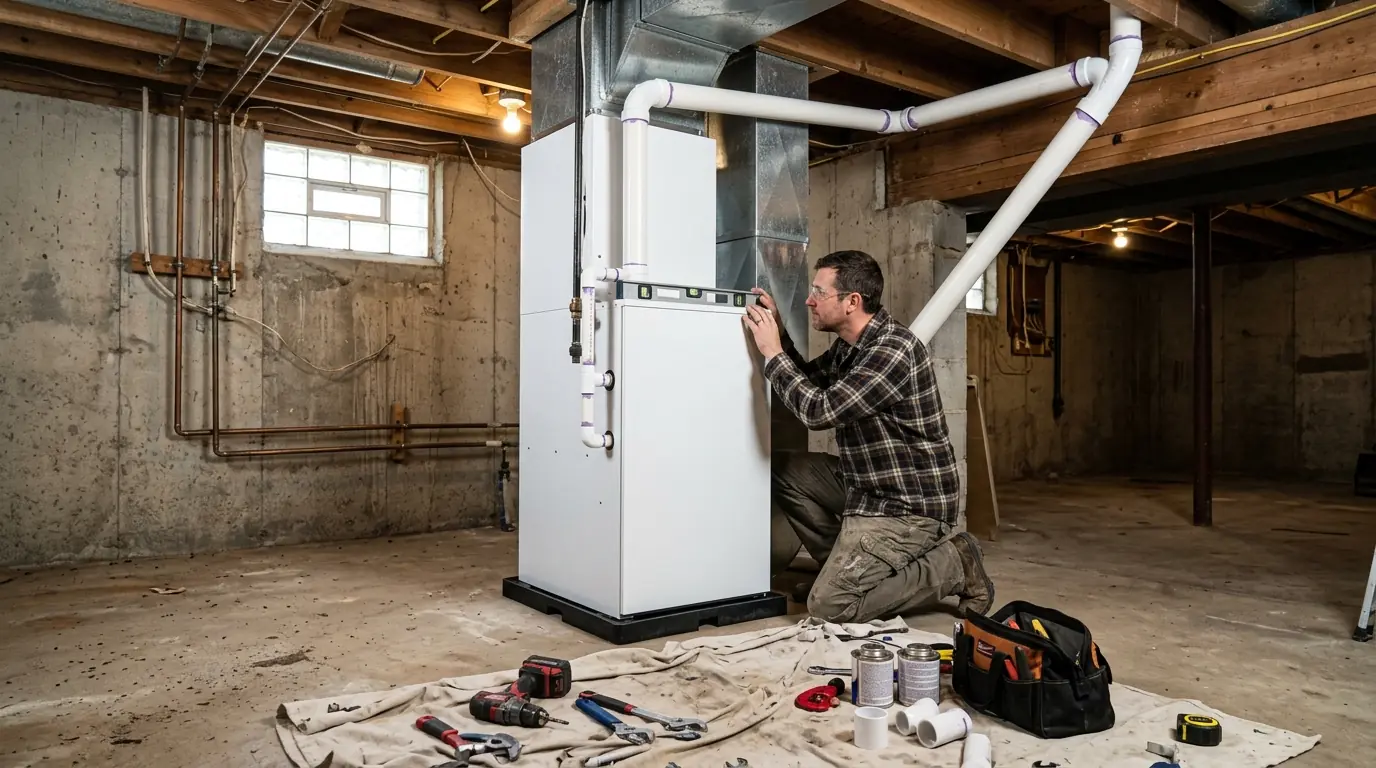
Replacing a gas furnace in the Kalamazoo area typically costs $3,890 to $8,470 installed, depending on efficiency, blower type and how much venting and duct work the house needs. The job usually takes one day. A proper replacement includes a load calculation, new venting where required, a gas leak test and a combustion check at startup.
A new furnace is a 15 to 20 year decision, and the parts of the job you cannot see matter as much as the unit itself. Sizing, venting, gas line capacity, return air and condensate routing all decide whether the system runs quietly and evenly or short cycles through every cold snap. Our installers handle each of those details on site, with our own crew from start to finish.
Kalamazoo homes range from early 1900s houses with converted coal-era chimneys to newer subdivisions with tight framing and long duct runs. A furnace that worked in one can be badly oversized in another. Every replacement starts with a heat loss calculation based on your walls, windows, insulation and ceiling heights, so the new unit is matched to the house rather than copied from the old nameplate.
Most gas furnaces start needing larger repairs between 15 and 20 years, and parts for older models get harder to find.
When a single repair approaches half the cost of a new unit on an aging furnace, replacement usually makes more sense.
Hot upstairs and cold basement rooms can point to an undersized blower, poor duct design or a single-stage furnace that runs too hard.
Older 60 to 80 percent efficient furnaces burn noticeably more gas than a modern condensing unit for the same heat.
A cracked or badly corroded heat exchanger on an out-of-warranty furnace is usually the end of the unit.
Two or more no-heat calls in one season is a sign the furnace is wearing out across several parts at once.
Many older furnaces in the area were sized by rule of thumb, and some were oversized by a wide margin. An oversized furnace heats the air fast, shuts off, and repeats, which wastes fuel, wears the igniter and leaves rooms drafty between cycles. Our installers measure the home and run a room-by-room heat loss calculation that accounts for Kalamazoo's design winter temperatures, window area, insulation levels and air leakage.
The calculation also checks the existing ductwork. A new furnace with a stronger blower can be noisy on undersized returns, so the installer measures static pressure before choosing equipment. If the returns are too small, adding one or two return air ducts during the install often fixes long-standing comfort complaints. You see the numbers that led to the recommendation, not just a model number.
Most replacements in Southwest Michigan are condensing furnaces in the 95 to 98 percent efficiency range, vented with PVC pipe through a sidewall or roof. Single-stage models are the lowest cost. Two-stage furnaces run on low fire most of the winter, which is quieter and more even. Modulating furnaces adjust in small steps and hold temperature tightly, a good fit for larger homes or open floor plans.
Blower motors matter as much as the burner. Variable-speed motors use less electricity, run quietly at low speed and pair well with air cleaners and whole-home humidifiers. If you plan to add central air later, the installer will size the blower and coil cabinet for it now. Pairing the furnace with a heat pump in a dual-fuel setup is another option some homeowners choose.
Moving from an 80 percent furnace to a condensing model changes the venting. The old unit exhausted hot gases up a metal flue or masonry chimney. A condensing furnace exhausts cool, damp gases through sealed PVC pipe, and it needs a fresh-air intake. Installers plan the pipe route, keep terminations clear of windows, gas meters and snow lines, and mount them high enough to stay above drifts.
Condensing furnaces also produce water that must drain to a floor drain or condensate pump. If your gas water heater shared the old chimney, it may be left venting alone in a liner sized for two appliances, which can cause poor draft. The installer checks that connection and recommends a liner or a water heater vent change when needed, so both appliances draft correctly.
The crew protects floors and the path to the basement, shuts off gas and power, and removes the old furnace. The new unit is set level on a pad, connected to the supply and return plenums, and sealed at every joint. Gas piping is connected with a new shutoff and sediment trap, then leak tested. Venting, condensate lines and the thermostat wiring come next.
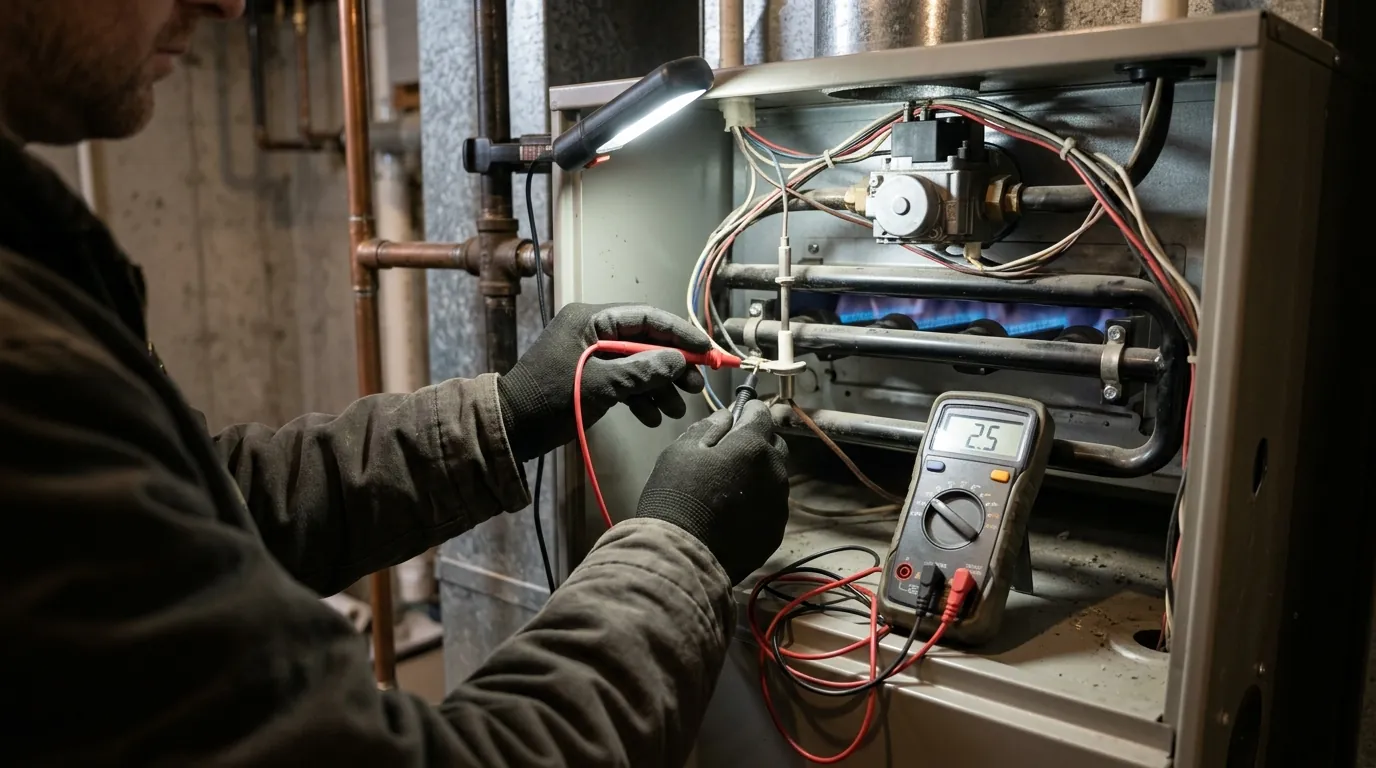
Startup is where the details get verified. The installer measures gas pressure, temperature rise across the heat exchanger and static pressure, and runs a combustion analysis to confirm clean burning. Airflow is set for the house, the thermostat is programmed and you get a walkthrough of the filter, the drain and the switches. The old furnace leaves with the crew.
| Work | Typical range |
|---|---|
| Single-stage 96 percent furnace, installed | $3,890 to $5,260 |
| Two-stage furnace with variable-speed blower | $4,780 to $6,940 |
| Modulating furnace, installed | $6,120 to $8,470 |
| New PVC venting and chimney liner work | $386 to $1,190 |
| Added return duct or plenum changes | $478 to $1,630 |
Ranges reflect typical Southwest Michigan installs. The final price is set after the installer measures the home, and the replacement estimate visit has no charge. Compare more jobs in the furnace and AC price guide.
Keep reading
Replace your furnace and central air together as one matched system, with a single install day and one load calculation.
Learn moreWi-Fi thermostats wired correctly to furnaces, heat pumps, boilers and dual-fuel systems, with a C-wire added when needed.
Learn moreNew gas piping for furnaces, ranges, dryers, generators, garage heaters and outdoor grills, sized for load and pressure tested.
Learn moreFAQ
Sometimes. If the right size unit is in stock and the venting and gas piping need no major changes, a same-day or next-day install is possible. During deep cold, demand is high, so we may restore partial heat with a temporary repair or space heating plan until the new furnace goes in.
Not always. If your AC is under ten years old and uses current refrigerant, the furnace can often be replaced alone, with the coil reused or replaced to fit the new cabinet. If the AC is aging too, replacing both together saves a second labor charge and gives you matched equipment.
Yes. A condensing furnace does not use the chimney at all. It vents through PVC pipe out a sidewall or the roof. The chimney may still serve a gas water heater, and in that case the installer checks whether the flue needs a liner so the water heater drafts properly on its own.
Noticeably quieter most of the time. A two-stage furnace spends the majority of a Michigan winter on low fire with the blower at a lower speed, so you hear a soft hum rather than a burst of air. On the coldest nights it moves to high fire, which sounds closer to a standard furnace.
The installer picks a spot that meets the manufacturer's clearances from windows, doors, gas meters and the ground, and keeps it above typical snow depth. On homes that get heavy drifting, a roof termination or a raised sidewall kit avoids the frosted, buried vents that shut furnaces down after big lake-effect storms.
Call any hour. Our office answers, sets the visit and tells you what to expect before a technician arrives.