Repairs keep landing on the busiest days
Repeated breakdowns during peak heat or cold usually mean wear items are failing that a seasonal visit would have caught.
Most commercial HVAC breakdowns happen on the first hot week of June or the first frigid week of January, which is exactly when a business can least afford one.
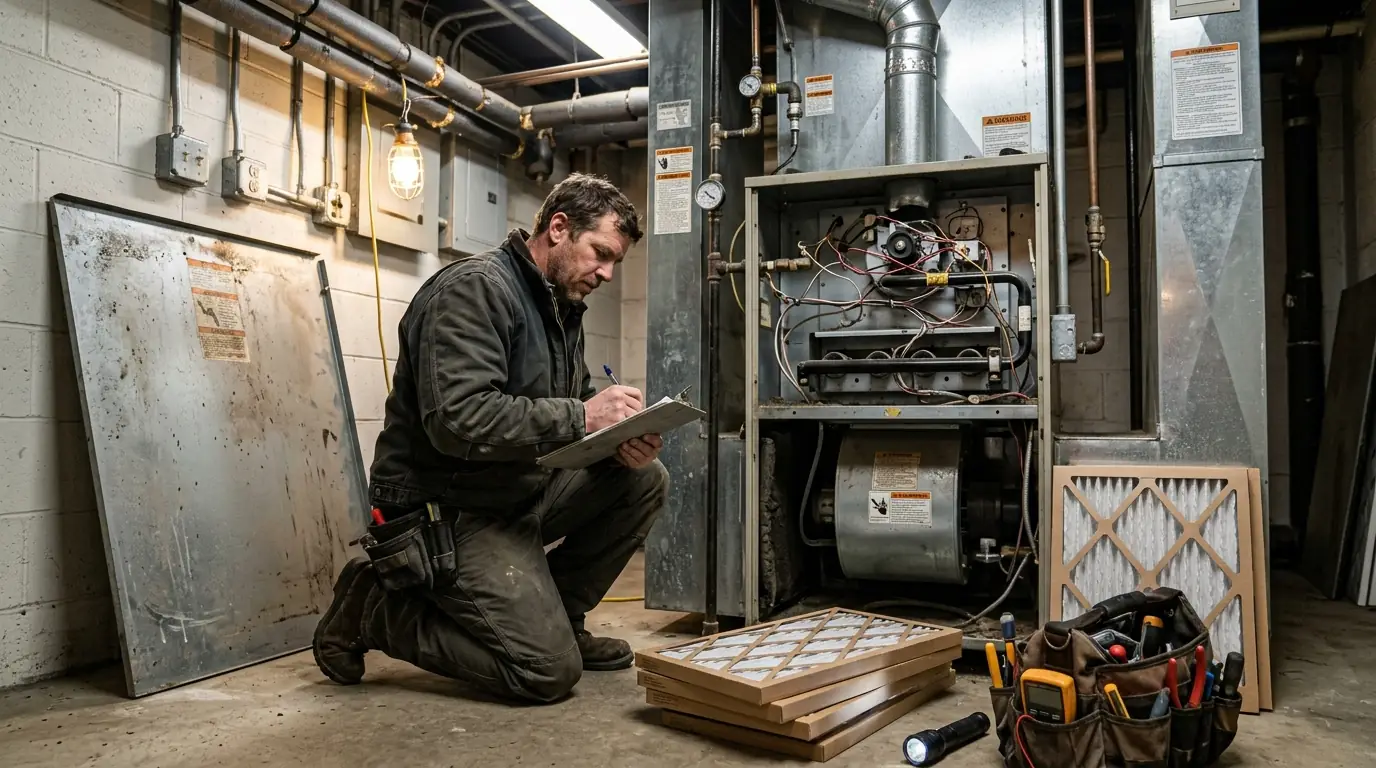
Commercial HVAC maintenance is a scheduled program of inspections, cleaning and testing for a business's heating and cooling equipment. Most buildings need two visits a year, in spring and fall, with extra filter changes for restaurants and dusty shops. The goal is fewer emergency calls, steadier comfort, lower energy use and longer equipment life.
A small business often has several pieces of equipment that nobody looks at until something goes wrong: a pair of rooftop units over the sales floor, a furnace in the back office, a unit heater in the stockroom and a ductless head cooling the server closet. Each one has filters, belts, coils and burners that wear on their own schedule, whether anyone is watching or not.
Our commercial maintenance program puts every unit in your building on a regular visit schedule, with the work recorded so you can see what was done. We serve restaurants, offices, retail shops, clinics, churches and light industrial buildings across Kalamazoo, Portage, Battle Creek and the Berrien County shore, and we set the visit frequency by how hard your equipment actually works.
Repeated breakdowns during peak heat or cold usually mean wear items are failing that a seasonal visit would have caught.
If there is no record on the unit or in your files, the filters are probably overdue and airflow is suffering.
Dirty coils, slipping belts and stuck economizers raise energy use well before they cause a complete failure.
Uneven temperatures, stuffy rooms and humidity complaints often trace back to equipment that has drifted out of adjustment.
Units over 10 years old benefit the most from regular attention, since small problems now cascade into expensive ones.
Multiple buildings with different equipment are much easier to oversee with one schedule and one set of records.
The spring visit focuses on cooling. Technicians clean condenser coils, check the evaporator coil and drain, test refrigerant pressures, measure amperage on compressors and fan motors, and confirm that economizer dampers move freely. Belts get inspected and replaced when worn, and filters are changed on every unit. Anything that tests weak, such as a capacitor reading low, is noted with a repair price before cooling season begins.
The fall visit shifts to heating. On gas equipment we inspect burners, test igniters and flame sensors, check gas pressure, look at heat exchangers for cracks or rust and check flue and vent connections. Unit heaters and radiant tube heaters in warehouses get their burners and reflectors cleaned. We also test carbon monoxide levels in the flue and around the space where combustion equipment is located indoors.
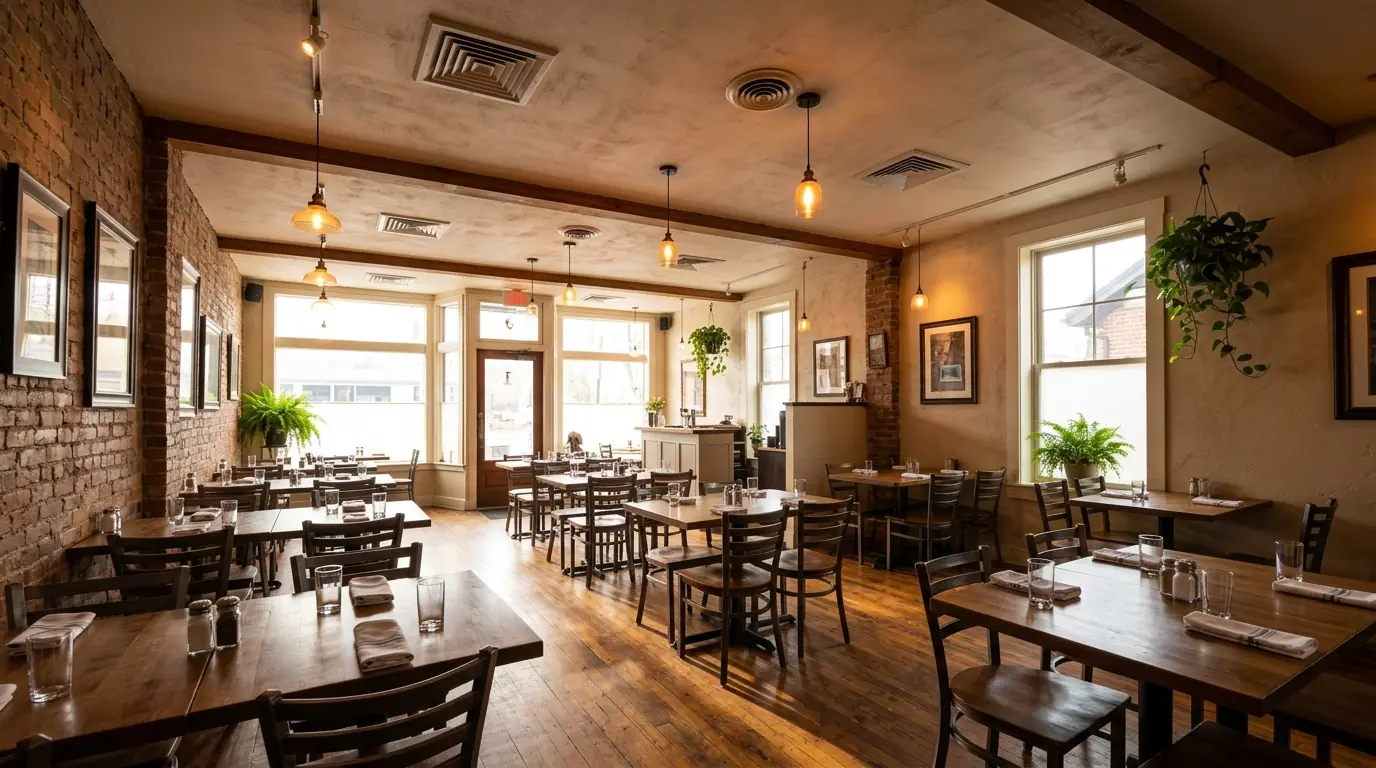
Offices, retail shops and churches with normal use usually do well on two visits a year. Restaurants are different: grease in the air coats coils and filters quickly, and make-up air units run hard during every service. Most restaurants benefit from quarterly filter changes and a mid-season check on the kitchen side. Light industrial shops with sawdust, metal dust or fumes may need filters changed even more often.
Churches have their own pattern. Equipment may sit idle for days, then run at full output to warm a large sanctuary before a service. That on and off duty is hard on igniters and heat exchangers, so we pay close attention to the heating side in fall. For buildings with server rooms or medical equipment, we add a check on the dedicated cooling unit at each visit so it does not get overlooked.
Every unit on your property gets its own record: make, model, serial number, tonnage, filter size, belt size and installation year when we can find it. After each visit, we note what was serviced, readings taken and anything found that needs attention. Over time, that record shows which units are holding up and which are starting to cost more in repairs than they are worth.
Property managers find this especially useful at budget time. Instead of guessing which rooftop unit will fail next year, you can see the age, the repair history and our technician's notes in one place. When a unit is due for replacement, we can plan it for a mild month rather than waiting for a mid-summer failure that forces a rushed decision and a closed sales floor.
Buildings on a maintenance program get priority scheduling when something does break. Our phone line is answered 24/7, and during heat waves and cold snaps, when calls stack up, maintenance customers are placed ahead in the queue. Because our technicians already know the equipment from past visits, diagnosis tends to go faster, and common parts for your units are easier to have on hand.
Maintenance also lowers the odds of needing that call in the first place. A belt replaced in April does not snap on a 90 degree afternoon in July. A cracked igniter found in October does not leave the office cold on a Monday morning in January. When repairs are needed between visits, our commercial repair technicians and rooftop unit specialists already have your history.
| Work | Typical range |
|---|---|
| Seasonal visit, small office or shop (1 to 2 units) | $197 to $415 |
| Seasonal visit, restaurant or retail (3 to 5 units) | $436 to $968 |
| Additional rooftop unit per visit | $118 to $214 |
| Quarterly filter service between visits | $89 to $236 |
| Typical yearly program, two visits | $389 to $1,940 |
Pricing depends on the number and size of units, roof access and filter types. We walk the building and list every unit before setting your program price. Compare more jobs in the furnace and AC price guide.
Keep reading
Repair and seasonal service for packaged rooftop units on stores, offices and restaurants, from belts and coils to gas heat.
Learn moreHeating and cooling repair for restaurants, offices, retail shops, churches and light industrial buildings, at any hour.
Learn moreNew and replacement rooftop units, split systems and unit heaters for small businesses, sized to the space and its occupancy.
Learn moreFAQ
Clean coils, correct belt tension, working economizers and proper refrigerant charge all let equipment run fewer hours to hold the same temperature. The size of the savings varies by building and how neglected the units were, but dirty coils and stuck dampers are some of the most common energy wasters we find on small commercial roofs.
Restaurants usually need filters changed every two to three months, and kitchens with heavy frying may need it monthly. Grease-laden air coats filters and coils quickly, which cuts airflow and raises cooling costs. We set a filter schedule based on what we see on the first visits and adjust it from there.
Yes. Most rooftop work happens on the roof and does not disturb the space below, but interior units and thermostats may need access. We can schedule visits for early mornings, after closing or on days the building is closed, such as a weekday for many churches.
You receive a written summary for each unit showing filters changed, readings taken, parts worn or replaced and any repair we recommend with its price. Over time those records build a history for every unit, which helps with repair decisions, replacement budgets and tenant questions about building comfort.
For most small buildings, yes. One emergency call on a hot Saturday often costs more than a year of scheduled visits, and the business may lose a day of sales on top of that. Two visits a year also catch slow problems like a cracked heat exchanger or a failing compressor contactor early.
Call any hour. Our office answers, sets the visit and tells you what to expect before a technician arrives.