No service last year
A furnace that skipped a season of care is more likely to fail during the first long cold stretch.
The furnace sat idle all summer, the first cold night is coming, and you would rather find a weak igniter in October than lose heat in January.
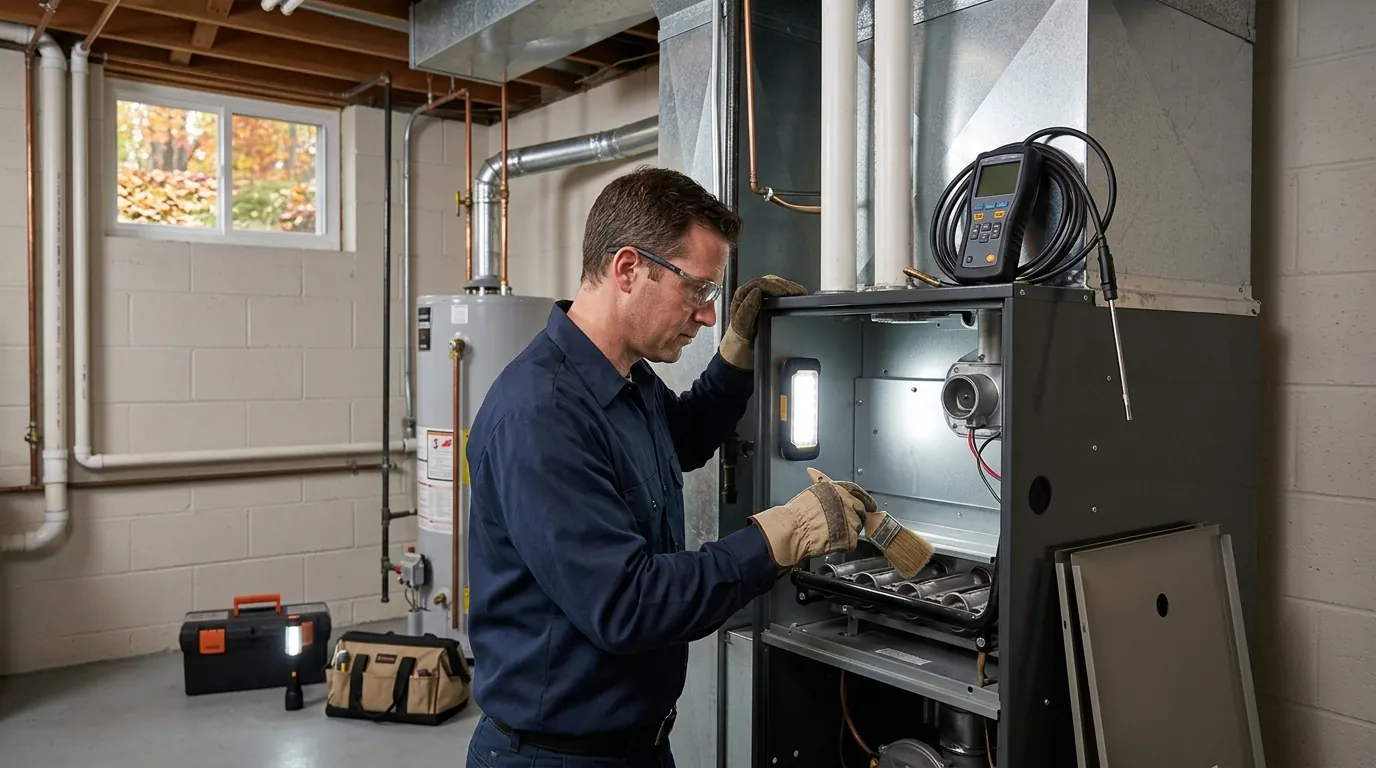
A furnace tune-up cleans the burners and flame sensor, checks the igniter, tests safety switches, measures gas pressure and temperature rise, inspects the heat exchanger and venting, and runs a combustion test. In the Kalamazoo area it typically costs $109 to $189 and takes about an hour. The best time is September through early November.
A furnace that runs through a Southwest Michigan winter can log well over a thousand burner cycles. Dust settles on the flame sensor, the burners pick up rust flakes, the condensate trap collects sludge and capacitors drift out of spec. None of that shows up until the furnace fails on a cold night. A tune-up catches those small problems while the weather is still mild and parts are easy to get.
Our tune-up is a measured inspection, not a quick filter swap. The technician cleans what needs cleaning, then tests the furnace under load and writes down the readings: gas pressure, temperature rise, flame signal, static pressure and carbon monoxide in the flue. Those numbers give you a baseline for next year, and they show whether anything is drifting toward failure.
A furnace that skipped a season of care is more likely to fail during the first long cold stretch.
A brief smell on the first run is normal. If it lasts more than a day, the burners or blower may need cleaning.
A healthy gas flame is mostly blue. Yellow tips can mean dirty burners or poor combustion air.
If the furnace runs longer to reach the same temperature, airflow or burner performance may have dropped.
A soft whump at startup often means burner ports are partly blocked and gas is building before it lights.
Many manufacturer warranties expect regular professional maintenance, and a dated service record helps if a part fails.
The technician starts by shutting off power and gas, then removes the burner assembly or cleans it in place, depending on the design. The flame sensor is polished, the pilot or hot surface igniter is inspected for cracks, and the blower compartment is vacuumed. On high-efficiency furnaces, the condensate trap is removed, flushed and refilled, and the drain hose is checked for sagging or kinks.
With the furnace back on, testing begins. Gas pressure is set to the manufacturer's spec, temperature rise is measured across the heat exchanger and the flame sensor's microamp signal is recorded. Safety switches, including the high limit, rollout and pressure switches, are proven to open. The thermostat is checked for accurate readings, and the technician notes the filter size so you can keep spares.
Kalamazoo usually sees its first hard freeze in October, and lake-effect snow can arrive before Thanksgiving. Once nights stay below freezing, furnace repair calls climb fast and parts suppliers run short on common igniters and inducer motors. A September or October tune-up lands well before that rush, so any worn part the technician flags can be replaced on a calm schedule.
Fall timing also lets the technician see how the furnace behaves after months of sitting. Rust on burner trays, mouse nests in the cabinet and spider webs in the intake pipe are common after a humid Michigan summer. Clearing them before the first long run keeps the burners lighting cleanly and avoids the lockouts that often happen on the first cold morning of the year.
A combustion analyzer reads oxygen and carbon monoxide in the flue gases while the furnace runs. Clean, properly adjusted burners produce very little carbon monoxide. A rising number points to dirty burners, the wrong gas pressure or, in some cases, a heat exchanger problem. Our technicians record the reading every year and keep it with your service history, so a change from one season to the next stands out clearly.
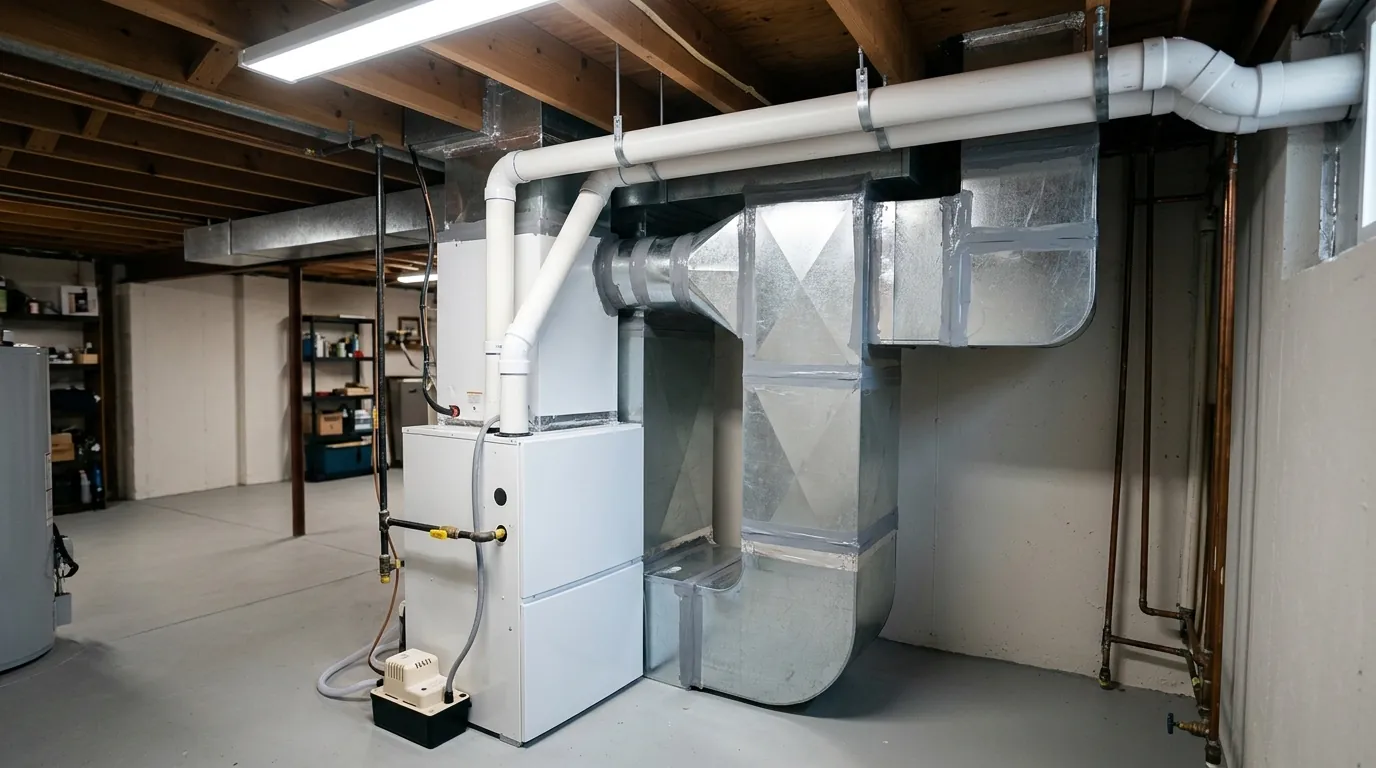
Venting gets the same attention. On older 80 percent furnaces, the technician checks the draft at the flue and looks for rust or separated joints in the metal vent pipe. On condensing furnaces, the PVC intake and exhaust are inspected inside and out, and outdoor terminations are cleared of leaves, nests and old ice. If a deeper look is needed, we can schedule a camera inspection of the heat exchanger.
You receive a written checklist with every reading and a plain list of anything that needs attention, ranked by urgency. A capacitor reading low but still working is noted for the next visit. A cracked igniter is flagged for replacement now, since it will likely break on a cold night. Nothing is replaced without your approval and a price first.
Between visits, change the filter on schedule, keep the area around the furnace clear and brush snow away from sidewall vents after storms. Many homeowners combine the fall furnace visit with a spring AC check through an annual maintenance plan, which keeps both systems on a regular cycle without having to remember to call each season. It also means the same records follow your equipment from year to year.
| Work | Typical range |
|---|---|
| Standard furnace tune-up | $109 to $189 |
| Tune-up with condensate system flush | $134 to $217 |
| Igniter replacement found during tune-up | $148 to $294 |
| Blower capacitor replacement | $127 to $246 |
Typical Kalamazoo-area pricing. The final price depends on the furnace type and what the technician finds, and any added repair is priced and approved before work starts. Compare more jobs in the furnace and AC price guide.
Keep reading
Gas furnace diagnosis and repair for ignition faults, short cycling, cold air and noisy blowers, any hour.
Learn moreTwo visits a year, furnace in fall and AC in spring, with priority scheduling when your home needs a repair.
Learn moreCombustion and venting tests on your furnace, boiler, water heater and other gas appliances, with CO readings in each room.
Learn moreFAQ
Once a year, ideally in early fall before steady use begins. Michigan furnaces work hard from October through April, so a single annual visit catches wear before the long season. Furnaces in dusty homes, homes with pets or homes under renovation may benefit from a filter and blower check midway through winter as well.
Yes, starting after the first heating season. New furnaces still collect dust on the flame sensor and sludge in the condensate trap, and many manufacturer warranties expect annual professional service. The first tune-up also confirms the installer's original gas pressure and airflow settings are holding steady after a full winter of cycles.
Homeowners can change filters, keep the area clear and check vents after snow. The rest of a tune-up needs tools most people do not own, such as a manometer, microamp meter and combustion analyzer. Adjusting gas pressure or testing safety switches without the right equipment can create a hazard rather than prevent one.
A short burning smell on the first few runs is normal. Dust that settled on the heat exchanger over summer burns off once it heats up. Opening a window and running the furnace for an hour usually clears it. A smell that lasts longer, or one that smells electrical or like gas, needs a call.
A weak flame sensor signal and a dirty or partly clogged condensate trap are the two most frequent finds. Close behind are cracked igniters and low blower capacitors. All four are inexpensive to address in the fall and tend to cause no-heat calls if left until the first long cold snap.
Call any hour. Our office answers, sets the visit and tells you what to expect before a technician arrives.