Musty basement odor
A damp, earthy smell downstairs usually means relative humidity is staying above 60 percent for long stretches.
A basement that smells musty every July, a portable dehumidifier filling its bucket twice a day, or air that feels clammy even with the AC running all point to more moisture than your system can remove.
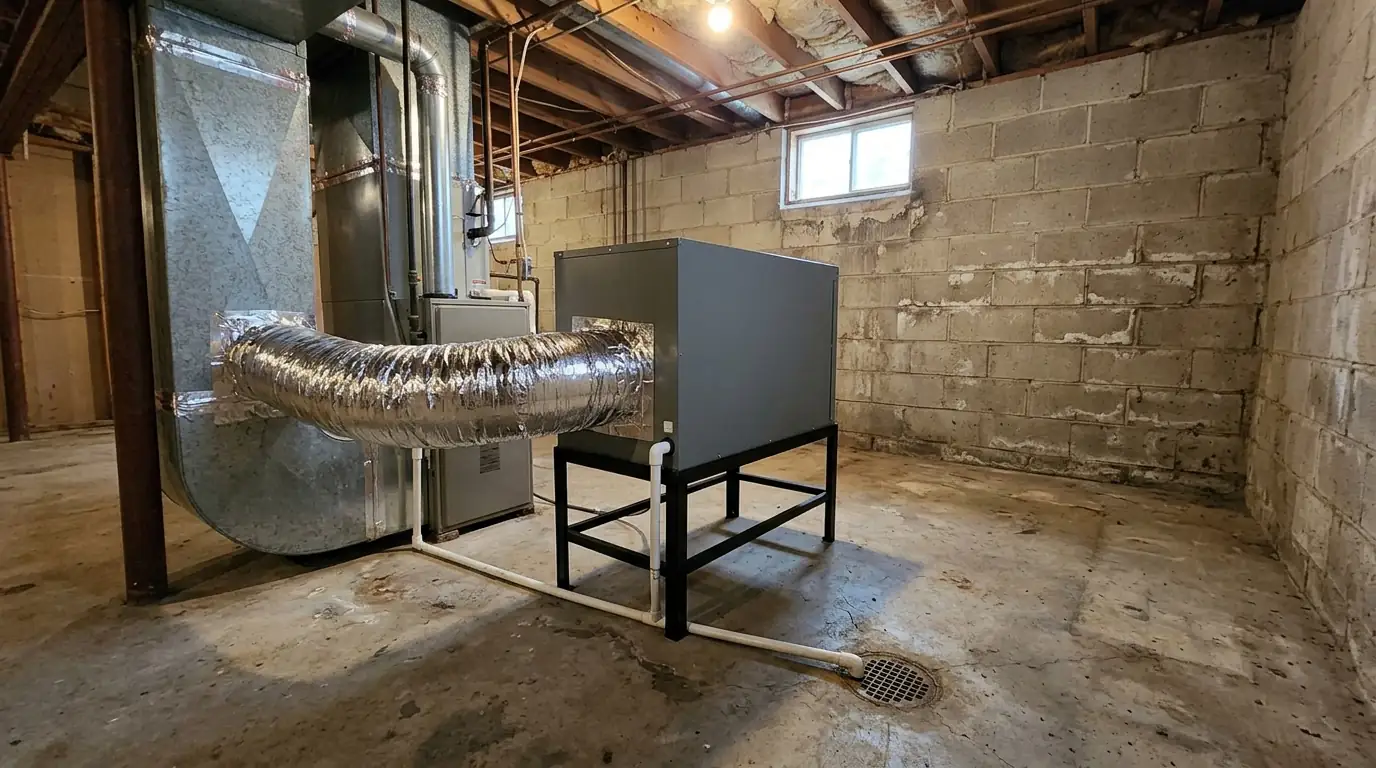
A whole-home dehumidifier is a ducted or freestanding unit, usually installed in the basement or mechanical room, that removes 70 to 130 pints of water per day and drains to a floor drain or pump. It runs independently of your air conditioner, controlled by its own humidistat, so it can dry the house on cool, damp days when the AC stays off.
Southwest Michigan summers bring long stretches of humid air, and the Lake Michigan shore adds damp breezes on top of that. Below grade, cool foundation walls and slab floors keep basement air close to its dew point. Central air removes some moisture, but only while the compressor runs, and a well-sized system on a mild, sticky day may barely run at all.
A whole-home dehumidifier is a dedicated machine that draws air from the house, passes it over a cold coil to condense water out, and returns drier air through your ductwork or straight into the basement. Our technicians install it with a fixed drain, a wall-mounted control and, when needed, its own supply and return ducts, so the moisture leaves the house without anyone carrying a bucket.
A damp, earthy smell downstairs usually means relative humidity is staying above 60 percent for long stretches.
Water beading on copper lines or metal ductwork in summer shows the air is close to its dew point.
If you are emptying a bucket every morning and the space still feels damp, the moisture load is larger than a small appliance can handle.
Rooms that feel cool but sticky often mean the air conditioner is oversized and short cycling, which removes little moisture.
Cardboard boxes, books, leather and fabric in the basement grow spots or smell stale by late summer.
Condensation on the outside of cool windows or on toilet tanks indoors points to heavy indoor moisture.
An air conditioner removes moisture as a side effect. Water condenses on the evaporator coil only while the coil is cold, and much of it can evaporate back into the airstream when the compressor shuts off and the blower keeps running. On a 74 degree day with heavy humidity, the thermostat may be satisfied almost right away, so the system barely runs and the moisture stays in the air.
Oversized air conditioners make this worse, because they cool the house fast and stop before the coil has time to pull much water out. Basements add their own load, since cool foundation walls keep the air there damp no matter what the upstairs thermostat reads. A dedicated dehumidifier handles moisture on its own schedule, regardless of whether the house needs cooling at that moment.
The simplest arrangement places the unit in the basement with its own intake and a short supply duct, drying that level directly. For whole-house control, we tie the dehumidifier into the furnace or air handler: it draws from the main return and discharges into the supply side, so the blower spreads dry air to every room. A backdraft damper keeps furnace air from pushing back through it.
In homes with a finished lower level, we sometimes run a dedicated return from the basement and supply into the main trunk. Each layout depends on where the ductwork runs, how the basement is finished and whether you want upstairs and downstairs treated together. Our technician sketches the options and explains the trade-offs before any cutting begins, including how each choice affects noise in nearby rooms.
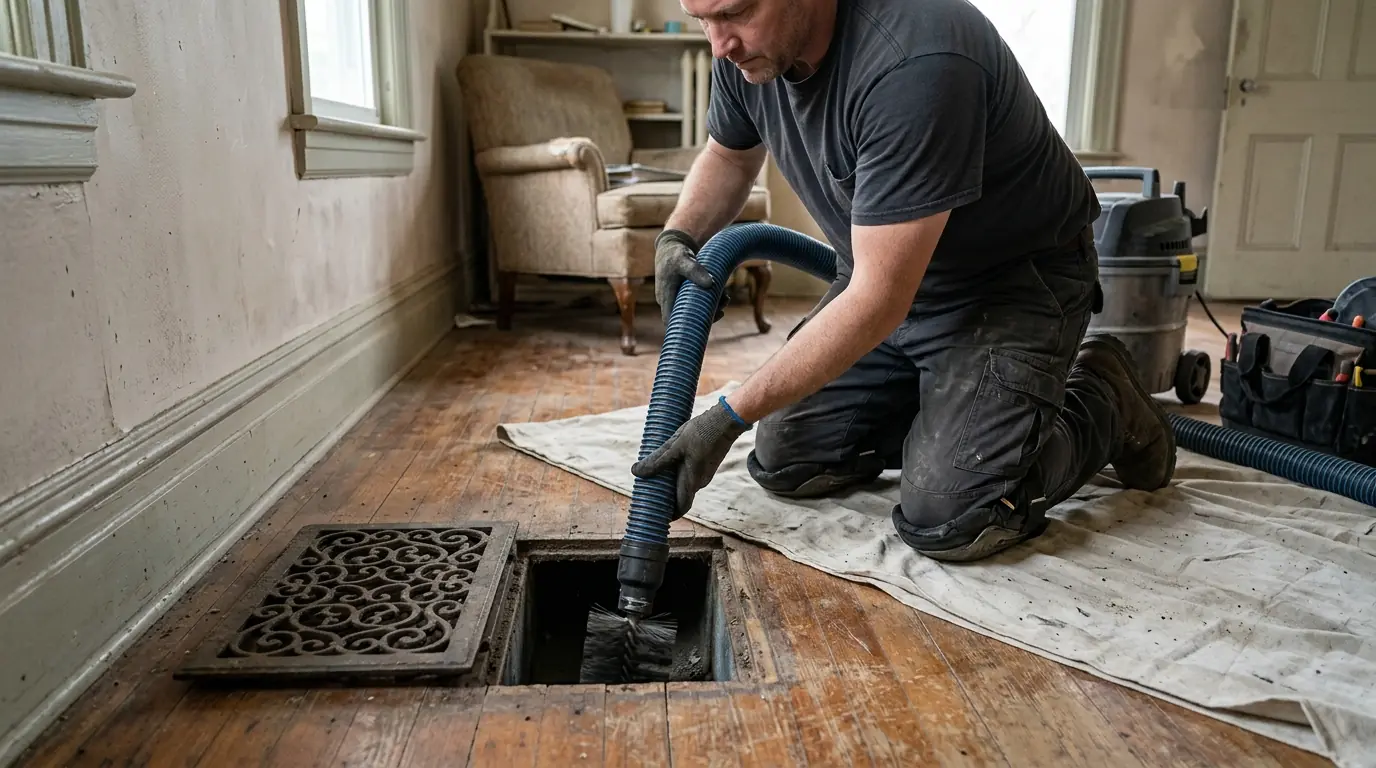
Homes near Lake Michigan in South Haven, St. Joseph and Benton Harbor deal with damp air drifting in off the water much of the summer. Older Kalamazoo houses with fieldstone or block foundations let ground moisture wick through the walls, and a portable unit in one corner rarely reaches the far end of the basement. Those spaces need steady air movement across the whole floor, not just one damp corner.
Newer, tightly built homes have a different problem. They trap the moisture from showers, cooking and people breathing, and an efficient air conditioner may not run long enough to pull it back out. In all three cases a dehumidifier sized by the moisture load, not just square footage, keeps the house steadier. Pairing it with balanced ventilation is common in tight construction.
Every unit we install drains by gravity to a floor drain or, where that is not possible, to a condensate pump with an overflow safety switch. The control is mounted in the living space, not on the unit, so it reads the humidity you actually feel. Most homeowners set it between 45 and 50 percent for summer and leave it there.
Upkeep is light: replace or wash the filter every few months, check that the drain line flows freely, and keep the coil clean. Our technicians include the dehumidifier on a regular AC tune-up visit, checking the coil, drain trap and control calibration. A clean filter alone makes a noticeable difference in how much water the machine removes each day, and it keeps the coil from loading up with basement dust.
| Work | Typical range |
|---|---|
| Basement-only ducted dehumidifier, installed | $1,687 to $2,438 |
| Whole-house dehumidifier tied into furnace ducts | $2,174 to $3,286 |
| Dedicated return or supply duct run | $287 to $694 |
| Condensate pump with overflow switch | $168 to $347 |
| Yearly dehumidifier service | $94 to $172 |
Dehumidifier projects in local homes generally land in these bands. The final price is set after the technician sees your basement, ductwork and drain options. Compare more jobs in the furnace and AC price guide.
Keep reading
On-site measurement of humidity, particles, carbon dioxide and VOCs, with clear readings tied back to your HVAC system.
Learn moreNew central air sized by load calculation, matched to your furnace and set up to dry out the air in humid Michigan summers.
Learn moreBypass, fan-powered and steam humidifiers mounted on your furnace, with outdoor-reset controls that keep winter windows dry.
Learn moreFAQ
Many finished or partly finished basements in this area do well with a ducted unit in the 70 to 100 pint per day range. Large homes, shore properties and basements with fieldstone walls may need 120 pints or more. We size by measured humidity, square footage, foundation type and how much the space is used.
Slightly. The machine releases a small amount of heat as it runs, much like a refrigerator. In a basement that is often welcome, and when the dry air moves through the ducts the effect upstairs is minor. Drier air usually feels cooler, so many people end up setting the AC a degree or two higher.
It can, but most homes in Kalamazoo do not need it once the heating season starts, since cold outdoor air is dry. We usually suggest turning the control down or off from late fall to spring. In a tight new home with a lot of occupants, some owners keep it on low for the shoulder months.
It drains continuously through a hose or PVC line to a floor drain, laundry tub or sump pit. If none of those sit lower than the unit, we add a condensate pump that lifts the water to a drain. There is no bucket to empty, and an overflow switch shuts the unit off if the pump ever fails.
If the AC is otherwise in good shape, adding a dehumidifier is usually the lower-cost way to fix sticky indoor air. When the air conditioner is near the end of its life anyway, right-sizing the new unit with a variable-speed blower can help. Often the best answer for humid homes is both together.
Call any hour. Our office answers, sets the visit and tells you what to expect before a technician arrives.