Stuffy bedrooms by morning
Closed doors and sleeping occupants raise carbon dioxide overnight, which many people notice as a heavy, stale feeling on waking.
A newer home that feels stuffy, holds cooking smells for hours and fogs its windows in winter is often sealed so well that stale air has nowhere to go.
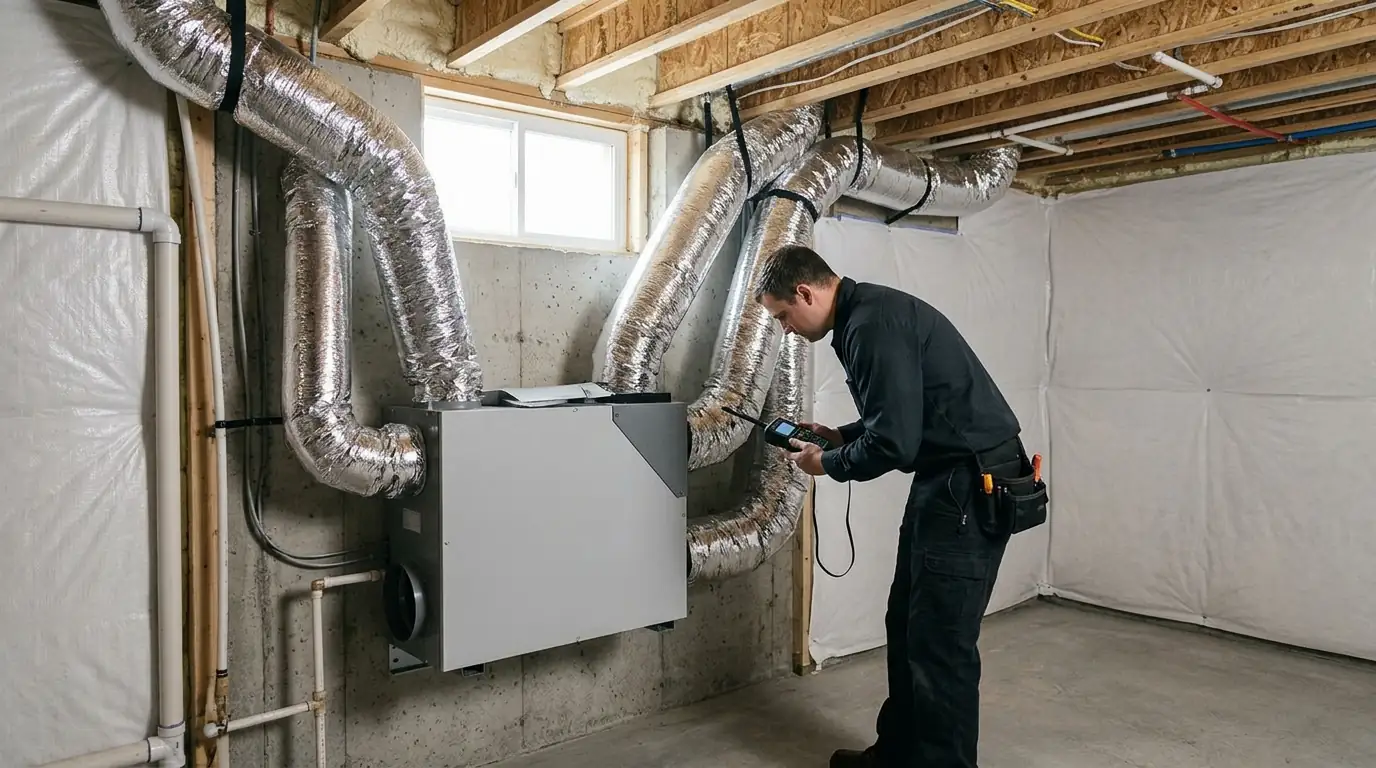
An HRV or ERV is a balanced ventilation unit with two fans and a heat exchange core. It pulls fresh air in from outside and sends an equal amount of stale air out, transferring heat between them. An ERV also moves some moisture, which helps in humid summers. Both connect to your furnace ductwork or a dedicated duct system.
Building practices have changed a lot over the last few decades. Newer homes around Portage, Oshtemo and Texas Township go up with sealed sheathing, foam at the rim joists and tight windows. That keeps heating bills down, but it also means the house no longer swaps indoor air for outdoor air through the cracks the way an older home does, so moisture, odors and carbon dioxide build up indoors.
An energy recovery ventilator (ERV) or heat recovery ventilator (HRV) brings in a steady stream of fresh outdoor air while exhausting the same amount of stale air. Inside the unit, the two streams pass through a core without mixing, and the outgoing air warms the incoming air in winter. Our technicians size, duct and balance these systems so they run quietly year-round.
Closed doors and sleeping occupants raise carbon dioxide overnight, which many people notice as a heavy, stale feeling on waking.
When normal moisture from showers and cooking cannot escape a tight house, it ends up on the coldest surface: the glass.
Cooking, pet and garbage smells that hang around for hours point to very little air exchange.
Insulation and sealing upgrades can cut natural air leakage enough that an older house now needs mechanical fresh air.
In a sealed home, exhaust fans may move less air because there is no easy path for makeup air to come in.
A home monitor or air quality test showing high CO2 in occupied rooms is a direct sign of under-ventilation.
Both machines recover heat. The difference is moisture. An HRV transfers heat only, so in winter it exhausts humid indoor air and brings in dry outdoor air, which lowers indoor humidity. That suits homes that run damp in winter and fight window condensation. An ERV core passes some moisture as well, keeping more humidity indoors in January and blocking some outdoor moisture in July.
Kalamazoo sits in a climate that pulls in both directions: dry, bitter winters and humid summers. For many tight homes here, an ERV is a balanced choice, since it avoids drying the house out too much in winter while easing the summer moisture load on the air conditioner. Homes with high winter humidity from large families or indoor pools may lean toward an HRV.
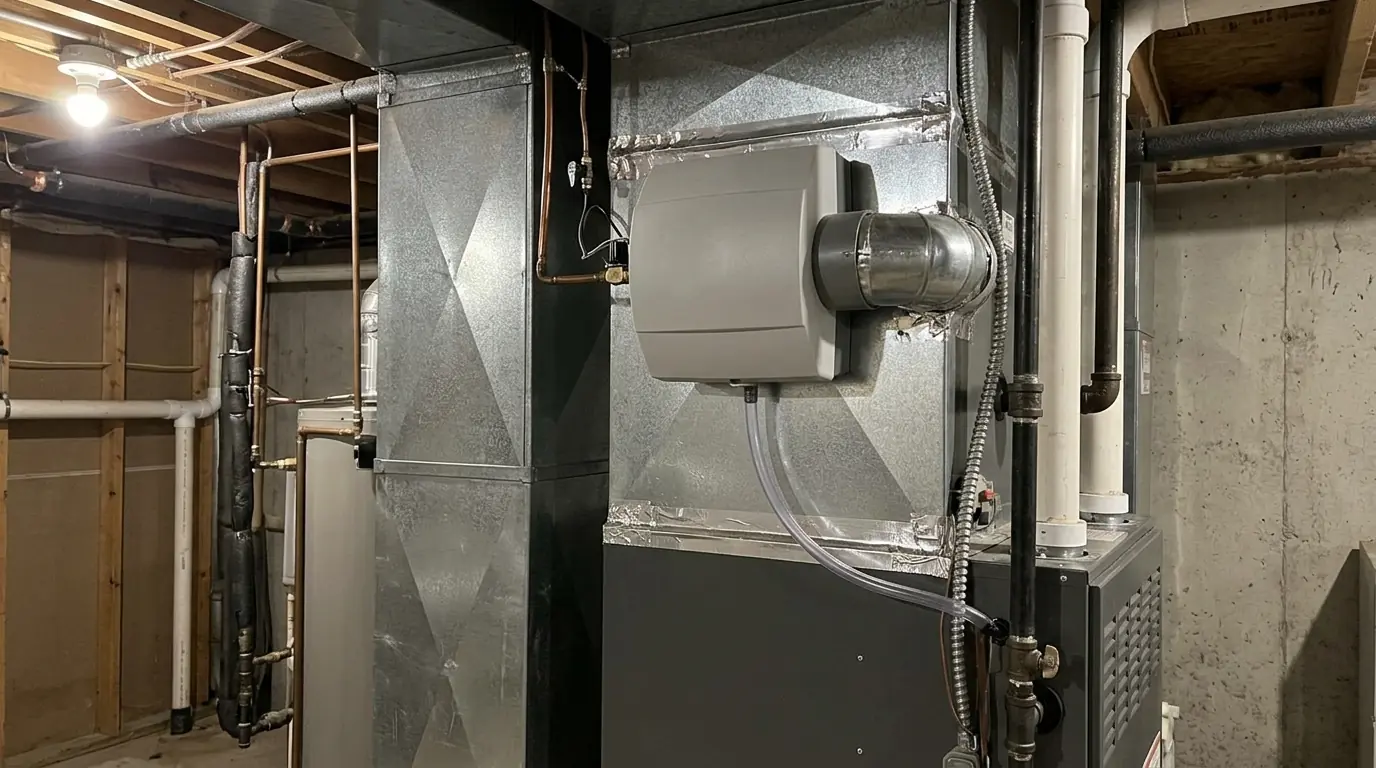
The simplest layout connects the ventilator to the furnace or air handler return. Fresh air goes into the return plenum and the blower spreads it through the house, while stale air is pulled from the return a short distance upstream. This works well in forced-air homes, though the furnace blower often needs to run on low speed when the ventilator is operating.
A fully ducted system runs separate exhaust pickups in bathrooms, the kitchen area and laundry, and delivers fresh air to bedrooms and living rooms. It costs more but moves air exactly where it is needed and does not rely on the furnace blower. Homes with boilers, radiant floors or ductless mini-splits typically need this dedicated duct layout because there is no central air handler.
On below-zero nights, the warm moist air leaving the house can frost the core as it cools. Ventilators handle this with a defrost cycle that briefly shuts off or recirculates the incoming air until the ice clears. ERV cores tend to frost at lower outdoor temperatures than HRVs, which is one reason they work well in this region, where January lows routinely fall below zero.
Both units contain filters on the incoming and outgoing streams that need cleaning or replacement every three to six months. The outdoor intake hood should stay clear of snowdrifts, dryer vents and the gas meter, and it needs to be separated from the exhaust hood so stale air is not drawn right back in. We place the hoods with those details and lake-effect snow drift lines in mind.
A ventilator only works properly when incoming and outgoing airflow match. If more air goes out than comes in, the house runs under slight negative pressure, which can pull air through gaps and even affect how gas appliances vent. Our technicians measure each stream at installation and adjust balancing dampers until they line up. We recheck the numbers with the furnace blower running, since the blower can shift pressures in the return.
Fan speed is set to deliver steady background ventilation at a low, quiet level, with a boost mode for showers, cooking or a full house. A wall control or a compatible smart thermostat can manage timing. Once the system is balanced and the controls are set, most homeowners forget it is running except for noticing that the air feels fresher.
| Work | Typical range |
|---|---|
| HRV or ERV tied into furnace ductwork, installed | $1,846 to $3,174 |
| Fully ducted ventilator with dedicated runs | $3,487 to $6,238 |
| Wall control or boost timers | $118 to $296 |
| Core cleaning and filter service | $124 to $219 |
Ventilation projects around Kalamazoo usually fall in these bands. The final price is set after the technician sees your duct layout, wall access and where hoods can be placed. Compare more jobs in the furnace and AC price guide.
Keep reading
On-site measurement of humidity, particles, carbon dioxide and VOCs, with clear readings tied back to your HVAC system.
Learn moreDucted dehumidifiers that pull summer moisture out of basements and living space, draining on their own with no buckets to empty.
Learn moreStatic pressure tests, register airflow readings and damper settings that send heat and cooling to rooms that come up short.
Learn moreFAQ
In a fully ducted system, bathroom pickups can take over from the bath fans, using the ventilator's boost mode for showers. When the ERV ties into the furnace return, most homes keep their existing bath fans. Kitchen range hoods always stay separate, since grease should not run through a ventilator core.
Some, but far less than opening a window. The core recovers much of the heat from outgoing air and passes it to the incoming stream, so the fresh air arrives already warmed. The extra cost depends on fan speed and how cold the winter is, and continuous low speed keeps it modest.
It can, but many early 1900s homes still leak enough air that a ventilator is not the first step. If the house has had major sealing, new windows and attic insulation, fresh air may become necessary. An air quality test with carbon dioxide readings shows whether mechanical ventilation is actually needed.
We keep the intake at least a few feet from the exhaust hood, dryer vents, furnace flues and the gas meter, and above the usual snow line. Both hoods are on a side wall or rim joist in most homes. Screens keep insects and leaves out, and they need a quick cleaning now and then.
At normal low speed, most units are about as quiet as a refrigerator and sit in the basement or a mechanical closet. Boost mode is louder for short periods. Insulated, properly sized ducts and rubber vibration isolators keep sound from carrying through the house.
Call any hour. Our office answers, sets the visit and tells you what to expect before a technician arrives.