A room always colder than the rest
A bedroom at the end of a long branch or on an outside corner may be getting far less air than it needs.
One bedroom that stays five degrees colder than the rest, a family room that never cools down in July, or registers that roar while others barely breathe point to air going to the wrong places.
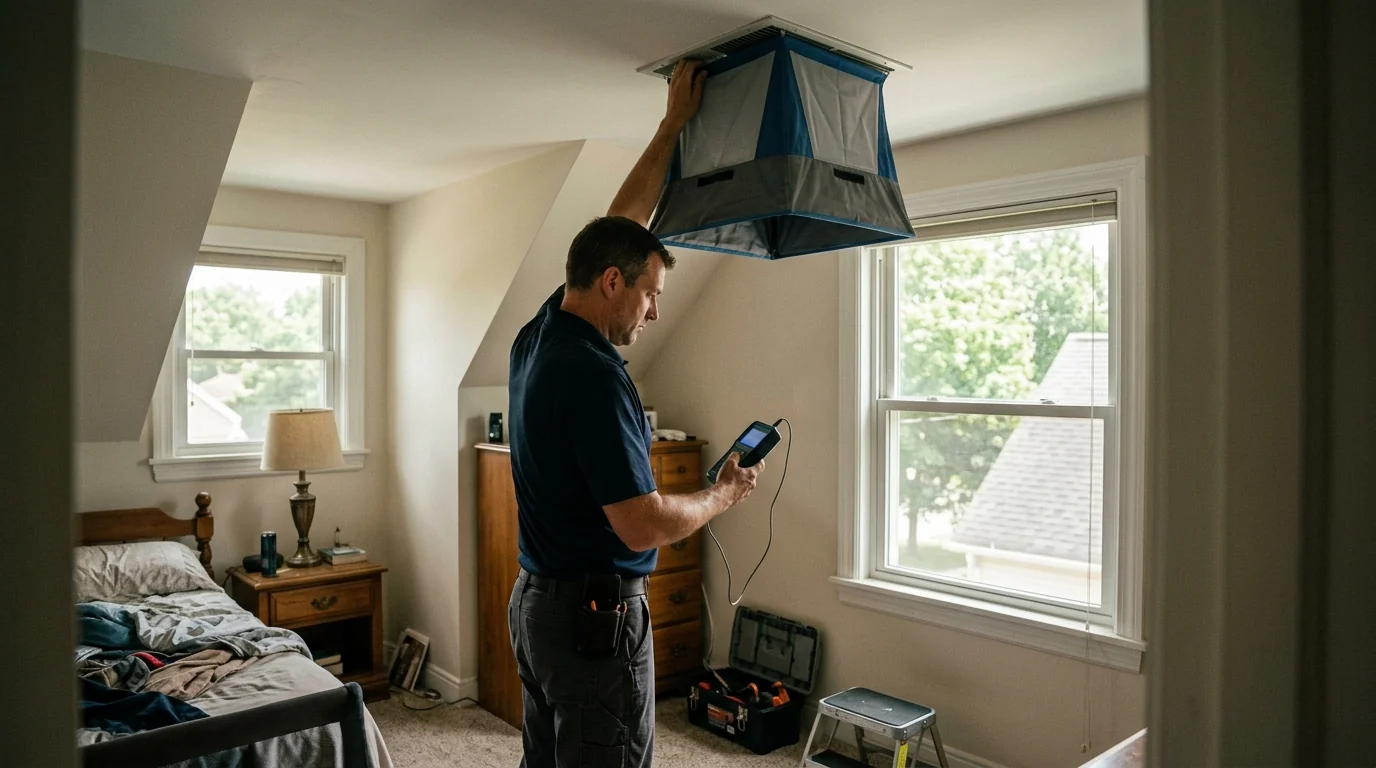
Airflow balancing measures how much air each room receives, then adjusts dampers and blower speed so each room gets the share it needs. A technician tests static pressure at the furnace, reads airflow at every register with a flow hood or anemometer, adjusts branch dampers and often sets seasonal positions for heating and cooling. Most homes take two to four hours.
Most duct systems were never balanced after they were installed. The installer hung the ducts, turned on the furnace and left, and the air found its own way. Rooms close to the furnace on short runs get more than their share, while rooms at the end of long branches, over garages or on the second floor get less. Over time, remodels and closed registers shift the pattern further.
Our technicians measure what is actually happening: total external static pressure at the furnace, airflow at each supply register and temperature differences across the house. Then we adjust balancing dampers, blower speed and register settings to send air where it is needed. When the numbers show a duct problem that adjustment cannot fix, we explain what change would solve it.
A bedroom at the end of a long branch or on an outside corner may be getting far less air than it needs.
Two-story homes often need different damper positions in summer and winter to keep both floors comfortable.
Uneven airflow at registers is the clearest sign the system needs balancing.
Pressure differences between rooms often come from too little return air, especially in closed bedrooms.
A furnace or AC replacement does not fix airflow distribution if the ducts and dampers stay the same.
Opening walls, finishing a basement or adding a room changes how air flows through the existing duct system.
Balancing starts with total external static pressure, which is the resistance the blower pushes against across the supply and return ducts. Our technician takes readings on both sides of the furnace and compares them with the blower's rated limits. High static pressure means the ducts or filter are restricting airflow, and no amount of damper adjustment will make up for that.
Next comes airflow at each supply register, measured with a flow hood or an anemometer, along with the temperature of supply air and the room. We also check whether closed bedroom doors create pressure differences that starve the rooms of air. These readings give a map of where air is going now and how far each room is from what it needs.
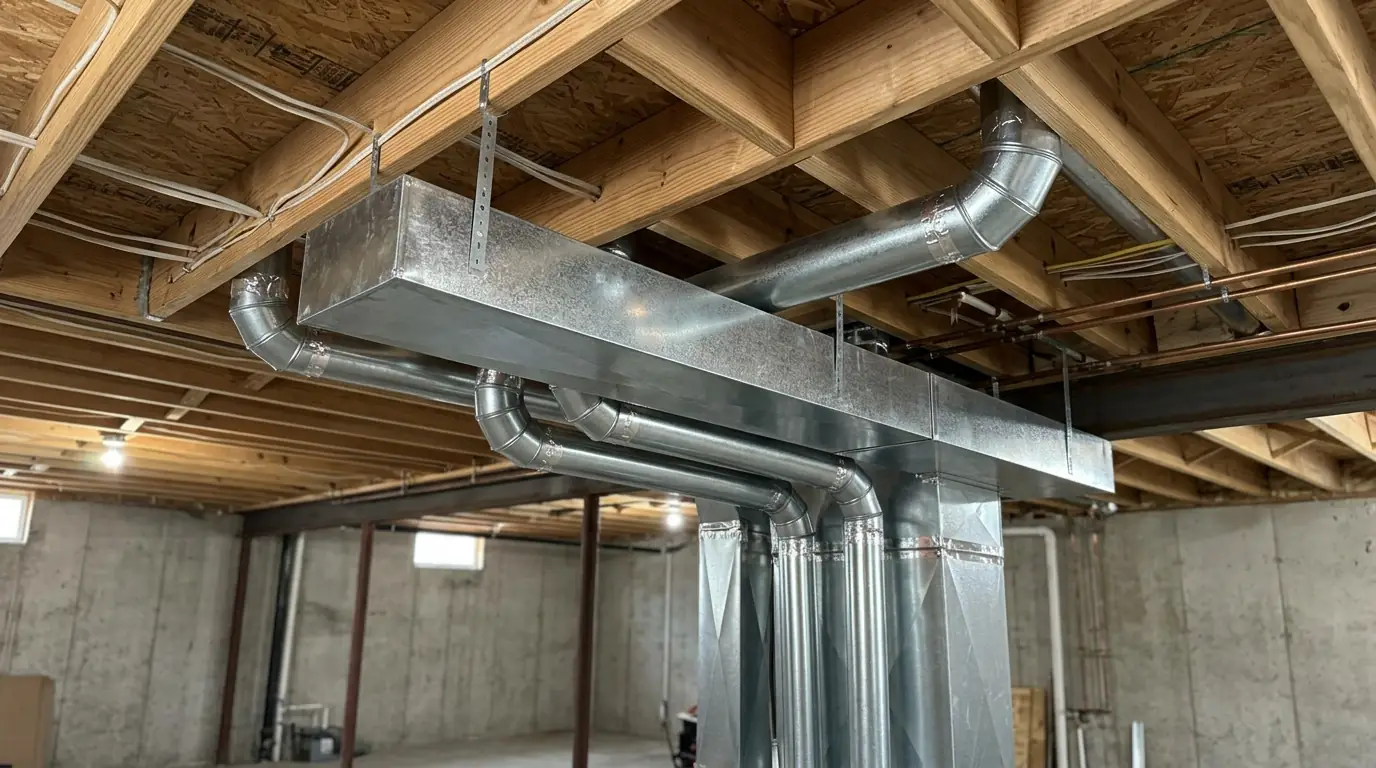
Most duct systems have manual balancing dampers in the branch takeoffs near the trunk. A handle or slot shows their position, though many have been painted over or forgotten. We open the dampers on rooms that are short of air and partly close dampers on rooms getting too much, measuring airflow again after each change until the distribution lines up.
If the blower is on a speed that is too low or too high for the system, we adjust it within the furnace manufacturer's limits. Registers with poor throw or the wrong size for the room can be swapped. Branches with no damper at all can have one added in the basement. Each change is small, but together they move a noticeable amount of air.
Heating and cooling need different balances in a two-story house. In winter, warm air rises on its own, so the upstairs needs less supply air and the main floor more. In summer, the upstairs gains heat from the roof and needs extra cooling air while the main floor needs less. A single fixed damper setting usually leaves one season uncomfortable.
We mark summer and winter positions on the dampers so you can switch them twice a year in about five minutes. For homes in Kalamazoo, Portage and the surrounding area, that seasonal change alone often closes most of the temperature gap between floors. If it does not, HVAC zoning with motorized dampers handles the switch automatically through two thermostats, one for each floor.
Supply air can only enter a room if air can leave it. Bedrooms with no return grille depend on the gap under the door, and when that door is closed, the room pressurizes and receives less air. Adding a jumper duct or transfer grille between the bedroom and hallway lets air flow back toward the central return without bringing noise or light through.
Some rooms cannot be fixed with dampers because the branch duct is too small, crushed or leaking. In those cases, our technician recommends duct repair or sealing or a new, larger branch run. Our technician shares the airflow numbers so you can see why a room comes up short and what each fix should change before deciding what to do.
| Work | Typical range |
|---|---|
| Airflow test and balancing, single system | $214 to $397 |
| Added manual balancing damper | $86 to $174 |
| Jumper duct or transfer grille for a bedroom | $168 to $389 |
| Register replacement, per opening | $38 to $92 |
| Blower speed adjustment and static pressure report | $119 to $218 |
Balancing visits in Kalamazoo homes generally fit inside these figures. Your final price is set after the technician measures the system and sees what adjustments are possible. Compare more jobs in the furnace and AC price guide.
Keep reading
Motorized duct dampers, a zone panel and separate thermostats so one furnace or heat pump can heat and cool each floor on its own.
Learn moreMastic leak sealing, repaired joints, reinsulated attic runs and fixed disconnects so the air you pay to heat reaches your rooms.
Learn moreNew and replacement duct systems designed from room loads, with sealed sheet metal trunks, sized branches and added returns.
Learn moreFAQ
Closing a few registers is usually fine, but closing many raises static pressure and can make the blower work harder, the furnace run hotter and the AC coil freeze. Partly closing branch dampers in the basement is a better way to cut airflow to unused rooms without straining the system.
These rooms often have three exposed sides, a cold floor and a long duct run from the furnace. Balancing can help by sending more air there, along with a dedicated return. If the duct is too small or the room loses heat too quickly, a ductless mini-split head may be a better fit.
Look on the round or rectangular branch ducts near where they leave the main trunk. A small lever, wing nut or slot on the side of the duct shows the damper position. When the handle runs in line with the duct, the damper is open, and across the duct it is closed.
Often, yes. Excessive airflow through small ducts and registers creates rushing or whistling noise. Lowering blower speed within its limits, opening restricted returns and setting dampers properly usually brings noise down. If static pressure is still high, adding a return or enlarging a duct is the next step.
No. Once the dampers are set and marked, you only need to switch between the summer and winter positions. Rebalancing makes sense after a remodel, new equipment, duct changes or if new comfort problems start showing up in rooms that used to feel fine.
Call any hour. Our office answers, sets the visit and tells you what to expect before a technician arrives.