Lights, then shuts off
The burners fire for a few seconds and go out. A coated flame sensor or a weak flame signal is the usual cause.
Your furnace is running but the house keeps getting colder, or it clicks, tries to light and quits, and the forecast says single digits tonight.
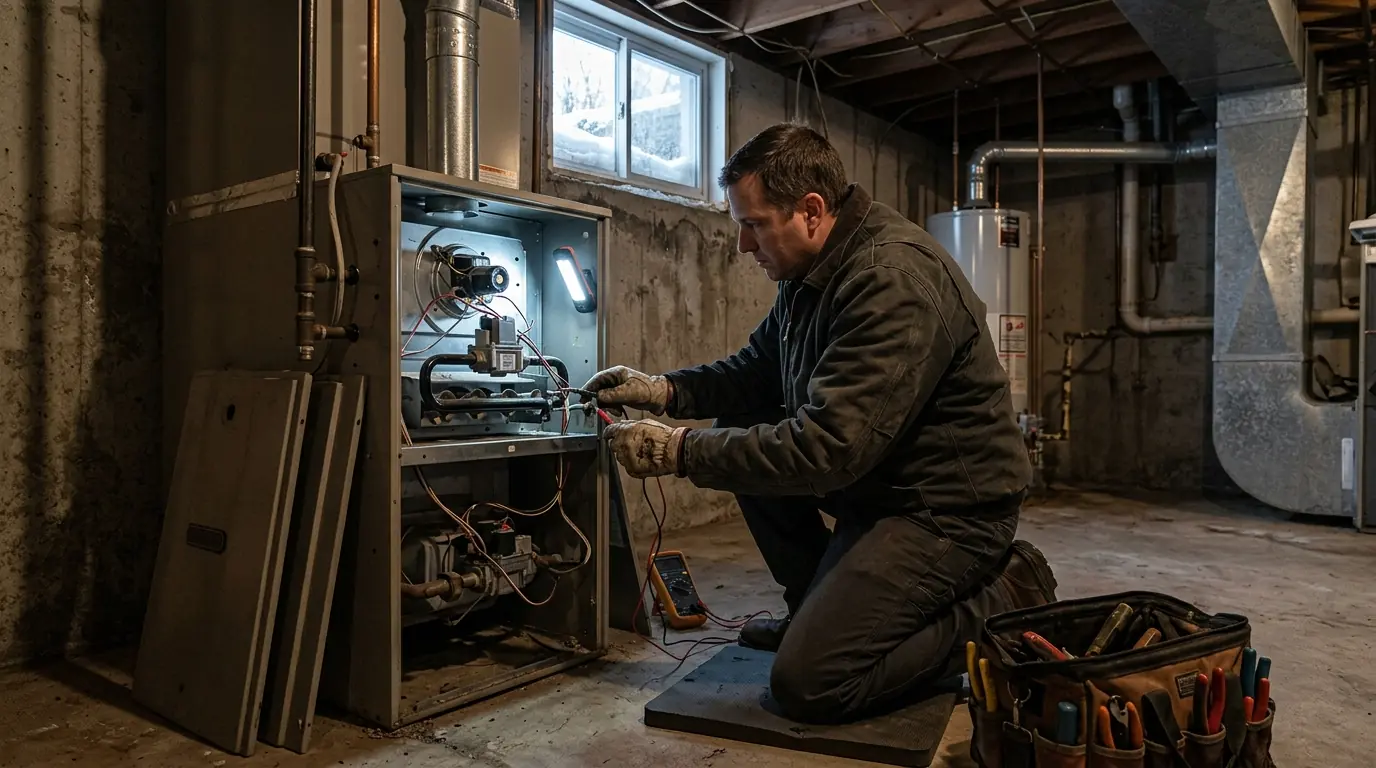
Most furnace problems come from a dirty flame sensor, a failed igniter, a blocked condensate drain, a tripped pressure switch or a clogged filter. A technician reads the control board's fault code, tests each step of the ignition sequence with a meter, then replaces or cleans the failed part. Typical repairs in the Kalamazoo area run $167 to $689 depending on the part.
Most forced-air furnaces in Kalamazoo follow the same sequence every time the thermostat calls: the inducer motor clears the flue, a pressure switch confirms the draft, the igniter heats, the gas valve opens and a flame sensor proves the burner is lit. A failure at any one of those steps stops the whole chain. Our technicians trace the sequence in order instead of guessing, which is why most repairs are finished in one visit.
Post-war ranch homes and newer subdivisions around the city run on gas furnaces fed by Consumers Energy, and many of those units are 12 to 20 years old. Parts that wear on that schedule include hot surface igniters, inducer bearings, capacitors and control boards. We carry the common ones on the truck, so a cracked igniter at 2 a.m. in January does not have to mean a second trip.
The burners fire for a few seconds and go out. A coated flame sensor or a weak flame signal is the usual cause.
The fan moves air but the burners never light, often from a failed igniter, a closed gas valve or a high-limit lockout.
The furnace starts and stops every few minutes. Overheating from a clogged filter or an oversized unit can trip the limit switch.
The control board flashes a code that points to the pressure switch, ignition, limit or flame circuit.
Worn blower or inducer motor bearings make metal-on-metal noise before the motor seizes.
High-efficiency furnaces make condensate. A cracked trap or a frozen drain line can flood the floor and shut the unit down.
The visit starts at the thermostat and the furnace switch, because a dead thermostat battery or a switch bumped off near the stairs accounts for more no-heat calls than people expect. From there the technician pulls the panel, reads the stored fault codes and watches a full ignition attempt. Watching the sequence in real time shows exactly where it stops, whether at the inducer, the pressure switch, the igniter or the flame proving stage.
Next comes measurement. The technician checks line voltage and the 24-volt control circuit, measures igniter resistance, reads the flame sensor's microamp signal and tests the pressure switch with a manometer. Gas pressure at the valve is measured too, since low inlet pressure causes rough lighting and weak heat. Each number is compared against the manufacturer's spec, so the repair is based on a reading instead of a hunch.
Hot surface igniters are brittle and crack after thousands of heat cycles, and a Kalamazoo winter can stack up a lot of cycles. Flame sensors build up a silica coating that weakens the signal until the board shuts the gas off. Inducer motors run every cycle and their bearings wear out first on furnaces past ten years. Run capacitors on blower motors lose strength slowly, so the motor hums, starts late or overheats.
On high-efficiency furnaces, the condensate system causes a surprising share of January calls. PVC drain lines routed through cold basements or crawlspaces can freeze, the water backs up into the collector box and the pressure switch opens. Lake-effect snow can also bury sidewall intake and exhaust pipes, which trips the same switch. Clearing the vent and thawing or rerouting the drain often restores heat without replacing a single part.
A $240 igniter on a nine-year-old furnace is an easy call. A failed control board plus a worn inducer on a 19-year-old unit is a different conversation. Our technicians give you the repair price first, then point out the age of the equipment, the condition of the heat exchanger and how often the system has needed service. You make the decision with real numbers in hand.
If replacement makes more sense, the technician can walk you through furnace replacement options on the same visit, and the replacement estimate itself carries no charge. We never push a new furnace when a reasonable repair will keep the old one running safely. Many homeowners choose to repair this winter and plan a replacement for the warmer months, when scheduling is easier and the house can go without heat for a day.
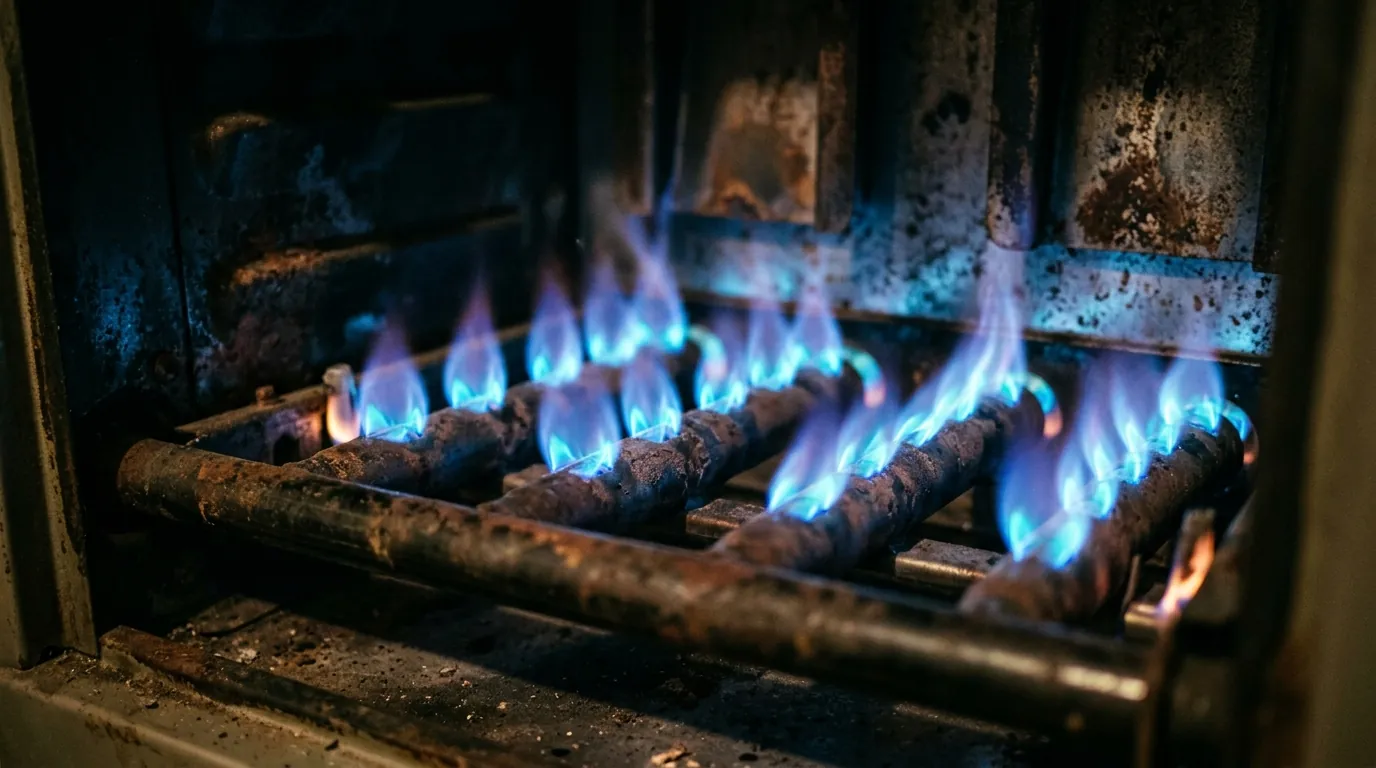
Every furnace repair includes a look at the parts that keep combustion gases out of the house. The technician checks the flue connection, inspects the vent pipe for separation or corrosion, and watches the flame for lifting or rolling, which can point to a cracked heat exchanger or a draft problem. A combustion analyzer reading is taken on units that show any warning sign.
If anything looks wrong, you will hear about it plainly and see what we saw. A suspected crack calls for a closer heat exchanger inspection with a camera. We also recommend working carbon monoxide alarms on every level of the home, especially in older Kalamazoo houses where the furnace shares a chimney with a gas water heater and both appliances depend on the same draft.
| Work | Typical range |
|---|---|
| Diagnostic visit | $89 to $149 |
| Flame sensor cleaning or igniter replacement | $167 to $338 |
| Pressure switch or limit switch replacement | $196 to $374 |
| Inducer motor replacement | $428 to $865 |
| Control board or blower motor replacement | $389 to $1,140 |
These are typical ranges for the Kalamazoo area. Your final price is set after the technician tests the furnace and confirms which part failed, and you approve it before work begins. Compare more jobs in the furnace and AC price guide.
Keep reading
A fall furnace tune-up that cleans, measures and tests ignition, combustion and airflow before the first hard freeze.
Learn moreNight, weekend and holiday heating repair for furnaces, boilers and heat pumps when the house is losing heat fast.
Learn moreCombustion and venting tests on your furnace, boiler, water heater and other gas appliances, with CO readings in each room.
Learn moreFAQ
That pattern almost always means the control board is not detecting the flame. The flame sensor rod gets a thin coating over time, and the board cuts the gas as a safety measure. Cleaning or replacing the sensor usually fixes it. If the sensor is clean, a poor ground or a cracked ceramic insulator is the next suspect.
Yes. A packed filter starves the furnace of airflow, the heat exchanger gets too hot and the high-limit switch shuts the burners off. The blower may keep running and push cool air. Replace the filter and give the system a few minutes. If it keeps tripping, the limit switch or blower motor may also need attention.
Gurgling usually comes from condensate that cannot drain freely. A partly blocked trap, a sagging drain line or ice in a line near an outside wall holds water in the collector box. Left alone, it trips the pressure switch and stops the furnace. Our technicians clear the trap, flush the line and correct the slope.
One reset to see what happens is reasonable. Repeated resets are not, because a lockout means a safety control found something wrong, such as a draft problem, overheating or failed ignition. Forcing it to retry can wear the igniter or mask a venting issue. Call us and describe the blink code so the technician arrives prepared.
Most repairs take one to two hours, including diagnosis and a test run. Swapping an igniter or cleaning a flame sensor is often under an hour. An inducer motor or control board replacement takes longer because of wiring and setup. If a part is not on the truck, the technician will tell you how soon it can be picked up.
Call any hour. Our office answers, sets the visit and tells you what to expect before a technician arrives.