Warm air from the vents
If the outdoor unit is off while the indoor blower runs, the capacitor, contactor or a tripped breaker is the usual cause.
Your air conditioner is running but the house keeps getting warmer, the copper line outside is frosted over, or the outdoor unit hums and never starts on a muggy afternoon.
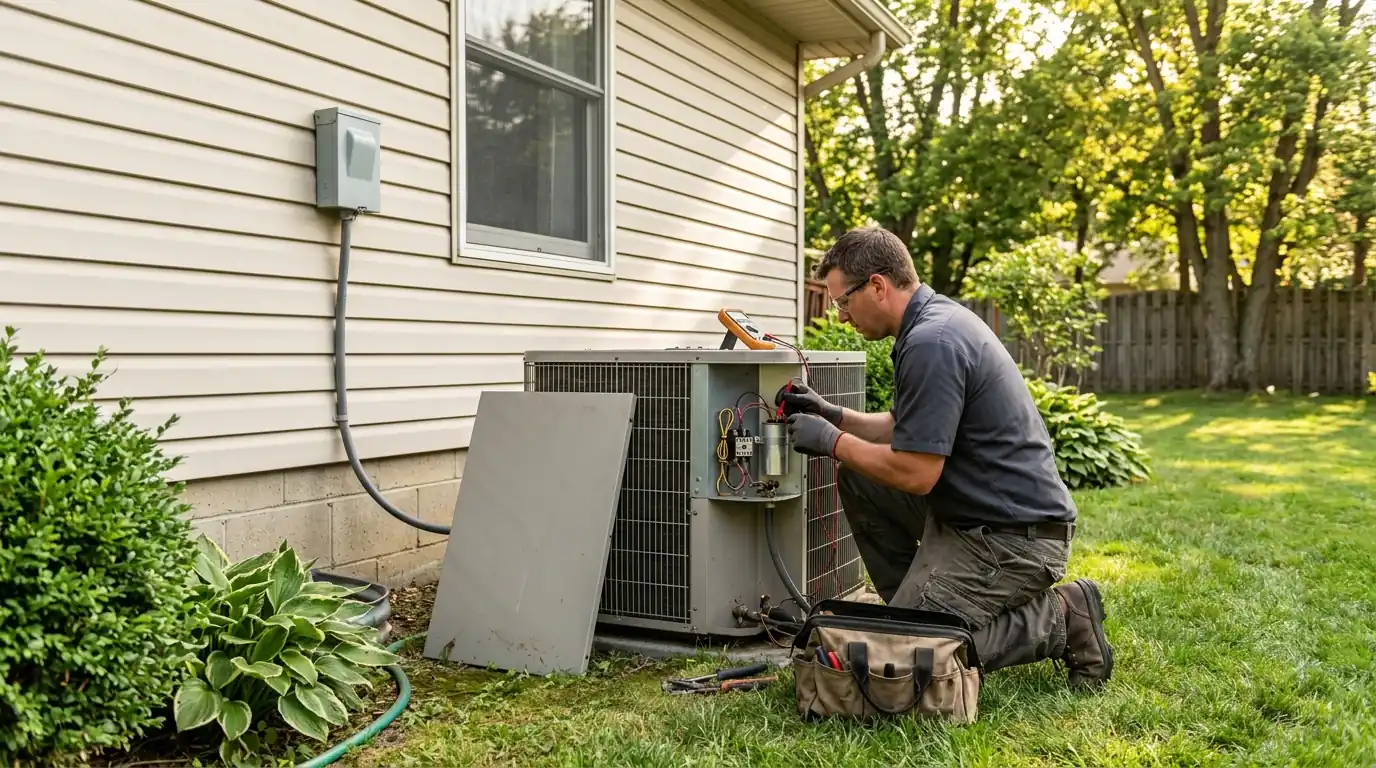
The most common AC repairs in Kalamazoo are capacitor and contactor replacement, condenser fan motor replacement, clearing a frozen evaporator coil, unclogging the condensate drain and fixing refrigerant leaks. Typical repairs run $167 to $1,290. Compressor and coil failures cost more and often lead to a repair or replace comparison on older systems.
Most central air breakdowns come from a short list of parts: the run capacitor, the contactor, the condenser fan motor, a clogged condensate drain or a refrigerant leak. Heat waves expose them, because the system runs long hours with high head pressure and every weak part gets pushed to its limit. A capacitor that limped through June often fails on the first 90 degree day.
Our technicians test the electrical side, the airflow and the refrigerant circuit before naming a cause, so you are not paying for parts that were never the problem. We carry common capacitors, contactors and motors on the truck to finish many repairs on the first visit. You hear the cause and the price before work starts. Call (269) 360-5258, day or night.
If the outdoor unit is off while the indoor blower runs, the capacitor, contactor or a tripped breaker is the usual cause.
A humming compressor or a fan that only spins when nudged points to a failed start or run capacitor.
Frost on the larger insulated line means the indoor coil is freezing from low airflow or low refrigerant.
A clogged condensate drain or a cracked drain pan sends water onto the basement floor during humid weather.
An oversized system or a blower set too fast can cool the air without pulling enough moisture out of it.
Rapid on and off cycles can come from a dirty coil, a failing thermostat, a frozen coil or a refrigerant problem.
The run capacitor gives the compressor and condenser fan motor the boost they need to start and stay running. Heat breaks them down over time, and a swollen or leaking capacitor is the single most common part we replace on AC calls in July. Contactors are close behind: the switch that sends power to the outdoor unit can pit and burn, or get packed with ants and debris.
We test capacitors under load with a meter instead of judging by appearance, since some weak ones look perfectly normal. We also check the disconnect, the wiring at the contactor and the compressor's amp draw. A compressor drawing too much current often tells us something else is wrong, such as a dirty condenser coil, before it causes a bigger failure.
A frozen evaporator coil shows up as ice on the copper line at the outdoor unit, weak airflow inside and sometimes water pooling when it melts. The coil freezes when it gets too cold, which happens when too little warm air passes over it or when refrigerant charge is low. A clogged filter, closed supply registers or a failing blower motor are the usual airflow causes.
If the coil is frozen, turn the cooling off and run the fan alone for a few hours so it thaws completely before anyone tests it. We then check the filter, blower speed, coil face and static pressure in the ducts. If airflow is fine, we move to refrigerant testing, because a frozen coil with good airflow almost always points to a leak.
Southwest Michigan summers bring dew points in the upper 60s and 70s, and an air conditioner does two jobs in that weather: it lowers the temperature and pulls water out of the air. A system that is oversized or set with a high blower speed reaches the thermostat setting quickly and shuts off before it removes much moisture. The house ends up cool and clammy at the same time.
We check blower settings, run time and the temperature drop across the coil to see whether the system is cycling too short. Sometimes slowing the blower or adjusting the thermostat's cycle rate is enough. In basements and lake-area homes that stay damp no matter what, a whole-home dehumidifier may be the better fix than asking the AC to do both jobs.
Small parts like capacitors, contactors and fan motors are worth replacing on nearly any working system. The question changes when the compressor fails, the evaporator coil leaks or refrigerant has to be added every season. On a system past 12 to 15 years, those repairs can cost a third to half of a new outdoor unit, and the old equipment will keep aging.
Our technicians price the repair and a replacement on the same visit when it makes sense to compare them. We also tell you plainly when a simple repair is the right move for your system. If you decide to replace, our AC installation team works from the same diagnosis, so you do not pay for a second visit just to start over.
| Work | Typical range |
|---|---|
| Diagnostic visit | $89 to $149 |
| Capacitor or contactor replacement | $167 to $394 |
| Condenser fan motor replacement | $386 to $795 |
| Condensate drain clearing or pump replacement | $178 to $462 |
| Leak repair with recharge | $468 to $1,290 |
Typical Southwest Michigan ranges. The final price is set after the technician tests the system and is shown to you before any work begins. Compare more jobs in the furnace and AC price guide.
Keep reading
Testing and repair for AC compressors that hum, trip breakers, run hot or will not start, plus honest replace-or-repair advice.
Learn moreLeak detection and repair for air conditioners and heat pumps that lose charge, freeze up or need a top-off every season.
Learn moreA spring central air check covering coil cleaning, capacitor testing, drain flushing and charge readings before the heat arrives.
Learn moreFAQ
That pattern usually means the outdoor unit is not getting power or cannot start. A tripped breaker, a failed run capacitor, a burned contactor or a blown fuse at the disconnect are the common causes. Reset a tripped breaker once. If it trips again, leave it off and call so the compressor is not damaged.
A properly working central air system typically delivers air about 15 to 20 degrees cooler than the air entering the return. On a very humid day the drop can be a little smaller. If the difference is under 10 degrees, the system likely has an airflow, refrigerant or electrical problem worth checking.
No. Running a frozen system can push liquid refrigerant back to the compressor and damage it. Switch the thermostat to off, set the fan to on and let the ice melt fully, which can take a few hours. Then call so we can find out whether the cause is airflow or refrigerant.
A musty smell usually comes from moisture and growth on the evaporator coil, in the drain pan or on dirty duct surfaces. Kalamazoo's humid summers make it common. Cleaning the coil and drain pan, clearing the drain line and checking the filter often solves it. A persistent smell may point to a duct or humidity issue.
Call volume rises sharply during heat waves, and we sort calls by urgency, with medical needs and vulnerable residents first. Many calls are answered the same day, and our phone is staffed 24/7. While you wait, close blinds on sunny windows and keep the filter clean so the system has its best chance.
Call any hour. Our office answers, sets the visit and tells you what to expect before a technician arrives.