Central air is near the end
Replacing an aging AC with a heat pump instead adds efficient heating for the cost difference between the two outdoor units.
Your furnace works fine, but your central air is aging, propane or gas bills climb every winter, and you wonder whether a heat pump could take some of that load.
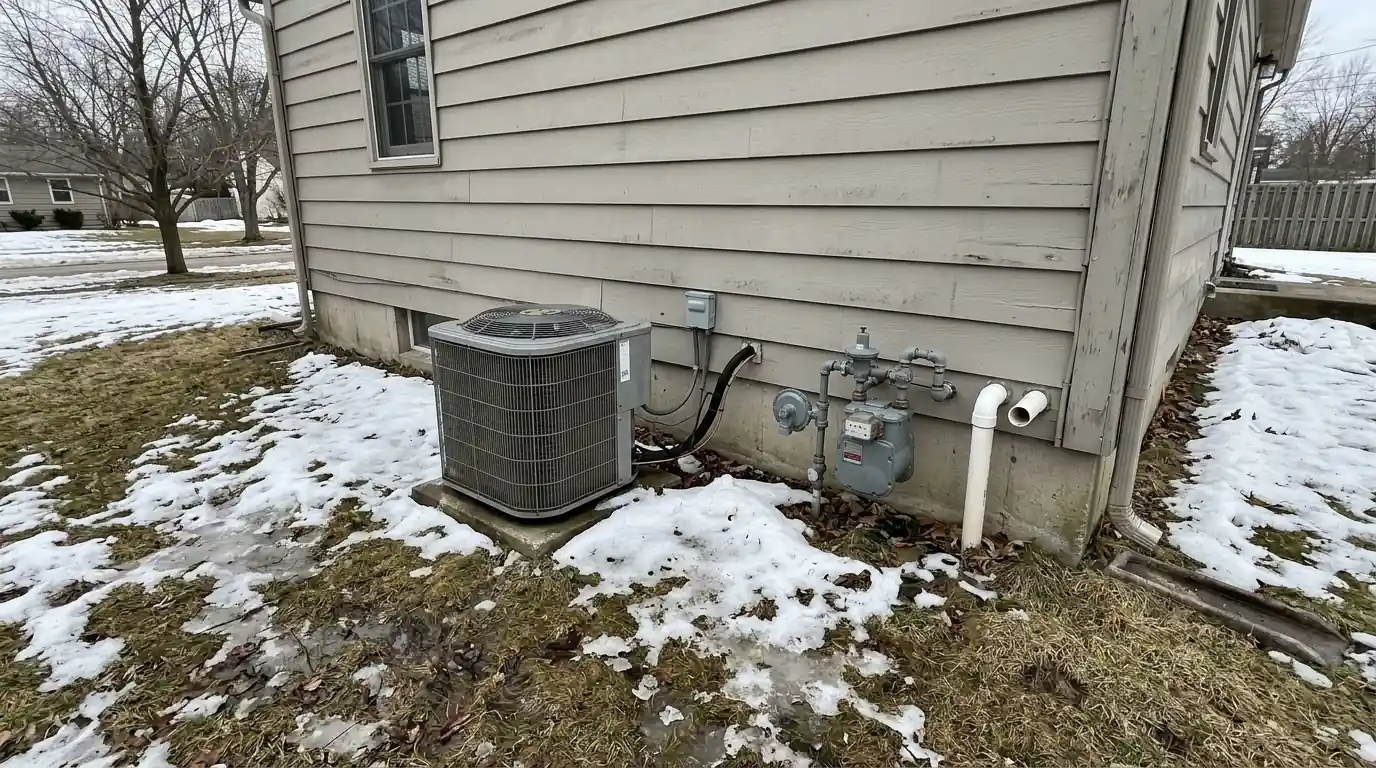
A dual-fuel system uses a heat pump for cooling and mild-weather heating, then switches to a gas or propane furnace below a set outdoor temperature, often somewhere between 25 and 40 degrees. Adding a heat pump to a working furnace in the Kalamazoo area typically costs $5,980 to $9,740, while a full new dual-fuel system runs $9,860 to $17,420.
A dual-fuel system pairs an electric heat pump with a gas or propane furnace and lets the thermostat choose between them. The heat pump handles cooling all summer and heating through the mild stretches of fall and spring. When the temperature drops low enough that the furnace becomes cheaper or more comfortable, the system switches over and the heat pump rests.
For many Kalamazoo homes with forced-air gas furnaces and central air, this is the most practical way to add a heat pump. The ducts, the furnace and much of the wiring stay in place. Our technicians size the heat pump, set the switchover point for your fuel and electric rates, and test both stages. Call (269) 360-5258, answered around the clock.
Replacing an aging AC with a heat pump instead adds efficient heating for the cost difference between the two outdoor units.
Rural homes on propane often gain the most, since the heat pump can carry many fall and spring weeks at lower cost.
A furnace under 10 to 12 years old with a sound heat exchanger makes an ideal backup stage for a new heat pump.
Gas or propane heat carries the house through below-zero nights even if the heat pump needs service.
Homes with an all-electric heat pump and resistance backup can switch to a furnace backup where gas is available.
Dual fuel lowers fossil fuel use for much of the year while keeping a dependable flame for the coldest weeks.
The heart of a dual-fuel system is the balance point, the outdoor temperature where the heat pump stops being the better choice. There are two kinds. The thermal balance point is where the heat pump can no longer keep up with the house's heat loss. The economic balance point is where a unit of heat from the furnace costs less than the same heat from the heat pump.
We calculate both using your home's heat loss, the heat pump's rated output at low temperatures, and your current Consumers Energy or propane prices. The thermostat is then set to lock out the heat pump below that temperature and run the furnace instead. Many owners also allow the system to bring the furnace on during a recovery from a nighttime setback, which warms the house faster.
Most dual-fuel projects in this area start with a working gas furnace and a central air system that needs replacing. We remove the old condenser and indoor coil, set a heat pump outdoors and install a matched coil on top of the furnace. The furnace blower moves air for both systems, so its motor and control board need to be compatible with heat pump operation.
A dual-fuel thermostat or a fossil fuel kit coordinates the two stages so the furnace and heat pump never run at the same time. Running both together would push hot furnace air across the heat pump coil and spike refrigerant pressures. Before we commit to this path, we inspect the furnace and its heat exchanger. If it is near the end of its life, a full system change may be the smarter buy.
Farmhouses and rural homes outside Kalamazoo, Paw Paw and Three Rivers often heat with propane, which usually costs more per unit of heat than natural gas. Here the economic balance point tends to fall lower, so the heat pump carries more of the winter. In many of these homes, the furnace only runs on the coldest days and during deep cold snaps.
The propane tank sees fewer deliveries over a season, and the furnace logs fewer hours, which can stretch its service life. We still recommend a yearly check on the furnace side through our propane furnace service, since a backup that sits idle for weeks needs its burners, igniter and flame sensor ready when the heat pump hands off on a January night.
With two separate heat sources, a dual-fuel system needs both sides maintained every year. In spring, we check the heat pump for cooling season: coil condition, refrigerant charge, capacitor health and the outdoor fan. In fall, we test the furnace burners, ignition, venting and heat exchanger, then confirm the switchover logic and outdoor sensor read correctly before the first hard freeze arrives.
Problems we see most often are thermostats set up wrong after a battery change or power outage, an outdoor temperature sensor that has failed or been knocked loose, and a furnace that runs while the heat pump is still on. Each one wastes energy or strains the equipment. A maintenance plan covers both seasonal visits so neither side gets skipped.
| Work | Typical range |
|---|---|
| Heat pump and coil added to existing furnace | $5,980 to $9,740 |
| New furnace and heat pump together | $9,860 to $17,420 |
| Dual-fuel thermostat with outdoor sensor | $287 to $596 |
| Furnace control board or blower upgrade for compatibility | $468 to $1,290 |
Typical Kalamazoo area ranges. Your installer confirms the price after inspecting the furnace, ducts and electrical service, and the estimate visit has no charge. Compare more jobs in the furnace and AC price guide.
Keep reading
Cold-climate heat pumps sized to your home with a load calculation, set up to heat through January and cool in July.
Learn moreNew gas furnaces sized by room-by-room load calculation, with venting, gas piping and ductwork matched to the house.
Learn moreWi-Fi thermostats wired correctly to furnaces, heat pumps, boilers and dual-fuel systems, with a C-wire added when needed.
Learn moreFAQ
It depends on your heat pump's low-temperature output, your home's heat loss and your fuel and electric prices. In Kalamazoo homes on natural gas, we often land somewhere between 30 and 40 degrees. Homes on propane usually switch lower. We calculate the setting for your house rather than using a factory default.
It often does in homes that would replace their central air anyway, because the heat pump takes over a large share of fall and spring heating. Savings depend on local gas, propane and electric rates, which change over time. We show estimated seasonal costs both ways so you can judge for your home.
In a standard dual-fuel setup, no. The heat pump coil sits on top of the furnace, and running both pushes hot air across the coil and drives refrigerant pressure too high. The thermostat or control kit locks one out whenever the other runs. If both seem to run together, have the wiring checked.
Some older furnaces have single-speed blowers and controls that do not coordinate well with a heat pump. Many still work with an added fossil fuel kit. Others need a control board or blower upgrade so airflow suits both modes. We check the furnace model and condition during the estimate visit.
If your air conditioner is fairly new and reliable, it usually makes sense to wait until it needs replacement. The best time to switch to dual fuel is when the AC fails or reaches 12 to 15 years. At that point the added cost of a heat pump over a straight AC is relatively small.
Call any hour. Our office answers, sets the visit and tells you what to expect before a technician arrives.