A basement much warmer than upstairs
If the unfinished basement stays toasty in winter while bedrooms run cold, supply ducts are likely leaking heat below grade.
A warm basement and cold bedrooms, dust streaks at duct joints, or a register that barely blows at all usually mean conditioned air is escaping before it ever reaches the room.
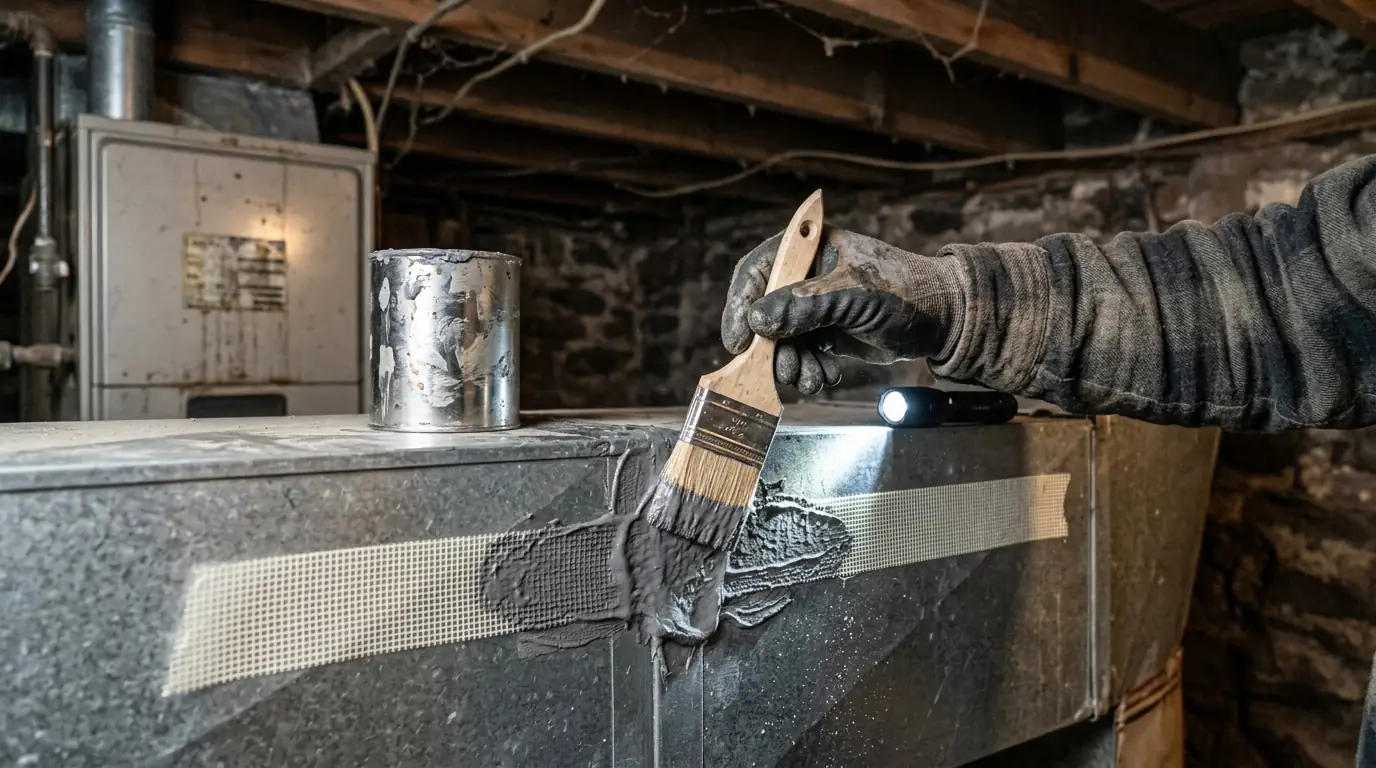
Duct repair and sealing closes leaks in your supply and return ductwork. Technicians reconnect separated sections, replace crushed or rusted pieces, brush mastic over seams and joints and wrap ducts in unconditioned spaces with insulation. Many homes are done in one day. Accessible basement ducts are the most straightforward, while sealing inside walls is limited to what can be reached.
Duct systems leak at their joints. Over years of heating and cooling cycles, cloth tape dries and peels, screws back out, and sections get bumped loose during plumbing or electrical work. Leaks on the supply side dump heated or cooled air into the basement, attic or wall cavity. Leaks on the return side pull dusty, unconditioned air from those same spaces into your system.
Our technicians find the leaks, reconnect loose sections, repair damaged duct and seal accessible joints with fiber-reinforced mastic. Where ducts run through attics, garages or crawlspaces, we add or replace insulation so the air holds its temperature. The result is more air reaching the rooms that need it and less of your furnace's output warming spaces nobody uses. It also means less dust drawn in from unfinished areas of the house.
If the unfinished basement stays toasty in winter while bedrooms run cold, supply ducts are likely leaking heat below grade.
Streaks of dirt along joints show air moving through the gap, which pulls dust in or pushes it out.
A disconnected or crushed branch can drop the air at one register to almost nothing.
Rising heating costs when nothing else has changed can point to leaks that make the furnace run longer.
Return leaks pull air from crawlspaces, attics and garages, bringing their odors into the house.
Uninsulated or leaky ducts in humid spaces sweat during cooling season and can drip onto ceilings and floors.
The worst leaks are usually right at the furnace. The joint where the supply plenum meets the cabinet, the return drop and the filter slot often have gaps you can feel with your hand when the blower runs. Branch takeoffs, where smaller ducts leave the main trunk, are next. In basements with panned joist returns, the edges of the sheet metal against the wood often leak all along their length.
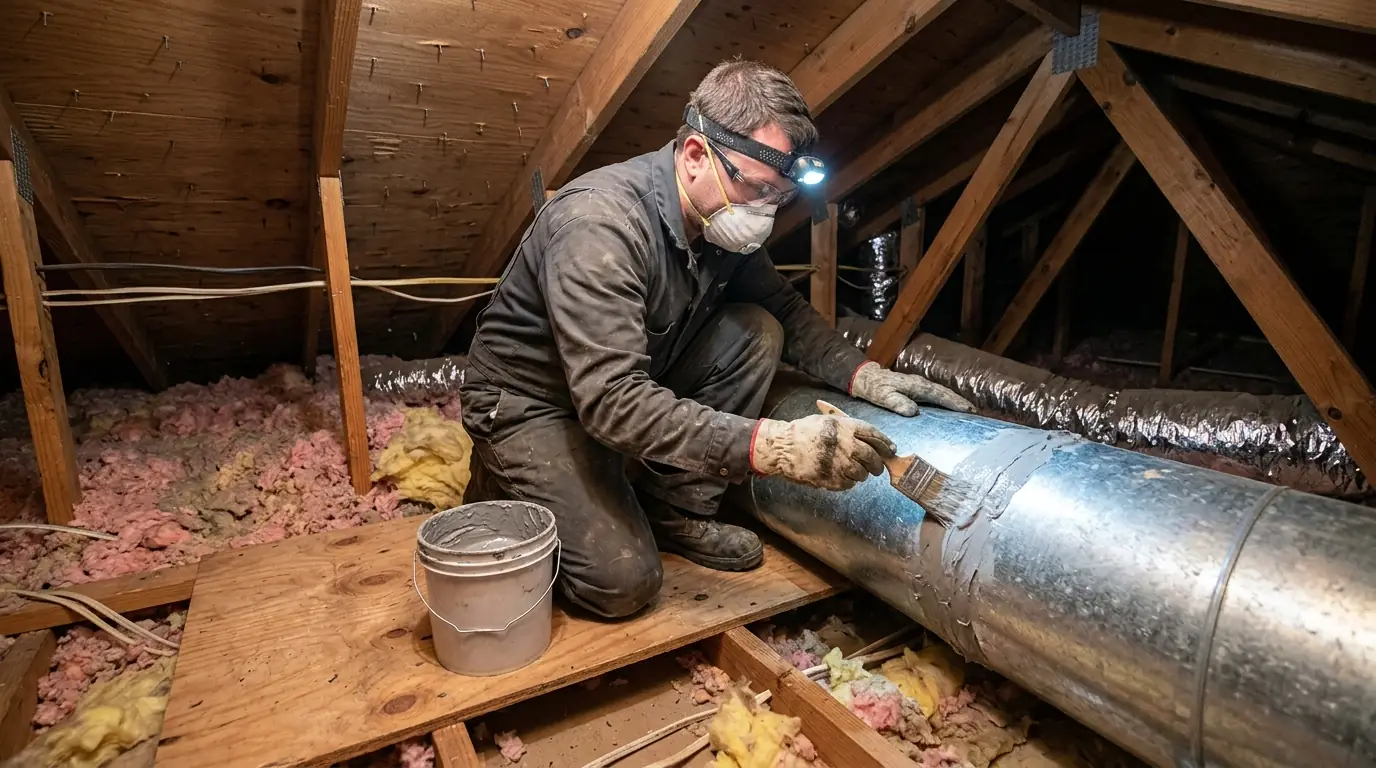
Attic ducts in ranch homes and finished upper floors are another trouble spot. Flex duct can pull away from its collar, and older ducts may have lost their insulation wrap to pests or age. Garages and crawlspaces round out the list. In each case, sealing the accessible joints and reinsulating the runs makes a noticeable difference in how well the system performs.
Before sealing, our technicians reconnect anything that has come apart, reattach flex ducts with clamps and replace sections that are crushed, rusted through or torn. Joints are mechanically fastened with sheet metal screws first, so they will not separate again, and then brushed with water-based mastic reinforced with fiberglass mesh on larger gaps. Seams are wiped clean first so the mastic bonds to bare metal.
Mastic stays flexible and holds up to the temperature swings inside ductwork far better than cloth duct tape. Where foil tape is used, it is a rated product applied to clean metal. Ducts in unconditioned spaces get new insulation with a vapor barrier facing out, which keeps winter heat in and stops summer cooling from causing condensation on the duct surface.
Supply leaks waste conditioned air, but return leaks can cause a different set of problems. When the return side pulls air from a damp crawlspace, a dusty unfinished basement or a hot attic, that air goes straight into the blower and out to every room. It adds dust, humidity and odors, and it makes the equipment work harder to heat or cool air that was never inside the house.
Return leaks near gas appliances deserve particular attention. A return that pulls hard from a mechanical room can affect how a nearby water heater or furnace drafts. Sealing those leaks is part of what we check during a carbon monoxide safety check. In many homes, return sealing alone cuts down on dust and helps the filter catch more of what passes through.
Most duct systems can be repaired and sealed for a fraction of what new ductwork costs. If the ducts are the right size and in reasonable shape, sealing and insulating them is usually the best value. Old ducts with heavy rust, undersized trunks or layouts that never delivered enough air to certain rooms are a different story, since sealing will not fix a sizing problem.
Our technician will tell you plainly which situation you are in, based on what the inspection actually shows. If replacement is the better long-term move, we explain why and quote new ductwork alongside the repair option so you can compare. For many homes, the best approach is sealing now and planning larger duct changes for the next time the furnace or air conditioner is replaced.
| Work | Typical range |
|---|---|
| Seal furnace plenums, return drop and filter slot | $187 to $428 |
| Seal accessible basement trunks and branches | $486 to $1,138 |
| Reconnect or replace a damaged duct section | $164 to $437 |
| Reinsulate attic or crawlspace duct runs | $612 to $1,486 |
| Seal panned joist returns | $238 to $596 |
Sealing jobs around Kalamazoo usually land within these ranges. Your final price is set after the technician sees how much ductwork is accessible and what condition it is in. Compare more jobs in the furnace and AC price guide.
Keep reading
New and replacement duct systems designed from room loads, with sealed sheet metal trunks, sized branches and added returns.
Learn moreStatic pressure tests, register airflow readings and damper settings that send heat and cooling to rooms that come up short.
Learn moreNegative-pressure duct cleaning with rotary brushes, plus blower and coil checks, for homes with debris built up in the ducts.
Learn moreFAQ
Only the parts we can reach, such as the ends near registers and the connections in the basement or attic. Ducts fully enclosed in walls or ceilings are not accessible for hand sealing without opening drywall. In most homes the largest leaks are at the furnace and in accessible basement runs, so that is where sealing pays off most.
It works well either way, but doing it during a replacement is efficient because the system is already shut down and the plenum connections are being remade. Sealing at that time lets the new equipment start out with tight ducts, and the technician can confirm static pressure with everything sealed before setting the blower speed.
The basement was being heated by leaks. Once they are sealed, that heat goes upstairs where it belongs, and the basement cools off. If you use the basement as living space, we can add a dedicated supply register or two so it gets heat on purpose instead of by accident.
Standard cloth duct tape loses its grip as it dries out and heats up, and it often falls off within a few years. Mastic is a paste brushed onto the joint that dries into a flexible seal. It lasts far longer and handles the temperature swings inside ductwork.
Usually, yes. Rooms at the end of long runs often get noticeably more air once the leaks between the furnace and those rooms are closed. Sealing is also a good time to rebalance dampers, since the airflow pattern in the system changes when the leaks are gone.
Call any hour. Our office answers, sets the visit and tells you what to expect before a technician arrives.