Leak confirmed at the coil
An electronic detector alert or bubble test at the coil tubes, return bends or headers points to a coil that needs replacement.
Your technician found the leak in the indoor coil, the system keeps losing refrigerant, and you need to know whether a new coil or a new system makes more sense.
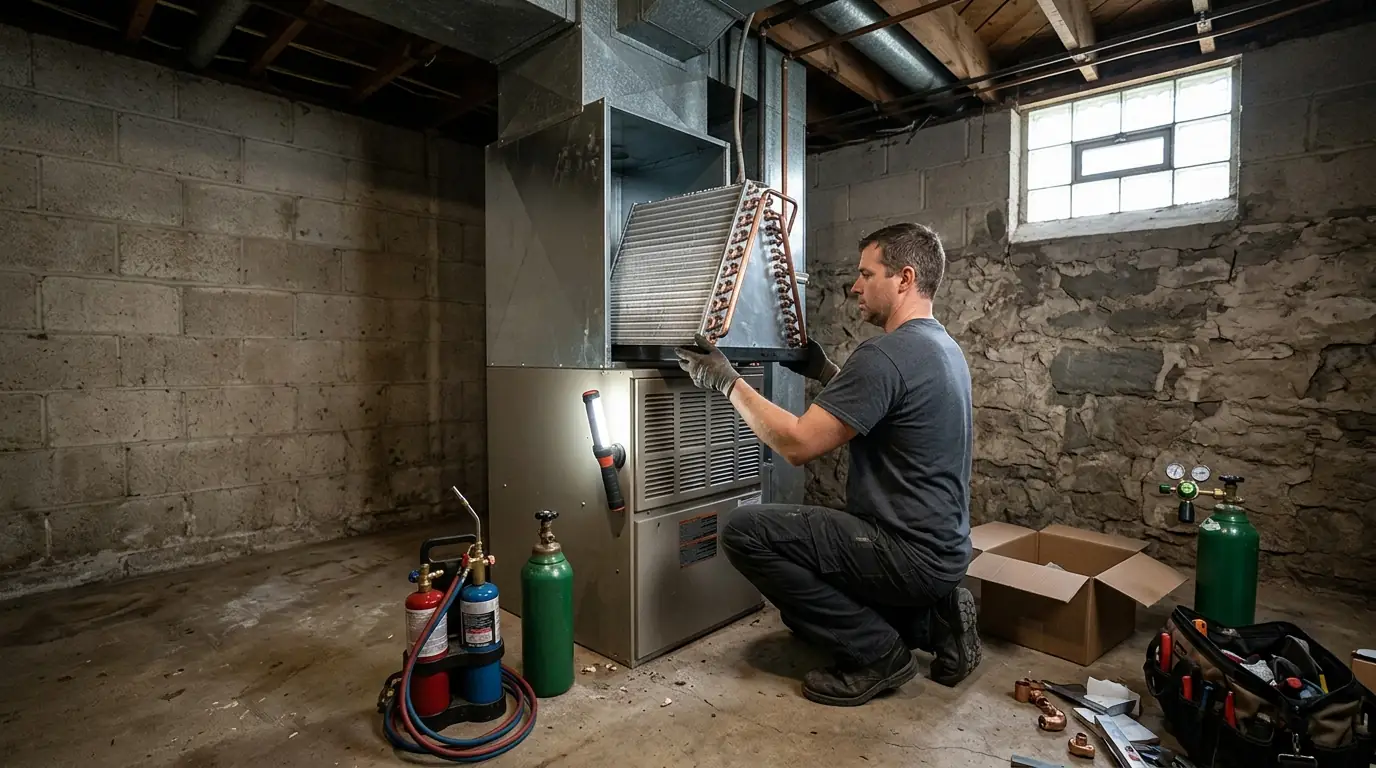
Evaporator coil replacement in the Kalamazoo area typically costs $1,380 to $2,960 when paying for the coil, and $894 to $1,640 in labor and materials when the coil is covered under manufacturer warranty parts coverage. The job includes recovering refrigerant, swapping the coil, brazing, pressure testing, evacuation and recharge.
The evaporator coil sits in a cased box on top of your furnace, or inside the air handler on a heat pump system. Warm house air passes over its cold tubes and fins, giving up heat and moisture before the blower sends it back through the ducts. When the coil leaks or clogs, the whole system loses its ability to cool, no matter how well the outdoor unit runs.
Our technicians replace coils with models matched to your outdoor unit's capacity and refrigerant type, so the system keeps its rated performance. We confirm the leak is in the coil before recommending replacement, and we check the drain pan, the cabinet fit and the furnace blower at the same time. You get a firm price before work starts. Call (269) 360-5258, answered 24/7.
An electronic detector alert or bubble test at the coil tubes, return bends or headers points to a coil that needs replacement.
Pinhole corrosion often spreads through the coil, so a second leak after a patch is a strong sign the coil is failing.
A failing pan under the coil leaks water into the furnace or onto the floor, and replacing the coil assembly fixes both.
Years of dust and growth on the coil face can choke airflow so badly that cleaning no longer restores performance.
A coil from a different capacity or refrigerant system can cause poor cooling, freezing or high head pressure.
Low charge from a coil leak drops coil temperature below freezing, which shows up as ice on the suction line.
Corrosion is the leading cause of coil leaks in Michigan homes. Copper coils can develop formicary corrosion, a branching pattern of tiny pinholes that starts on the outside of the tube. Aluminum coils resist that type but can corrode from airborne chemicals and moisture in damp basements. Either way, the leaks are small, slow and often spread across the coil over a few seasons.
Coils also fail from physical damage. A coil cabinet that was not sealed lets dust pack the fins, and a cleaning attempt with harsh chemicals or a stiff brush can tear tubes. On older systems, the drain pan beneath the coil rusts or cracks, letting water spill onto the furnace. We look at all of these before recommending a replacement.
A replacement coil needs to match the outdoor unit's capacity, the refrigerant it uses and its metering device, whether that is a fixed orifice or a thermal expansion valve. It also needs to fit the furnace cabinet and the plenum above it. An undersized or mismatched coil can freeze, cause high head pressure in the outdoor unit and shorten compressor life.
Coils come in cased and uncased versions and in A-shaped or slab designs. We measure the furnace opening, the plenum height and the duct transition before ordering. When an exact match is not available, we choose a coil the outdoor unit manufacturer lists as compatible. If the system is old enough that a match is hard to find, we discuss replacing the full system.
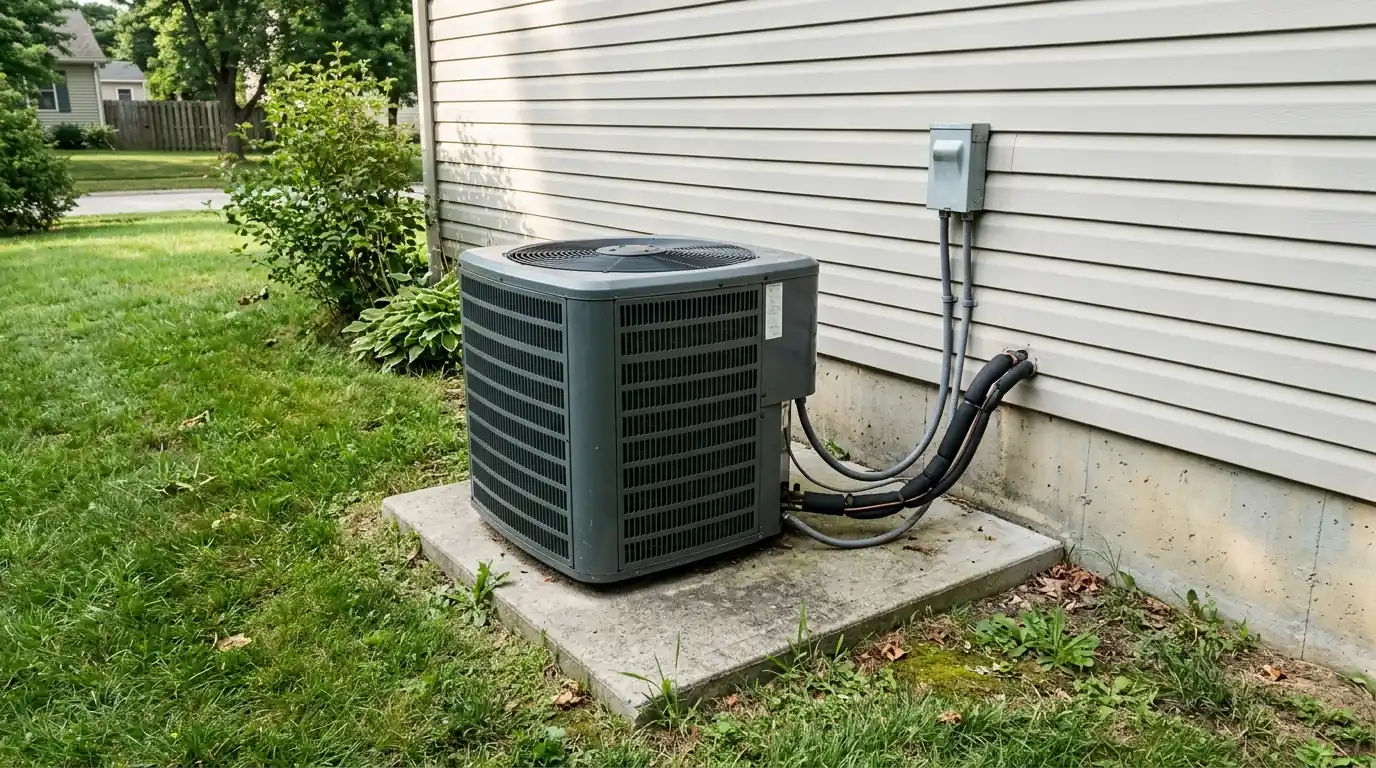
We start by recovering the refrigerant from the system into a recovery cylinder. The old coil is cut out of the line set, the plenum or cabinet panel is removed, and the coil slides out. The new coil goes in, and we braze the connections with a nitrogen purge flowing through the tubing so no scale forms inside. Sealed panels go back on to keep air from bypassing the coil.
With the lines closed, we pressure-test with nitrogen and pull the system into a deep vacuum, watching the micron gauge to confirm it holds. A new filter drier is installed on the liquid line. Then the system is charged by weight and fine-tuned by superheat or subcooling. Finally, we rebuild the condensate trap, test the overflow float switch and run the system.
The age of the outdoor unit drives the decision. On a system under 8 to 10 years old, the coil may be covered under the manufacturer warranty for parts, leaving labor and refrigerant as the main cost. On a system past 12 to 15 years, spending on a coil means putting new parts on an old compressor that may not last much longer.
We price both options during the same visit so you can compare them directly. If the outdoor unit is still in good health and uses a refrigerant that is easy to source, coil replacement can add years of service. If the furnace is aging too, a combined furnace and AC replacement may cost less over the next decade than fixing pieces one at a time.
| Work | Typical range |
|---|---|
| Coil replacement, coil purchased | $1,380 to $2,960 |
| Labor and materials, coil under warranty | $894 to $1,640 |
| Drain pan replacement only | $287 to $596 |
| Plenum or duct transition modifications | $247 to $689 |
Refrigerant quantity and coil availability affect the final cost. Your technician confirms the price after measuring the furnace cabinet and checking the system. Compare more jobs in the furnace and AC price guide.
Keep reading
Leak detection and repair for air conditioners and heat pumps that lose charge, freeze up or need a top-off every season.
Learn moreNew central air sized by load calculation, matched to your furnace and set up to dry out the air in humid Michigan summers.
Learn moreReplace your furnace and central air together as one matched system, with a single install day and one load calculation.
Learn moreFAQ
Most coil swaps take four to seven hours once the coil is on site. Extra time is needed if the plenum must be modified, the coil cabinet is in a tight crawlspace or attic, or the line set needs repair. Ordering a matched coil can add a few days before the install date.
If the coil is not leaking and the problem is dirt or growth on the fins, cleaning often restores airflow and cooling. A coil that is leaking refrigerant cannot be fixed by cleaning. We check for leaks first, then recommend cleaning or replacement based on what we find.
A new coil restores lost cooling and efficiency when the old one was leaking, clogged or mismatched. It does not raise the system's original efficiency beyond what the outdoor unit was designed to deliver. The savings come from the system no longer running long cycles with low charge or poor airflow.
Yes. On a heat pump, the indoor coil works as an evaporator in cooling mode and as a condenser in heating mode, so it runs year-round. That extra use means coil leaks on heat pumps affect both heating and cooling. The replacement process is similar, with attention to the heat pump's specific metering device.
A cased coil comes inside its own sheet metal cabinet that sits on top of the furnace. An uncased coil fits inside an existing cabinet or plenum. Cased coils are easier to swap and seal well. Uncased coils are used where space is tight or the existing cabinet is in good condition.
Call any hour. Our office answers, sets the visit and tells you what to expect before a technician arrives.