Water dripping from the head
A clogged drain line, a kinked hose or a head that is not level lets condensate spill out of the tray and run down the wall.
Your mini-split head is dripping water down the wall, blinking an error light, or blowing air that never gets warm or cold enough to make the room comfortable.
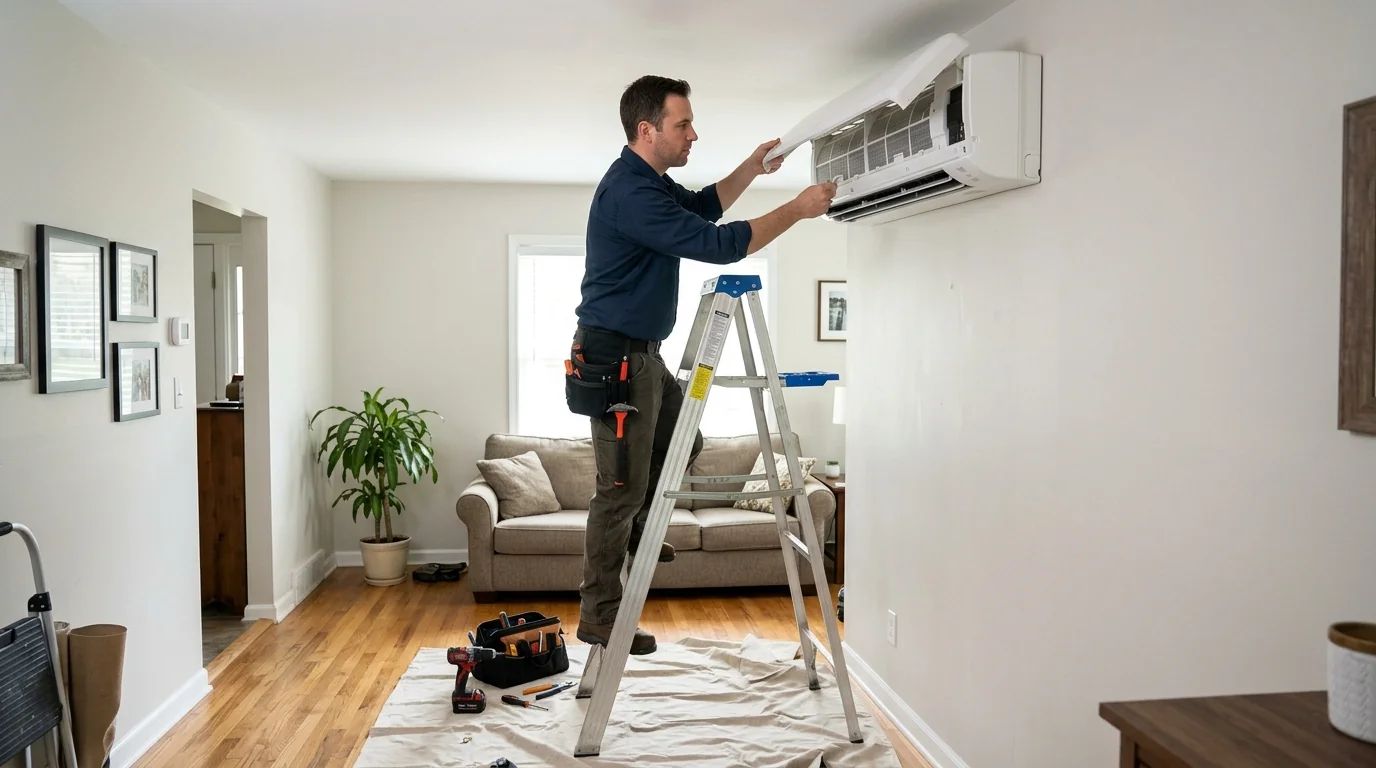
Common mini-split repairs include clearing a clogged condensate drain, replacing a failed thermistor or fan motor, fixing a flare connection leak, and replacing a control board. In the Kalamazoo area, most repairs fall between $194 and $1,280. Compressor or inverter board failures on older units sometimes make replacement the better value.
Mini-splits pack a whole heat pump into a compact outdoor unit and a slim indoor head, with circuit boards and sensors that report faults as blinking lights or codes. That helps with diagnosis, but the code only points to a symptom. A sensor fault might be a bad thermistor, a loose connector or a board that has taken a voltage spike during a summer storm.
Our technicians work on wall heads, ceiling cassettes, floor consoles and multi-zone outdoor units from the major ductless brands. We read the fault history, test the sensors and communication wiring, and check refrigerant pressures at the service port. You hear what failed and what it costs before we replace anything. Call (269) 360-5258 at any hour and a person answers.
A clogged drain line, a kinked hose or a head that is not level lets condensate spill out of the tray and run down the wall.
The flash pattern identifies a fault family such as a sensor, communication or pressure issue, which we confirm with meter tests.
Dirty filter screens, a matted blower wheel or a failing fan motor cut airflow, often with a musty smell when it first starts.
Low refrigerant from a leaking flare joint or a failing expansion valve leaves the head running all day without catching up.
A tripped breaker, failed inverter board or a communication fault between the head and the outdoor unit can stop it cold.
Frost on the copper lines in cooling mode usually means low charge or very poor airflow across the indoor coil.
We start by reading the fault code from the head or the outdoor board, then check the history if the unit stores one. Many codes trace to a thermistor, a small sensor that tells the board the coil, room or discharge temperature. We measure each one with a meter and compare it to the manufacturer chart, which tells us quickly whether the sensor or the board is at fault.
Communication faults need a different approach. The head and outdoor unit talk over a signal wire, and a loose terminal, a nicked cable or a surge-damaged board will break that link. We test voltage on the communication terminals during operation. Pressures come last, through the service port, so we can tell a true refrigerant issue from a control problem without venting any charge.
Water leaking from a wall head is the most common call we get on ductless systems in summer. Kalamazoo's humid July weather pulls a lot of moisture from the air, and the drain tray fills fast. If slime builds up in the tray or the drain line sags without a steady slope, water backs up and spills out the bottom of the head onto the wall or floor.
The same moisture feeds mold and dust on the barrel-shaped blower wheel behind the louvers. Over time the fins clog, airflow drops and the head smells musty on startup. A deep cleaning removes the wheel or uses a bagged wash kit to flush the coil and wheel in place. Many owners schedule it every two to three years for heads in bedrooms and kitchens.
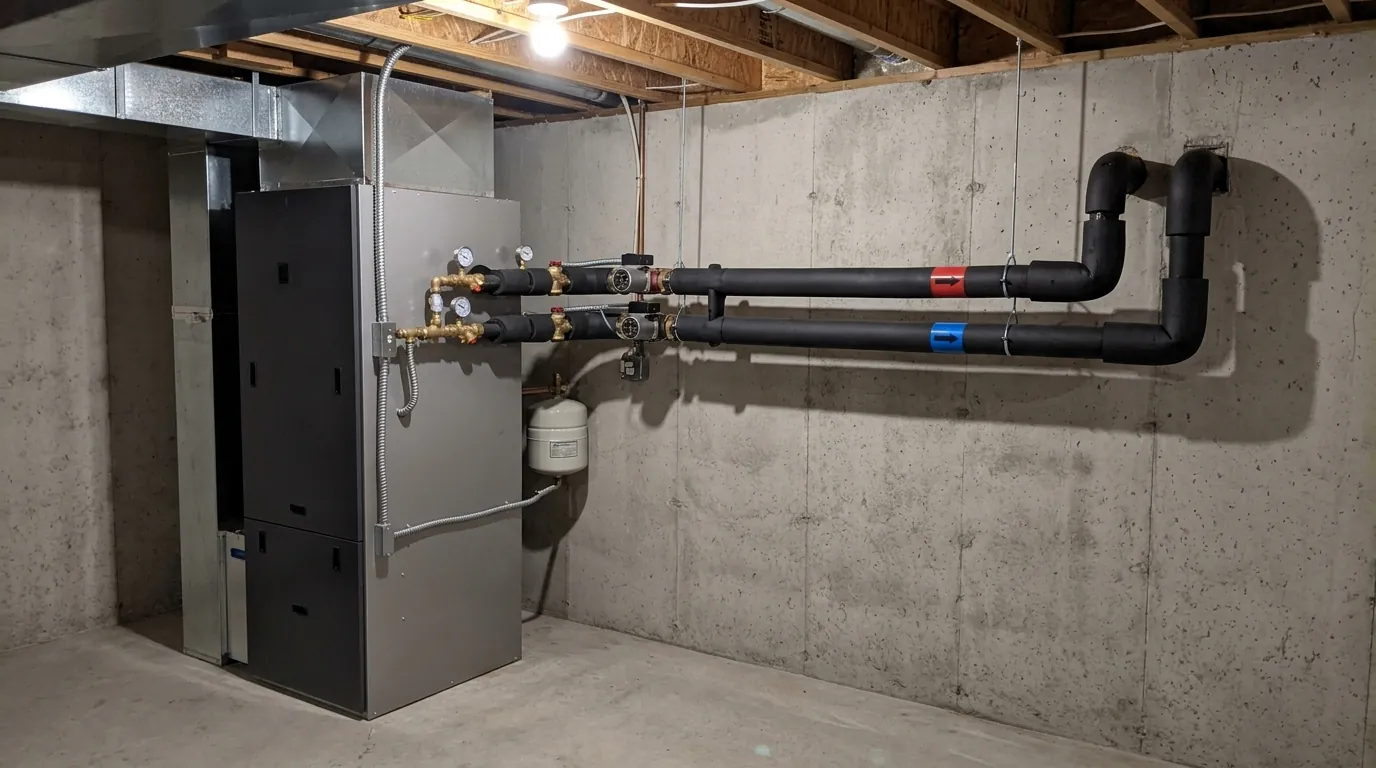
Mini-splits connect to the line set with flare fittings, where a flared copper tube is clamped by a brass nut. A flare that was under-tightened or cut poorly at installation can seep refrigerant for years. Temperature swings between Michigan winters and summers work the joint as the copper expands and contracts, which can open a slow leak on an older system.
We test the flares with electronic detection and bubble solution before replacing anything else. A leaking flare is cut off, re-flared with the proper tool and torqued to spec, then the system is pressure-tested with nitrogen and evacuated before charging. If the leak is in the indoor coil instead, we discuss a coil replacement or a replacement head, since coil costs approach new equipment on some models.
Mini-splits heat by running in reverse, and in winter the outdoor coil frosts over and must defrost periodically. During defrost the indoor fan stops and the head may show a flashing light. That is normal. A head that stops heating for long stretches, or an outdoor unit buried in ice that never clears, points to a failed defrost sensor or a drainage problem under the unit.
Snow and meltwater are a frequent cause. A condenser mounted too low gets buried in drifts, and water from defrost cycles freezes into a pile beneath it that eventually blocks the coil. We can relocate the unit to a wall bracket or a taller stand. On homes that pair the head with radiators, a short outage is less urgent, but the fix still matters before the next cold front.
| Work | Typical range |
|---|---|
| Diagnostic visit | $89 to $149 |
| Drain line clearing or condensate pump | $194 to $468 |
| Thermistor or fan motor replacement | $287 to $742 |
| Flare leak repair with recharge | $412 to $1,080 |
| Indoor or outdoor control board | $586 to $1,280 |
Parts prices vary by brand and model, and the technician quotes the final cost after testing. You see the price before any part is replaced. Compare more jobs in the furnace and AC price guide.
Keep reading
Wall, ceiling and floor mini-split heads for additions, radiator homes, finished attics and garages with no ductwork.
Learn moreDiagnosis and repair for heat pumps that ice up, blow lukewarm air or lean on backup heat through a Michigan winter.
Learn moreLeak detection and repair for air conditioners and heat pumps that lose charge, freeze up or need a top-off every season.
Learn moreFAQ
On many brands a slow blink during heating is a normal defrost or warm-start signal. A repeating pattern of blinks, often with a pause, is a fault code. Count the blinks and note which light is flashing before you call. The pattern narrows the cause, though we always confirm with meter tests.
You can and should rinse the filter screens every few weeks during heavy use. Cleaning the coil and blower wheel is a different job: it involves water near circuit boards and fragile fins, and a bad spray can damage the fan motor. A deep cleaning by a technician is safer for anything behind the filters.
Most heads hold the indoor fan off until the coil warms up, so cold air on startup is unusual. Brief cool air after a defrost cycle can happen. If the head blows cold for more than a few minutes at a time, or never warms, a sensor, valve or refrigerant issue is likely and worth a diagnostic visit.
Usually yes for sensors, drains, fan motors and flare leaks. It gets closer when the compressor or inverter board fails, because those parts can cost half the price of a new single-zone system. We quote both options so you can compare, and we note efficiency and cold-weather heating gains on newer equipment.
Not necessarily. When one head out of several fails, the problem is often at that head: a sensor, a fan motor, a communication wire or a leaking flare on that zone's line set. If every head stops at once, the outdoor unit is the more likely source. We test from the head back to the condenser.
Call any hour. Our office answers, sets the visit and tells you what to expect before a technician arrives.