Boiler hot, radiators cold
Heat is made but not moved. A stuck circulator, a closed zone valve or trapped air is the usual cause.
The boiler is running but the radiators stay cold, the pressure gauge keeps creeping up, or water is dripping from a valve on the side of the unit.
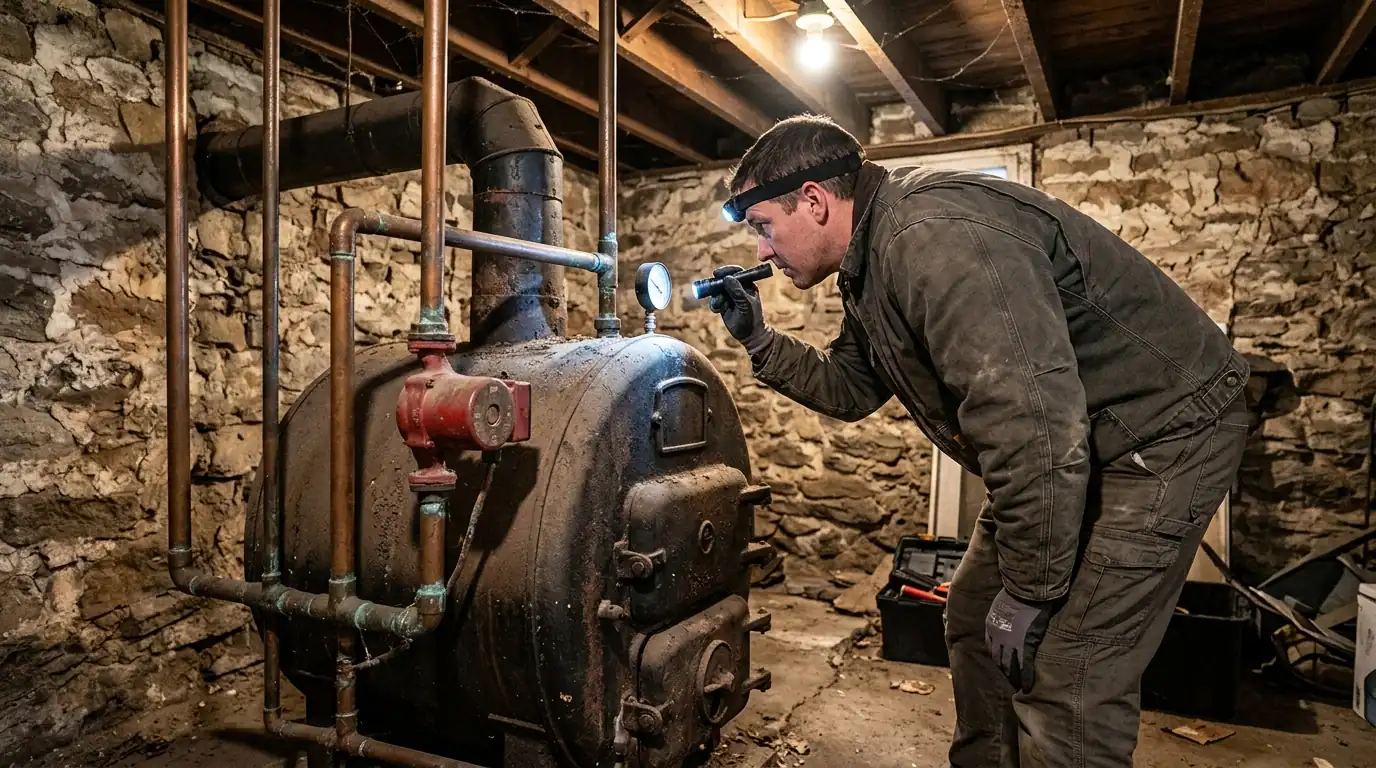
Common boiler problems are a failed circulator pump, a waterlogged expansion tank, a leaking relief valve, a bad thermocouple or igniter, air trapped in the piping, or a low-water cutoff that tripped. A technician reads pressure and temperature, tests the controls and pump, and repairs the failed part. Typical boiler repairs in the Kalamazoo area run $194 to $1,160.
Kalamazoo has a lot of boiler heat. Early 1900s homes in the older neighborhoods often still run on cast-iron radiators fed by hot water or steam, and plenty of newer homes use boilers for baseboard or in-floor heat. Boilers are long-lived and quiet, but they rely on pumps, valves, expansion tanks and controls that wear out on their own schedule.
Our technicians repair gas and propane boilers of every age, from old atmospheric cast-iron units to wall-hung modulating condensing boilers. Hot-water and steam systems fail in different ways, so the first step is always identifying which one you have and reading the gauges. From there, the technician works through the circulator, controls, ignition and piping until the cause of the problem is clear.
Heat is made but not moved. A stuck circulator, a closed zone valve or trapped air is the usual cause.
On a hot-water system, rising pressure often means a waterlogged expansion tank or a leaking fill valve.
The relief valve is opening to protect the boiler. That points to excess pressure, which needs attention right away.
Air in hot-water lines gurgles. Steam systems bang when condensate is trapped in sagging pipes.
A weak thermocouple, failed igniter or a draft problem can shut down the burner.
Leaks from fittings, pump flanges or a cracked section need a technician to find the source.
A hot-water boiler keeps the system full of water, usually at 12 to 20 psi, and a circulator pump pushes that water through radiators or baseboard and back. An expansion tank absorbs the water's growth as it heats. Problems tend to show up as pressure changes, pump noise, cold zones or gurgling. Most of these systems have a combined pressure and temperature gauge on the front.
A steam boiler is only partly full of water and runs at very low pressure, often under 2 psi. It boils water into steam that rises to the radiators, condenses and drains back by gravity. A sight glass on the side shows the water level. Steam problems look different: uneven heat, banging pipes, spitting air vents and a water level that drops too fast. Our technicians work on both types.
The visit starts with the gauges. On hot water, the technician reads system pressure cold and hot and checks the expansion tank's air charge. On steam, the sight glass, pressure control and low-water cutoff come first. Then the burner is watched through a full cycle, since many boiler problems trace back to ignition, the pilot or a draft issue at the chimney rather than the water side.
Next, the technician follows the heat. A circulator pump that is warm and humming but not moving water often has a seized shaft or a broken coupling. Zone valves are tested electrically and by feel. Radiators that are cold at the top point to trapped air in hot-water systems. On steam, cold radiators usually mean a stuck main vent or a radiator vent that has failed closed.
Circulator pumps are the most common hot-water repair, especially on older cartridge-style pumps that have run for decades. Expansion tanks are close behind. A diaphragm tank loses its air charge over time, the system pressure swings, and the relief valve starts dripping. Older homes may still have a steel compression tank hung from the basement ceiling that needs draining to restore its air cushion.
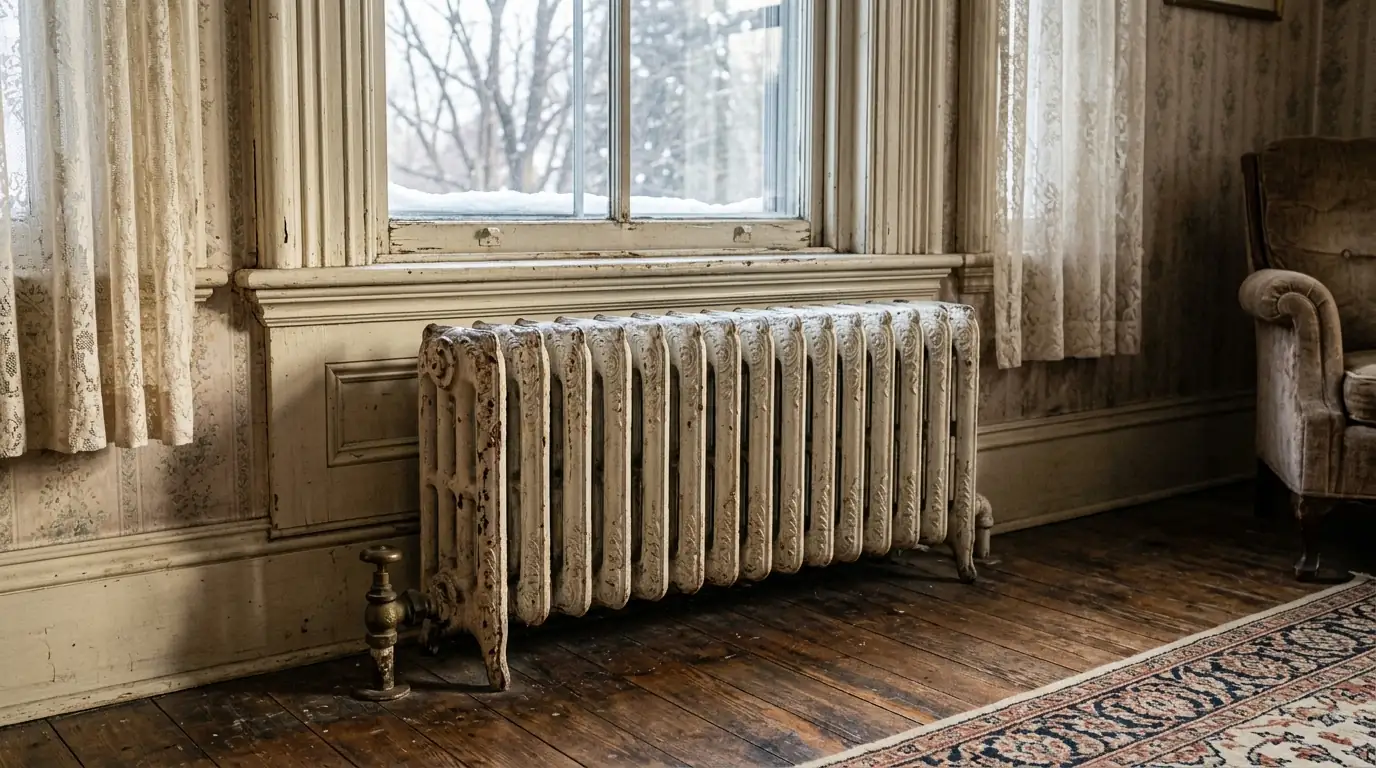
On steam systems in early 1900s homes, worn main vents and radiator vents cause most uneven heat complaints. Pipes that have sagged over the years trap condensate and cause loud banging. Burner problems on aging cast-iron boilers include worn thermocouples, failed pilot assemblies and gas valves past their service life. If the system needs more than a repair, see radiator and steam heat service for venting and balancing.
Cast-iron boilers can last 30 years or more, and many in Southwest Michigan are older than that. A boiler with a cracked section, a heavily corroded heat exchanger or a leaking firebox usually cannot be repaired economically. Our technicians show you the damage, explain what a repair would involve and give an honest opinion about whether the boiler has more seasons left.
If replacement is the better path, a modern boiler sized to the actual heat load of the radiators often uses far less fuel than an oversized original. The technician can walk you through boiler replacement options and the replacement estimate visit has no charge. Many homeowners keep their radiators and piping and replace only the boiler, which preserves the even, quiet heat they like.
| Work | Typical range |
|---|---|
| Boiler diagnostic visit | $94 to $159 |
| Thermocouple, pilot or igniter repair | $194 to $386 |
| Relief valve or fill valve replacement | $218 to $447 |
| Expansion tank replacement | $367 to $694 |
| Circulator pump replacement | $489 to $1,160 |
Typical Kalamazoo-area ranges for residential boilers. The final price is confirmed after the technician tests the system, and you approve it before any work begins. Compare more jobs in the furnace and AC price guide.
Keep reading
Boiler replacement sized to your radiators and baseboard, from cast-iron steam boilers to wall-hung condensing units.
Learn moreVenting, balancing, valve repair and pipe pitch corrections for steam and hot-water radiator systems in older homes.
Learn moreNight, weekend and holiday heating repair for furnaces, boilers and heat pumps when the house is losing heat fast.
Learn moreFAQ
Most residential hot-water boilers run around 12 to 15 psi when cold and up to about 20 to 25 psi when hot. A reading near 30 psi is close to the relief valve setting and needs attention. A reading near zero usually means the system has lost water and the fill valve or a leak needs checking.
The relief valve opens when pressure gets too high. The most common cause is an expansion tank that has lost its air charge, so the heated water has nowhere to expand. A fill valve that lets in too much water is another cause. Sometimes the relief valve itself is worn and weeps at normal pressure.
With the boiler running and the system warm, use a radiator key on the small bleed valve near the top of each radiator. Hold a cup under it and open slowly until water flows steadily, then close it. Start at the lowest floor. Afterward, check the boiler pressure, since bleeding can lower it.
No. A tight steam system should lose very little water. Adding water often points to a leak in a return line, a failed radiator vent letting steam escape, or a crack in the boiler. Frequent fresh water also brings in oxygen and minerals that speed corrosion inside the boiler, so the source should be found.
Older three-piece pumps can sometimes be repaired by replacing the motor, bearing assembly or coupling. Modern wet-rotor cartridge pumps are usually replaced as a unit. The technician checks the pump type, its age and the cost of parts, then recommends whichever makes more sense. High-efficiency replacement pumps also use less electricity.
Call any hour. Our office answers, sets the visit and tells you what to expect before a technician arrives.