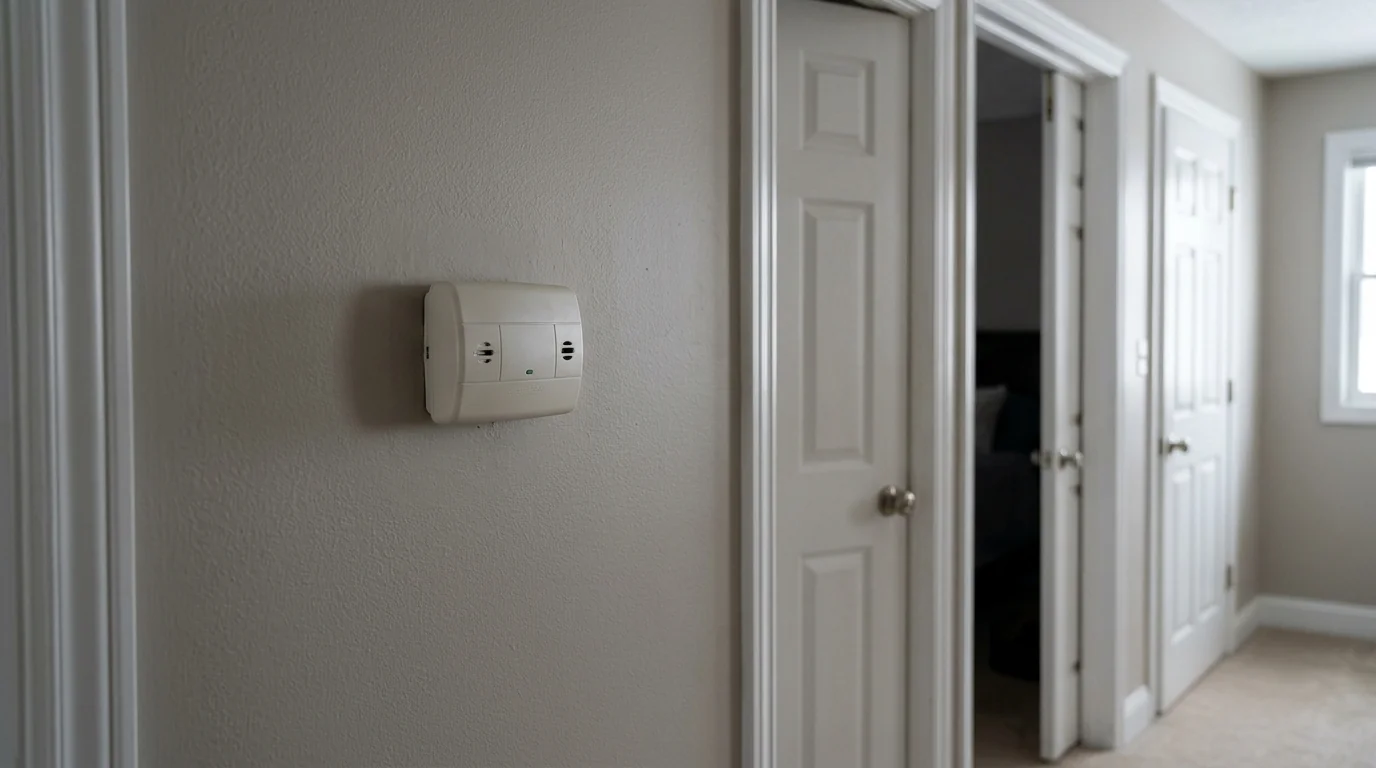
If your CO alarm goes off, do this first
Treat every carbon monoxide alarm as real until responders say otherwise. Do not try to find the source, do not stop to open windows, and do not wait to see whether symptoms develop. Get everyone out of the house, including pets, and call 911 or Consumers Energy from outside or from a neighbor's home.
Stay outside until emergency responders or the gas utility have tested the air and told you it is safe to go back in. If anyone feels ill, tell the 911 dispatcher, because CO poisoning is treated with oxygen and sometimes needs a hospital visit even after the person feels better. Have the fire department or utility note the reading they find, since it helps the technician later.
After the all clear, do not restart the appliance that caused the problem until a technician has found the cause and fixed it. Our technicians respond to these calls 24/7, and a carbon monoxide safety check tests every fuel-burning appliance and its venting before you go back to normal.
How carbon monoxide forms in a house
Any appliance that burns fuel makes some carbon monoxide. A furnace, boiler, water heater, gas range, gas dryer, gas fireplace and a car engine all produce it. When the appliance is working well and vented properly, the small amount produced goes up the flue and outdoors. Problems start when combustion goes wrong, when the exhaust cannot escape, or when exhaust is pulled back into the house.
Poor combustion comes from dirty burners, wrong gas pressure or a lack of combustion air, and it raises the amount of CO in the exhaust. Blocked or disconnected vents trap that exhaust. A cracked heat exchanger can let flue gases mix into the air the furnace blows through the house. Back drafting happens when exhaust fans, a dryer or a fireplace pull air out of a tight house so hard that a water heater flue reverses direction.
Michigan winters stack the odds. Snow can bury plastic furnace vents, ice can close off the end of an exhaust pipe, and houses sealed up against the cold leave the exhaust fewer places to go. Power outages bring their own risk, when people run generators too close to the house or use a gas oven to stay warm. Keep a generator at least 20 feet from windows, doors and vents, and never heat the home with a range or oven.
The furnace and water heater
Older 80 percent furnaces and most tank water heaters in Kalamazoo homes vent into a masonry or metal chimney through a metal connector pipe. That pipe should rise steadily toward the chimney, with tight joints and no rust holes. When a newer high-efficiency furnace replaces an old one, the water heater is sometimes left alone in an oversized chimney, which can cool its exhaust and slow the draft. A chimney liner is often needed in that situation.
High-efficiency furnaces vent through plastic pipe out a side wall or the roof. Those pipes must stay clear of snow, ice, leaves and bird nests. Keep at least a foot of open space around the openings, and check them after every storm. Our technicians check that the vent and intake are spaced correctly from each other, from windows and from the ground, since exhaust drawn back in through the intake can upset combustion.
Look for warning signs during the season: soot or rust around the flue connector, a water heater draft hood that feels hot or damp at the edges, a yellow or lazy burner flame, or heavy condensation on windows near the furnace room. Any of those warrants a technician visit. Do not attempt to adjust burners, gas valves or venting yourself.
The attached garage
An attached garage is one of the most overlooked CO sources. A car warming up in a closed garage, even for a few minutes, can fill the space with exhaust, and that air finds its way into the house through the connecting door, gaps around pipes and ducts, and any return air openings that pull from the garage. Cold Michigan mornings make the habit of warming up a car in the garage tempting, which is exactly when the risk is highest.
Never run a car, a snowblower, a generator or a gas pressure washer in a closed garage, even with the overhead door partly open. Back the car out promptly on cold mornings. Keep the door between the garage and house closed and weatherstripped, and make sure no furnace return duct pulls air from the garage. If you have a workshop in the garage, use battery or electric tools rather than gas engines while the door is down.
A gas or propane garage heater must be the vented type, mounted and piped by a technician. Unvented heaters release their exhaust right into the space. A properly vented garage heater installation keeps the space warm without adding exhaust to the air you breathe.
Detector placement and care
Put CO alarms where they will wake you. That means on every level of the home, including the basement, and in the hallway outside each sleeping area. Many families also add one in or near any bedroom with a fuel-burning appliance close by. Follow the manufacturer's mounting height, since some are designed for the wall and some for the ceiling.
Keep alarms at least several feet from the furnace, water heater and range, so normal startup puffs do not trigger false alarms, and away from bathrooms where steam can affect the sensor. Do not mount them behind curtains or furniture where air does not move. A CO alarm is not a substitute for a smoke alarm. Use combination units or separate alarms for both.
Most CO alarms wear out after about 7 to 10 years, and many will chirp to tell you. Check the date printed on the back, test each one monthly with the test button, and change the batteries when you change your clocks. Hardwired alarms with battery backup and interconnected models that all sound together give the best coverage. Write the install date on each new alarm with a marker so you know when it is due for replacement.
Symptoms that mean leave the house and call 911
CO poisoning symptoms often look like the flu, which is why it is easy to miss. The difference is that the symptoms tend to ease when you leave the house and come back when you return, and several people or pets in the home feel unwell at the same time. Morning headaches that fade by midday at work or school are a pattern worth paying attention to.
Exposure over many hours at low levels can cause dull, lingering headaches and fatigue, while a short exposure at high levels can cause confusion and loss of consciousness within minutes. Infants, older adults, pregnant women and people with heart or lung conditions are at greater risk, so err on the side of leaving the house when they are in it. Do not drive anyone to the hospital if you feel dizzy yourself. Let the 911 dispatcher send help.
If anyone shows these signs, leave the house and call 911 right away, even if no alarm has sounded:
- Headache, dizziness or weakness that several people share.
- Nausea or vomiting without a clear reason.
- Shortness of breath, chest pain or confusion.
- Unusual drowsiness or trouble waking someone.
- Pets that seem lethargic or unsteady, since animals are often affected first.
Lyman Tibbetts, Comfort Guides Editor at Teed Heating & Cooling. Lyman edits the Comfort Guides with our technicians, turning the questions homeowners ask on service calls into plain answers.