First, decide whether the air is truly cold
A furnace that starts up and pushes cool air for the first minute is behaving normally. The burners light, the heat exchanger warms, and the blower waits for that metal to come up to temperature before it starts. Some control boards start the fan on a timer instead of a temperature reading, so a short puff of room-temperature air at the beginning of each cycle is expected.
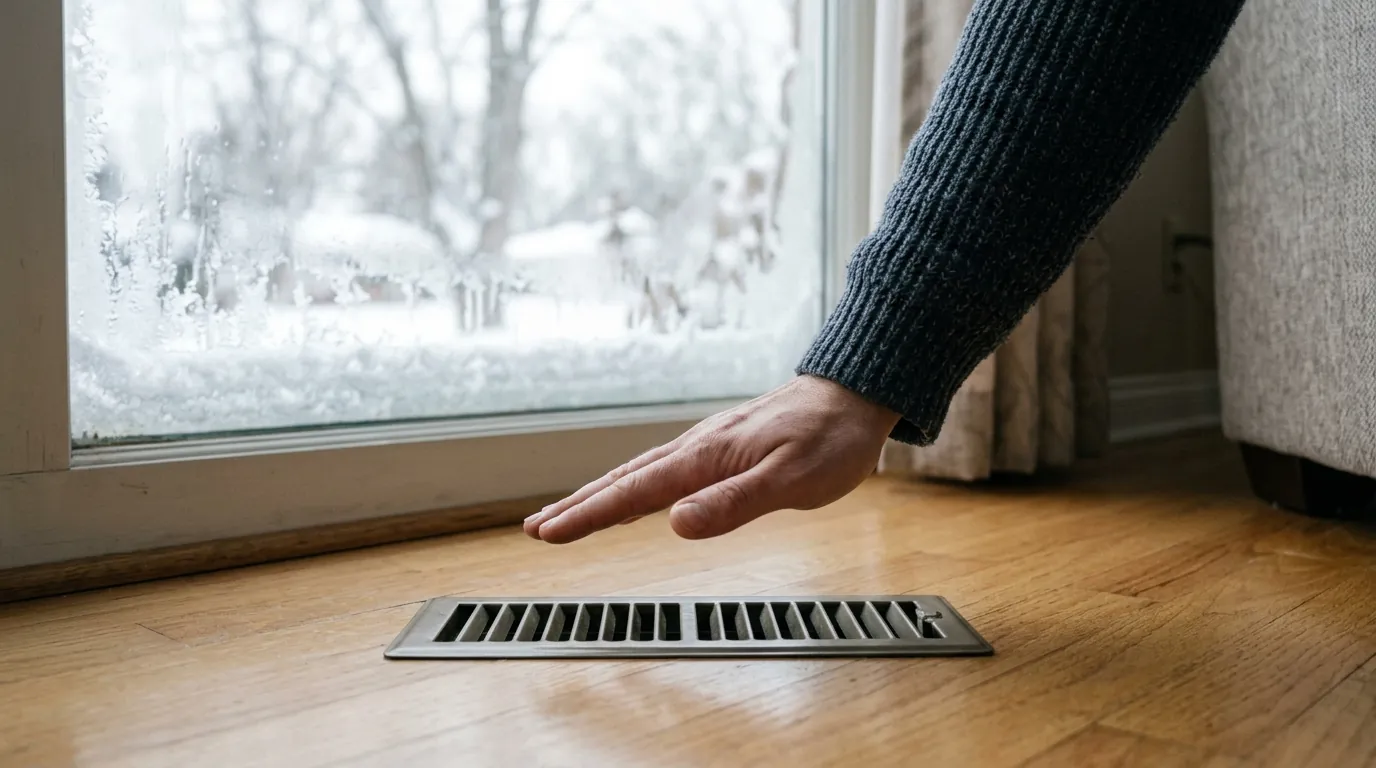
The real problem is air that stays cool for the whole cycle, or air that turns warm and then goes cold again a few minutes later while the blower keeps running. Hold your hand over a supply register near the furnace for three or four minutes. Healthy forced-air heat usually feels clearly warm, often somewhere around 40 to 70 degrees warmer than the air going back into the return grille.
Also notice the pattern. Cold air from one or two far rooms points toward ducts. Cold air everywhere points toward the furnace itself. That one observation will save you and your technician time.
Check the thermostat before anything else
The single most common reason for cold air is a thermostat fan setting of ON instead of AUTO. With ON selected, the blower runs all day, even between heating cycles, and it moves unheated air through the ducts. Switch it to AUTO, and the fan will only run while the burners are making heat.
Next, confirm the system mode reads HEAT and that the set temperature is a few degrees above the room temperature. Smart thermostats can fall back to a schedule after a power blip or a software update, and some will drop into an away setting that holds the house at 60 degrees. If the display is blank or dim, replace the batteries, since a weak battery can stop the call for heat while still letting the fan run.
If you recently had a new thermostat put in, check that it is set for the right equipment type. A thermostat configured for a heat pump on a gas furnace system can send the wrong signals.
Simple checks a homeowner can safely make
Once the thermostat is ruled out, go to the furnace. You are only looking and flipping switches that are meant for you to use. Do not remove burner covers, touch wiring, or open the gas valve body. If you smell gas at any point, leave the house right away and call Consumers Energy or 911 from outside.
Here is the short list, in the order we would do it. After each change, give the furnace a full cycle of ten minutes or so before you judge the result, because most control boards wait through a short delay before they try to light again.
If changing a badly loaded filter brings the heat back, keep an eye on it for the next few days. A furnace that tripped its high limit once will usually behave after the airflow is restored, but one that keeps tripping with a clean filter has a different problem, such as a weak blower motor or undersized return ducts. Plan on checking a 1 inch filter monthly through the heating season, since a house sealed up for winter recirculates the same dust day after day.
- Pull the filter. A clogged filter starves the furnace of air, the heat exchanger overheats, and a safety switch shuts the burners off while the blower keeps running cool air through the house.
- Check the furnace power switch (it looks like a light switch on or near the unit) and the breaker in your panel.
- Make sure the furnace door is fully seated, because a loose panel opens a safety switch.
- Look at the gas shutoff handle on the pipe feeding the furnace. Parallel with the pipe means open.
- On a propane home, read the tank gauge. A tank under about 20 percent may not deliver steady pressure in hard cold.
Snow, ice and blocked vent pipes
High-efficiency furnaces in many Kalamazoo homes vent through two white plastic pipes on a side wall or through the roof. One brings in combustion air and the other carries exhaust out. Lake-effect snow can drift over those pipes overnight, and frost can build up on the exhaust outlet during long stretches of nights below zero.
When either pipe is blocked, a pressure switch inside the furnace prevents the burners from lighting. The blower may still cycle, and the house gets cold air or no air at all. Walk outside and look. Gently clear loose snow away from the pipe openings by hand, keeping at least a foot of open space around them, and do not chip at ice on the pipe itself. After a heavy storm, make this walk part of your shoveling routine so the furnace never runs out of combustion air.
If the pipes are clear and the furnace still will not hold a flame, or if you find ice packed inside the exhaust, stop there. Ice inside the venting can mean a sloped or sagging pipe, and that is a job for a technician.
Causes that need a technician
Many cold-air calls come down to the ignition sequence failing partway through. The most frequent culprit is a dirty flame sensor, a thin metal rod that proves the burners are lit. When it is coated with residue, the furnace lights, cannot confirm the flame, shuts the gas off after a few seconds, and tries again. After three or so failures, the control board locks out, and you may see a blinking light through the small window on the blower door.
Other causes include a failed hot surface igniter, a weak inducer motor, a clogged condensate drain that trips a float or pressure switch, a gas valve that will not open, and a limit switch that keeps tripping because of a deeper airflow problem. These involve gas, high voltage and safety controls, so a homeowner should leave them alone. Our furnace repair technicians test each step of the sequence with meters rather than guessing at parts.
Write down any blinking light pattern before you shut the power off. The code tells the technician where to start.
When only some rooms get cold air
If the furnace room is warm and the vents near it blow hot air, but a back bedroom or a room over the garage stays cool, the furnace is probably fine. The heat is being lost on the way. Ducts that run through an attic, a crawlspace or an outside wall can leak at the joints, and in a Michigan winter that duct air cools fast before it reaches the register.
Check that supply registers in the cold rooms are open and not blocked by furniture or rugs. Look for any dampers on the main ducts near the furnace that may have been bumped closed. Beyond that, the fix is usually sealing joints with mastic, adding insulation to exposed runs, or adjusting the air balance between rooms. A duct repair and sealing visit can find where the warm air is going.
Last, remember that a heat pump in defrost mode will blow cool air for several minutes on purpose. If your home has a heat pump paired with a furnace, that short cool spell on a frosty morning is part of normal operation. For anything beyond these checks, call (269) 360-5258 at any hour and a Teed technician will come out to find the cause.
Lyman Tibbetts, Comfort Guides Editor at Teed Heating & Cooling. Lyman edits the Comfort Guides with our technicians, turning the questions homeowners ask on service calls into plain answers.