How a heat pump makes heat from cold air
A heat pump does not burn anything. It uses refrigerant and a compressor to pull heat out of outdoor air and move it inside, the same way an air conditioner moves heat out of your house in summer, just in reverse. Even air at 5 degrees holds usable heat, and a heat pump can deliver two to three units of heat for every unit of electricity it uses in mild weather.
As the outdoor temperature falls, that advantage shrinks. There is less heat in the air to collect, and the compressor has to work harder to move it. Older standard heat pumps lost much of their capacity around 20 to 25 degrees, which is why heat pumps earned a poor reputation in Michigan years ago.
Cold-climate models use variable-speed inverter compressors and refrigerant circuits designed for low temperatures. Many keep producing a large share of their rated heat at 5 degrees and keep running below zero. That makes them a real option for a Kalamazoo home, as long as the system is sized and set up correctly.
What a Kalamazoo winter asks of a heat pump
A typical Kalamazoo winter has long stretches in the 20s and 30s, which is where heat pumps do well. The hard part is the handful of nights each year that fall to zero or below, often with wind and lake-effect snow. A heat pump that covers 90 percent of the season comfortably still needs a plan for those few coldest days.
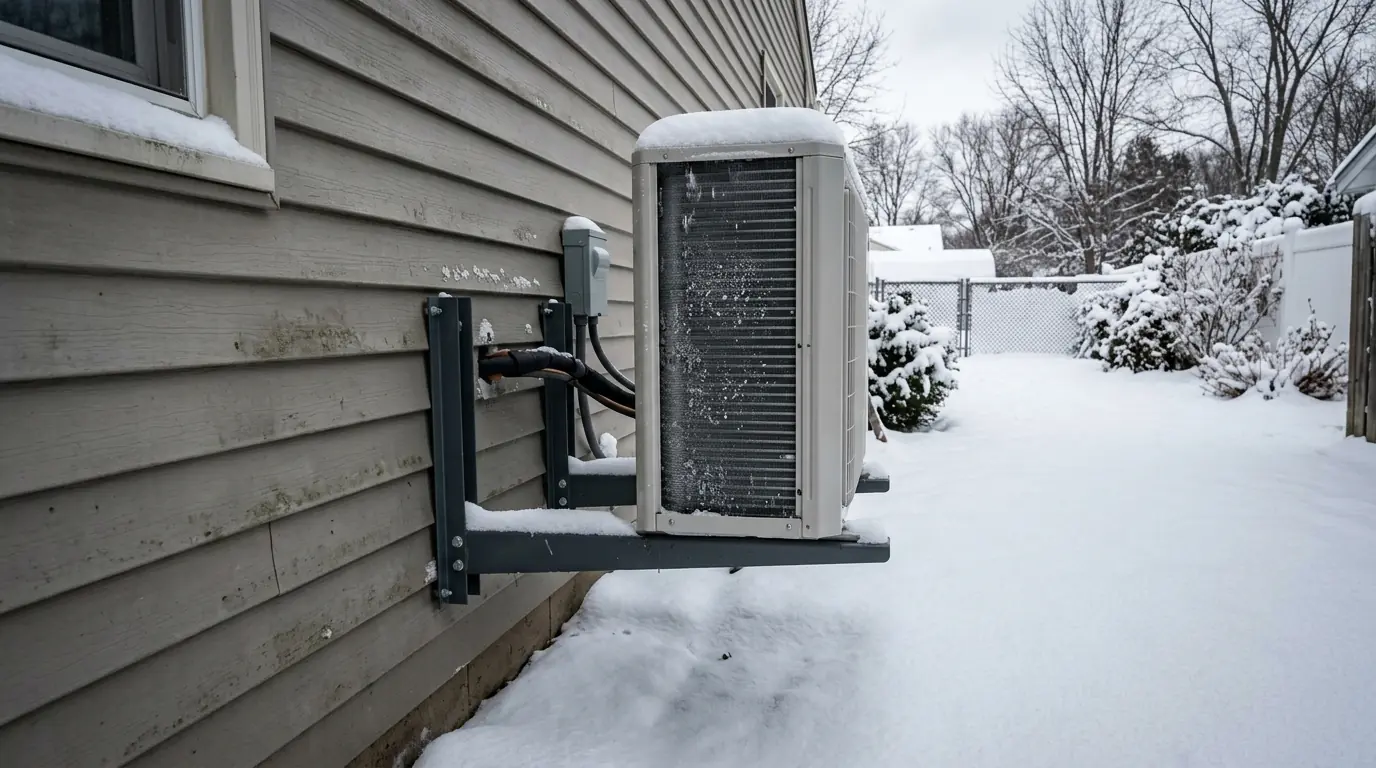
Humidity and snow add their own challenges. Damp air near freezing causes frost to build on the outdoor coil. The heat pump handles that with a defrost cycle, briefly reversing to warm the coil and melt the frost. During defrost you may see steam rising from the outdoor unit and feel cooler air from the vents for a few minutes. Both are normal.
Placement matters in snow country. The outdoor unit should sit on a stand or wall bracket high enough to stay above drifting snow, with a clear path for melt water to drain away rather than refreezing under the unit. Homes closer to the Lake Michigan shore see more snow, so mounting height deserves extra thought there.
Balance point, in plain terms
The balance point is the outdoor temperature at which your heat pump can no longer keep up with the heat your house is losing. Above that temperature, the heat pump handles the whole load on its own. Below it, something else has to help. Every house has its own balance point, based on its size, insulation, windows and air leakage, and on the heat pump capacity.
A well-insulated house with a properly sized cold-climate heat pump might have a balance point near zero or below. A drafty older home with the same equipment might reach its balance point at 20 degrees. That is why a heat load calculation matters more for a heat pump than for a furnace. Guessing the size by the square footage can leave you with a system that runs on backup heat far more than expected.
There is also an economic balance point. Even when the heat pump can still keep up, there may be a temperature where running a gas furnace costs less than running the heat pump, based on what you pay Consumers Energy for gas and electricity. That number shifts as rates change. A technician can set the switchover point on a dual fuel system to match your rates, then adjust it later if prices move.
Backup heat options
An all-electric heat pump system usually pairs with electric resistance heat strips in the air handler. Those strips work like a large toaster, turning electricity directly into heat. They are reliable and respond fast, but they cost much more to run than the heat pump itself. They should only come on during defrost and on the coldest days, not as a regular source of heat.
A dual fuel system pairs the heat pump with a gas or propane furnace instead. The heat pump handles mild and moderate weather, and the furnace takes over below a set outdoor temperature. Because the furnace is already sized to heat the home alone, dual fuel gives a strong safety net during a long subzero stretch or a power interruption to the outdoor unit. Many Southwest Michigan homes that already have gas service find this the most practical path. Our dual-fuel heating systems are set up with an outdoor sensor so the switch happens on its own.
Rural homes on propane often see the largest difference in running costs, since propane prices tend to run higher than natural gas. In those homes, a heat pump can carry most of the season and the propane furnace handles only the deep cold.
- Electric heat strips: lowest install cost, highest cost per hour of backup heat.
- Gas furnace dual fuel: strong backup, uses existing gas service.
- Propane furnace dual fuel: good fit for rural homes, cuts propane deliveries.
- Ductless heads plus an existing boiler: helpful for older radiator homes.
Ducted, ductless and older homes
Homes with existing forced-air ductwork can usually take a ducted heat pump in place of a central air conditioner. Ducts sized for an older furnace may be on the small side, though, since heat pumps deliver air at a lower temperature and need steady airflow to stay comfortable. A technician should check the supply and return sizes and the static pressure before the equipment is chosen.
Older Kalamazoo homes with steam or hot-water radiators and no ducts can still use heat pumps. Ductless mini-splits mount a head on the wall in key rooms and handle cooling in summer plus much of the heating through spring and fall. The boiler stays in place to cover the deep cold. That pairing avoids running new ducts through plaster walls.
Mini-split heads should be placed where they can move air through the room without blowing directly on people. Bedrooms, a main living space and a finished attic room are common choices. A ductless mini-split installation can start with one or two zones and add more later.
Getting the most from a heat pump in winter
Heat pumps work best with steady settings. Large nighttime setbacks force a long morning recovery, and the thermostat may bring on the expensive backup heat to catch up. A setback of 2 to 3 degrees, or none at all, usually costs less to run. A thermostat built for heat pumps will also lock out the heat strips above a set outdoor temperature.
Keep the outdoor unit clear. Brush snow off the top and sides gently after storms, keep the area around it clear of drifts and ice, and never chip ice from the coil with a tool, since the fins and tubing are easy to damage. If the unit stays coated in ice for hours, the defrost system may need service, and a technician should take a look. Our heat pump repair team handles defrost boards, sensors and reversing valves.
Change the filter on the same schedule you would with a furnace, and have the system serviced once a year. For any electrical or refrigerant work, leave it to a technician. To talk through whether a heat pump fits your home, call (269) 360-5258 any hour.
Lyman Tibbetts, Comfort Guides Editor at Teed Heating & Cooling. Lyman edits the Comfort Guides with our technicians, turning the questions homeowners ask on service calls into plain answers.