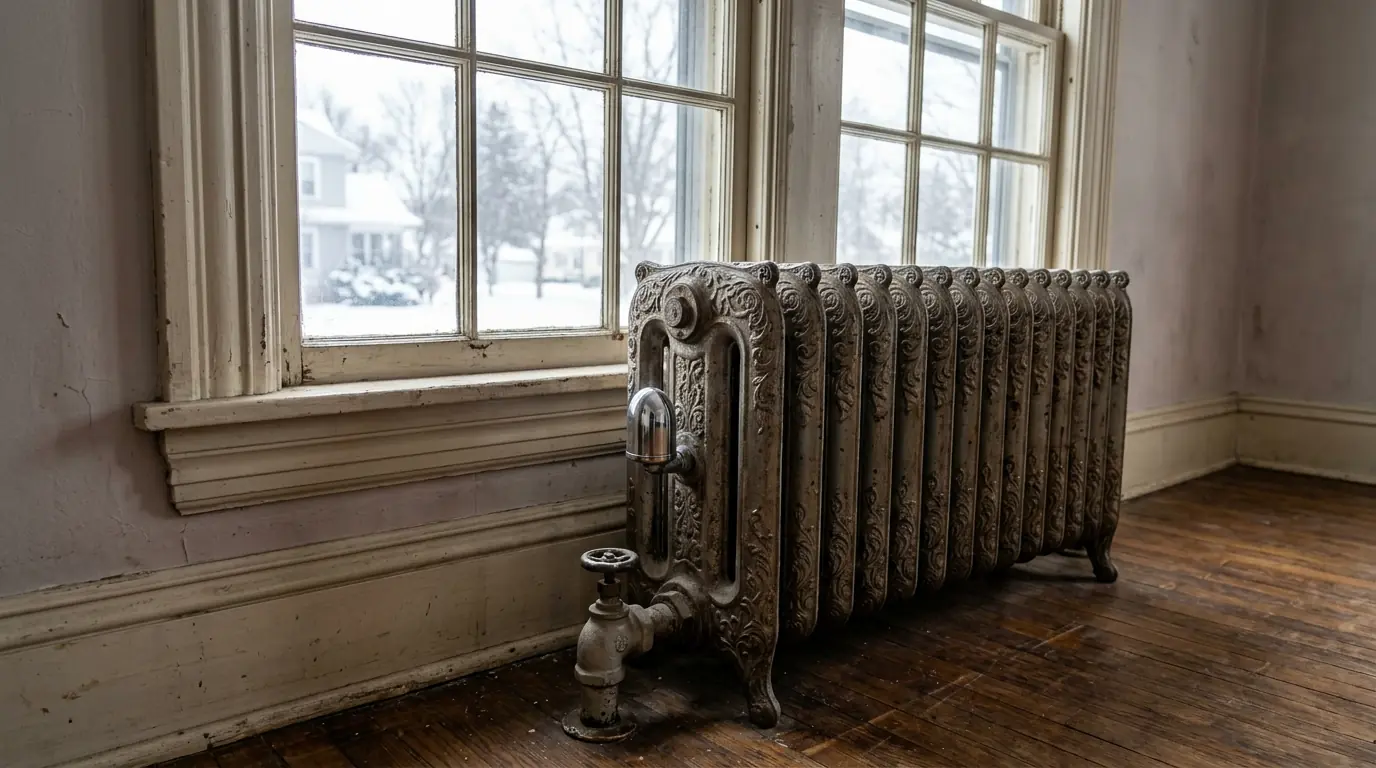
Steam or hot water: how to tell which you have
Radiator homes use one of two systems, and the care for each is different. A steam system boils water in the boiler and sends steam up through the pipes to the radiators, where it condenses back into water and drains back down. A hot-water system, often called hydronic heat, keeps the pipes full of water and uses a circulator pump to push heated water through the radiators and back.
The boiler gives the quickest clue. A steam boiler has a sight glass on the side showing the water level, and a pressure gauge that reads in very low numbers, often under 2 psi. A hot-water boiler has no sight glass, usually has a pump on the piping, an expansion tank nearby, and a gauge that reads around 12 to 20 psi along with a temperature.
The radiators help too. Steam radiators often have a small chrome or brass vent on one side, about halfway up or near the top, that hisses as the system heats. Hot-water radiators usually have a small square or slotted bleed valve near the top and pipe connections at both ends.
Why steam pipes bang and hiss
A loud bang or hammer in a steam system almost always comes from water trapped where steam is trying to pass. Steam moving fast over a pocket of condensate picks the water up and slams it against a fitting or elbow. The noise can be startling, and over time it stresses pipe joints.
One-pipe steam radiators need to tilt slightly back toward the valve so water can drain out the same pipe that steam comes in. Floors settle in older houses, and a radiator that has drifted level or tilted away will collect water and knock. A carpenter's level across the top will tell you. Shims under the far feet can restore the slope, but leave any pipe work or valve repair to a technician.
A radiator valve on a one-pipe system must be all the way open or all the way closed. Leaving it halfway traps water in the radiator and causes noise. Hissing from a vent while the system heats is normal, but water spitting from a vent means the vent is failing or the boiler water level is too high. Running a steam boiler at higher pressure than it needs is another common cause of noise, and most homes heat well at a setting under 2 psi.
Steam air vents and how to check them
Those small vents on each steam radiator let air out so steam can come in, then close tight when steam arrives. A clogged vent keeps air trapped, and the radiator stays cold or heats only at one end. A vent stuck open hisses steam into the room and wastes heat and water.
Main vents on the basement piping are just as important. They let air out of the long supply mains quickly so steam reaches all the radiators at once. When main vents fail, rooms close to the boiler heat early and far rooms lag behind, which leads people to push the thermostat higher and creates more noise. Main vents are usually larger than radiator vents and sit near the end of each main in the basement.
You can unscrew a radiator vent by hand when the system is off and cool, and replacement vents are sold in different venting speeds. Faster vents on far radiators and slower vents on close ones help balance the house. If you are not sure which size to use, or the threads are corroded, our radiator and steam heat service can replace and balance the vents for the whole system.
Bleeding hot-water radiators
Air collects at the top of hot-water radiators over time, especially after the system has been drained for a repair. A radiator that is warm at the bottom and cool at the top, or a gurgling sound in the pipes, is a sign it needs bleeding. Bleeding is a reasonable homeowner task when done carefully. Some newer hot-water systems have automatic air vents near the boiler that handle much of this on their own.
Use the steps below with the boiler running and the circulator on, so the system has pressure behind it. Work from the radiators closest to the boiler outward, and from the lowest floor up. After bleeding several radiators, check the boiler pressure gauge. If it has dropped below about 12 psi, the system may need water added through the fill valve, and a technician should handle that if you are unsure.
- Hold a rag and a small cup under the bleed valve.
- Turn the valve with a radiator key a quarter to half turn counterclockwise.
- Let air hiss out until a steady stream of water appears.
- Close the valve snugly, without forcing it.
- Move on to the next radiator, then check the boiler pressure.
Yearly boiler care
Steam boilers lose water through vents and small leaks, and many older units have a manual fill valve. Check the sight glass weekly during the heating season. The water should sit about halfway up the glass when the boiler is cool, and you should never add cold water to a hot, empty boiler, since the shock can crack cast iron. If the glass is empty, shut the boiler off and call for service. A boiler that needs water added every few days has a leak worth finding.
Many steam boilers also have a low-water cutoff that should be flushed regularly to clear sediment, following the manufacturer instructions. Hot-water systems need less weekly attention, but the expansion tank, relief valve and circulator should be checked each year. A relief valve dripping or a gauge creeping higher than 25 psi should be looked at promptly.
A yearly service visit before the cold sets in covers burner cleaning, combustion testing, flue inspection and safety control checks. Because boilers burn gas or oil and run under pressure, any work on the burner, controls, gas line or relief valve belongs with a technician. If you ever smell gas near the boiler, leave the house and call Consumers Energy or 911 from outside.
Repair, upgrade or replace
Cast-iron radiators can last far longer than the boilers that feed them, and it is common to replace a boiler two or three times in the life of the same radiators. Cast-iron sections can crack, burners wear, and controls age out, so a boiler that leaks from its sections, needs frequent repairs or burns poorly is often near the end. Our boiler repair technicians test the burner, controls and water side before suggesting a replacement.
Steam boilers must be replaced with steam boilers, and they must be sized to the total radiation in the house, not just the old boiler size. A technician measures every radiator to get that number right. Hot-water systems have more options, including high-efficiency condensing boilers with modulating burners that adjust output to the weather. Expect the replacement to include new near-boiler piping laid out to the manufacturer's diagram.
Many radiator homes add cooling with ductless mini-splits, which avoids cutting duct runs through plaster walls and old trim. That pairing gives summer comfort and extra shoulder-season heat while the radiators keep doing what they do best in deep winter. To talk about any steam or hot-water system, call (269) 360-5258, any day and any hour.
Lyman Tibbetts, Comfort Guides Editor at Teed Heating & Cooling. Lyman edits the Comfort Guides with our technicians, turning the questions homeowners ask on service calls into plain answers.